

-
A trending X post warns of a potential market crash linked to Fed policy, yields and liquidity.
-
The post claims long-term Treasury yields are at their highest levels since 2007.
-
Bitcoin is included among the assets the post says could face forced selling.
A Bitcoin crash warning is making the rounds on X, with a trending post comparing the S&P 500 chart with the so-called Benner cycle and declaring that something extremely bad could happen Monday. The post links the warning to the Federal Reserve, long-term yields, debt and liquidity.
Bitcoin Crash Warning Centers On Fed Policy
It also claims that holding rates steady or cutting them could worsen inflation, loosen financial conditions and eventually force another round of tightening.
That creates the cycle the post highlights, higher rates could mean slower growth, while lower rates could mean renewed inflation pressure.
Long-Term Yields Sit At Center Of Warning
The post specifically points to long-term Treasury yields, claiming they are already at their highest levels since 2007. It also refernces roughly $40 trillion in U.S. debt and argues that rising debt costs could increase pressure across financial markets.
The comparison with Japan is another major part of the warning. The post argues that the Federal Reserve could eventually face a similar policy dilemma. Still, none of those claims establishes that markets will crash on Monday.
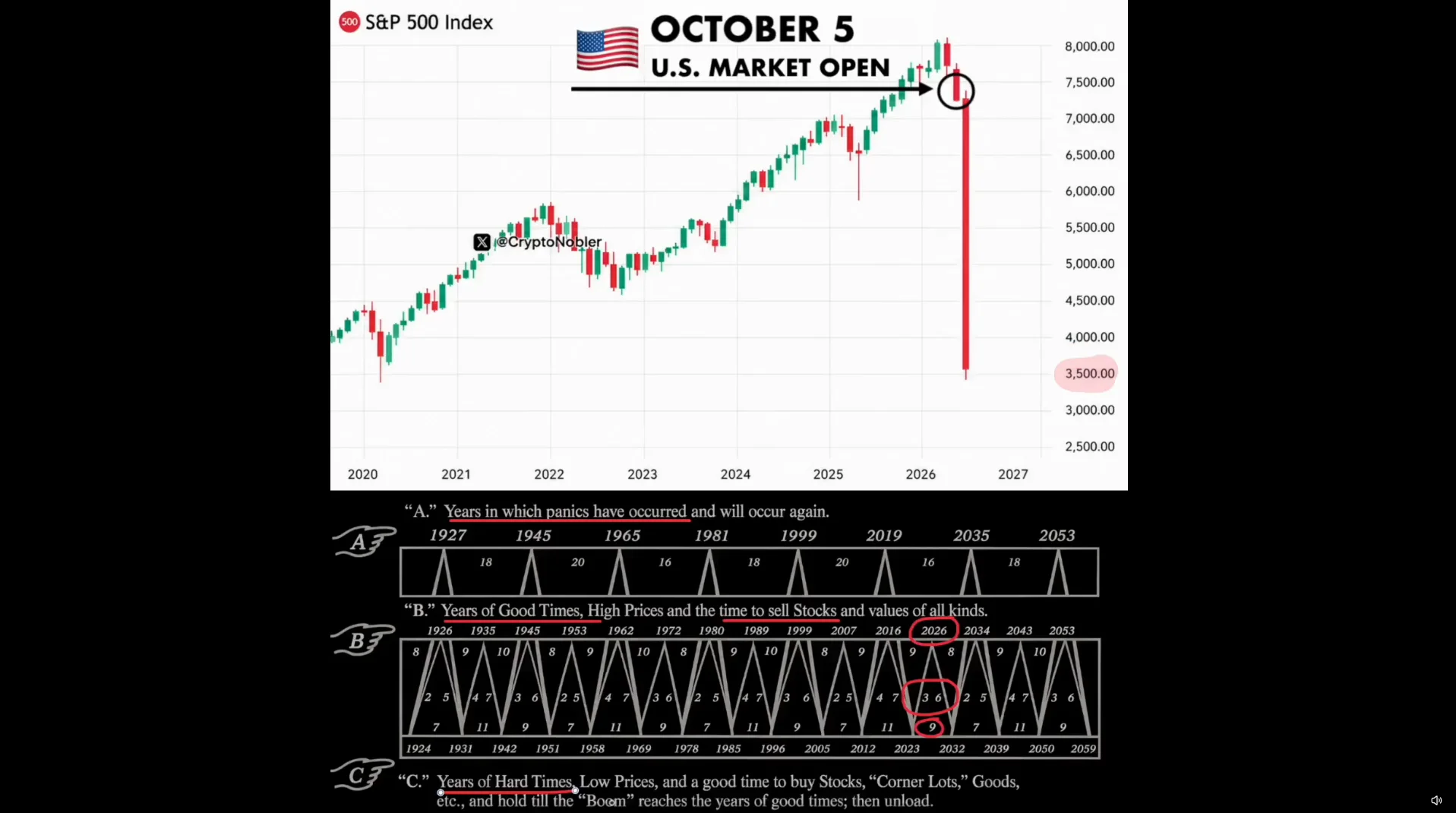
Bitcoin Gets Named Among Assets At Risk
The post mentioned that tighter liquidity could trigger forced selling across stocks, bonds, silver and Bitcoin. Its proposed chain reaction is straightforward, higher yields lead to tighter liquidity, falling risk assets and eventually forced selling.
The post also argues that investors may sell whatever they can liquidate when liquidity disappears.
For Bitcoin, that means the warning is tied directly to the broader liquidity argument rather than a specific crypto-market catalyst. The Bitcoin crash warning remains a forecast circulating on X, based on data isn’t a confirmed guarantee that a crash will occur on Monday, October 5.



