
With US PCE and Jackson Hole signals approaching, gold bulls may further strengthen

FX168 Financial News, August 24—The global bond market remains highly volatile, with yields across multiple maturities staying near multi-year highs. Elevated oil prices and fiscal concerns are major factors weighing on the bond market. The market is now awaiting new policy signals from the upcoming US PCE inflation data and the Jackson Hole Symposium. In the short term, the US dollar remains weak and fluctuating, while US Treasury direction remains unclear. Against the backdrop of uncertain interest rate expectations, gold bulls are expected to continue receiving support.
The global financial markets began this week in a state of anticipation. Commerzbank interest rate strategist Hauke Siemsen pointed out that persistently high oil prices and escalating fiscal concerns keep the bond market fragile, with yield curves across different maturities globally testing multi-year highs. Although there was some consolidation in the early hours of trading, the fundamental factors pushing yields higher have yet to be fundamentally resolved, meaning conditions are still insufficient for a sustained reversal in the market.
The pressures facing the bond market are multi-faceted. On one hand, persistently high energy prices increase inflation risks, with concerns about renewed price pressures not completely fading away. On the other, sustained focus on fiscal deficits and debt levels in major economies drives investors to demand higher yield compensation for holding long-term bonds. The combination of these two factors keeps the term premium for long-term US Treasuries and other major global bond markets elevated.
The influence of oil prices on the financial market is particularly noteworthy. Rising energy costs not only directly push up inflation expectations but may also force central banks to maintain relatively cautious monetary policies even as economic growth faces headwinds. For the bond market, this could mean less room to cut rates; for gold, the impact becomes more complex. If energy-driven inflation causes real interest rates to keep rising, gold will be under pressure, but if markets shift focus toward fiscal risks, monetary credibility, and safe-haven demand, gold may attract new fund inflows.
Currently, the US dollar market is also showing signs of a clear weak adjustment. US fiscal policy interventions in long-term bond yields, coupled with cooling expectations for further tightening by the Federal Reserve, have eroded the dollar’s previous interest rate advantage. Meanwhile, after the US Treasury expanded its long-term bond buyback program, markets began reassessing the relationship between US fiscal policy and bond yields.
The short-term weakening of the US dollar directly supports gold. As gold is denominated in dollars, a devaluation of the dollar lowers the cost for non-dollar investors to buy gold, typically boosting gold prices. Additionally, if dollar weakness persists, capital may further increase allocations to gold and other non-dollar assets, reinforcing the bullish sentiment in the precious metals market. However, the US Treasury market has yet to show a clear trend. Yields staying near multi-year highs means bonds offer certain allocation value, but fiscal risks and inflationary pressures limit the upside for long-term bonds. The market awaits new macro data and monetary policy signals to determine the next direction for yields.
This week, US PCE inflation data will serve as an important observation window. PCE is one of the Federal Reserve’s key inflation indicators; if the data further shows price pressures easing, the market may renew expectations for future policy easing, putting the dollar and US yields under pressure and providing stronger upside momentum for gold. Conversely, if PCE data shows inflation remains resilient, the market may bet on higher rates for longer, leading to a rebound in the dollar and yields that could temporarily weigh on gold.
The Jackson Hole annual symposium could also become this week’s key market variable. Investors are not only watching the Fed’s outlook on inflation and economic growth, but, more importantly, any clear signals from policymakers regarding the future path of interest rates. If the policy tone leans dovish, risk appetite and bond prices may improve and gold could benefit from both a weaker dollar and lower real rate expectations; if the tone is hawkish, gold may see some short-term profit-taking.
From a market sentiment perspective, investors have not formed unidirectional bets. Intertwined worries about the bond market, fiscal risks, energy prices, and monetary policy expectations are prompting capital to stay on the sidelines until key data confirms a direction. In this environment, gold’s appeal derives not just from rate expectations but also from its hedging function against fiscal risk and macro uncertainty.
For the US dollar, the short-term outlook is more likely to remain weak and corrective. The US dollar index has already fallen significantly; lacking new strong economic data and hawkish policy signals, there is still insufficient basis for a rapid reversal. However, if PCE reignites inflation worries or Jackson Hole delivers a clear hawkish surprise, the dollar could stage a temporary rebound, thus short-term volatility driven by events cannot be ignored.
From a daily technical perspective, gold remains in a bullish trend overall, with prices holding above key medium-term moving averages and trend support. The current upward momentum is still intact. If previous highs are decisively broken and gold maintains levels above $4,750, the market could see further upside potential; conversely, if key resistance zones continue to cap gains, watch for increased profit-taking and a possible pullback to the previously breached $4,400 region. The US dollar and Treasury yields will continue to determine whether the gold breakout can sustain.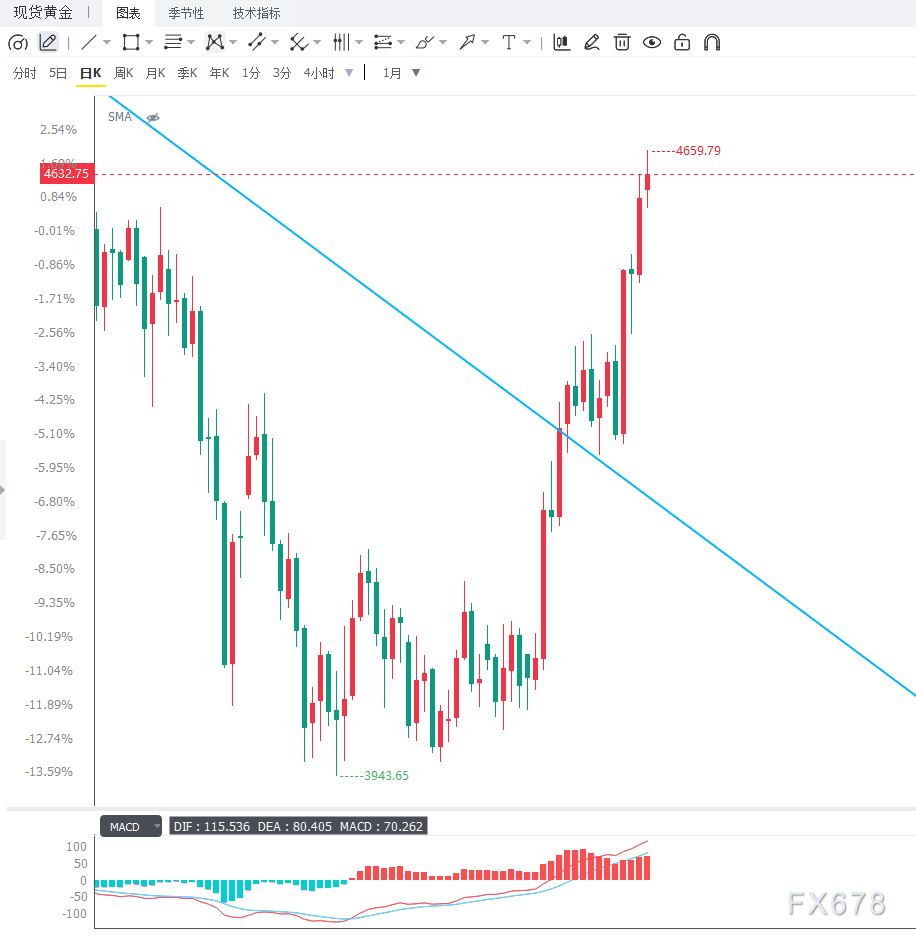
Overall, high oil prices, fiscal concerns, and global bond yields near multi-year highs are keeping markets highly sensitive, while dollar weakness provides more direct upward momentum for gold. Ahead of the US PCE inflation data and the Jackson Hole Symposium, the dollar is expected to remain weak and corrective, and US Treasuries are likely to stay in a phase of directional selection. If inflation data cools and policy signals turn dovish, gold bulls could further expand their advantage; if inflation heats up again and pushes yields higher, gold prices may face a near-term correction. Thus, in the coming sessions, the core narrative will continue to revolve around the “inflation—Federal Reserve policy—US Treasury yields—US dollar—gold” transmission chain.
Disclaimer: The content of this article solely reflects the author's opinion and does not represent the platform in any capacity. This article is not intended to serve as a reference for making investment decisions.
You may also like
Breaking the Deadlock or Reshaping the Rules? Saudi Capital Market Regulator Changes Leadership, Investors Hope for Eased Foreign Investment Restrictions and Revised IPO Rules
The recent leadership changes at Saudi Arabia's Capital Market Authority have reignited hopes among investors and bankers, with the market anticipating further liberalization measures such as easing restrictions on foreign ownership limits.

XRP Records Explosive $15.4B Daily Volume in Biggest Trading Surge of 2026

XRP circulating supply rises 5.5% while XRPL revenue drops 81.6% in 2026
Crypto prices
More


