
Webull: Finally, the bear market turns bullish


Webull's Q2 results are out, here's a quick comment from Dolphin.
I. Rare Alpha Outperformance
First of all, Webull has not historically demonstrated strong alpha capability, so its performance has mostly correlated with the U.S. stock market. Only in the recent quarter has it achieved some market outperformance.
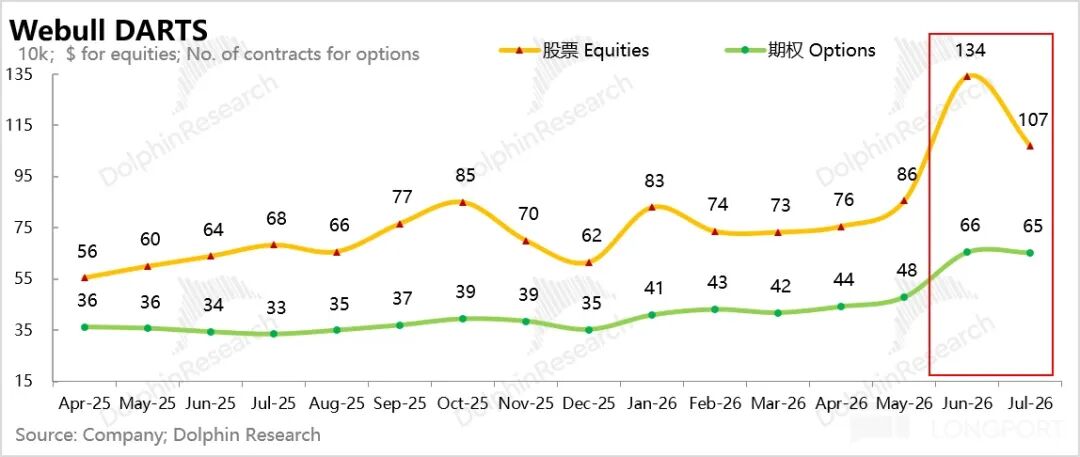
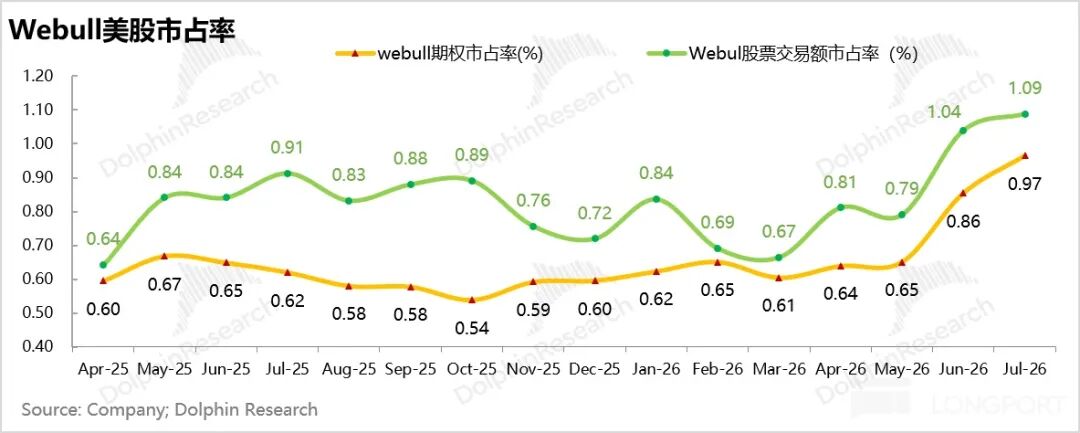
Below, the first chart shows Webull's average daily trades in equities and options: a marked uptick in June and July. Of course, June saw a strong market, but the performance remained robust in July, even as the market fell. The options product, with higher per-trade revenue, secured market share faster than stocks (see second chart).
II. Can Webull Sustain This Alpha?
Since its IPO, Webull has closely tracked overall market trends and didn't show much alpha. Suddenly, it's gaining market share in U.S. equities and options trading. What has changed?
Based on the company's earnings call and the months when its market share rose, it basically aligns with when the PDT rule restrictions were relaxed. Let's elaborate here:
A: What is the PDT rule? What changed?
PDT = Pattern Day Trader
1) What was the old rule?
1. In a margin account, making 4 or more intraday round trips in five consecutive trading days gets you marked as a PDT.
2. Once marked, the account must always maintain at least $25,000 in equity; if it falls below, you can only make three intraday trades every five days, and violations lead to a 90-day freeze.
3. Many users, to bypass these restrictions, would open accounts with multiple brokers to boost their allowable weekly intraday trades.
2) Timeline for the reform?
1. In September 2025, the FINRA board passed a comprehensive replacement plan and submitted it to the SEC on December 29.
2. On January 14, 2026, it was published in the Federal Register for public comment.
3. The comment period ended on February 4, 2026, with over 100 letters received; all but one supported the change—including Schwab, Robinhood, E*TRADE, and SIFMA.
4. On April 14, 2026, the SEC granted accelerated approval. On April 20, FINRA issued regulatory notice 26-10, confirming it would be effective June 4.
6. Brokers with system upgrades have 18 months to phase in implementation (until October 20, 2027).
3) What is the new rule?
A primary motivator for reform is that 0DTE (Zero Days To Expiration) options and other modern intraday trading forms did not exist when rules were made in 2001. The core of the new framework is to shift from "counting trades" to "monitoring real-time risk":
a) The PDT tag is fully abolished, intraday trade counts no longer matter, the $25,000 threshold disappears.
b) Qualified margin accounts need to maintain only $2,000+ in equity (the legal margin account minimum);
c) Each broker sets intraday buying power based on current positions and required margin maintenance. Brokers can choose:
- Real-time monitoring of margin deficits (blocking trades that would create/worsen intraday deficits); or
- Only one end-of-day check.
This new rule benefits active traders, especially small accounts and those using 0DTE options. These products inherently consume intraday trade counts. For a platform like Webull, where per-customer AUM is less than $5,000, it's a highly targeted positive policy shift.
The company welcomed the policy boon and publicly pledged around April 15 that it would adapt to the new rule as soon as SEC approval came through.
The surge in options and stock trading directly coincided with the new rule's June implementation; in July, despite market weakness, the number of options contracts didn't drop noticeably.
B: Will Webull maintain its ability to seize U.S. trading market share?
The new PDT rule gives the company a structural boost:
First, users formerly blocked by the old PDT rule are now free to trade (over 1 million active funded accounts were frozen in the last 6 years), and there have been efforts to bring them back.
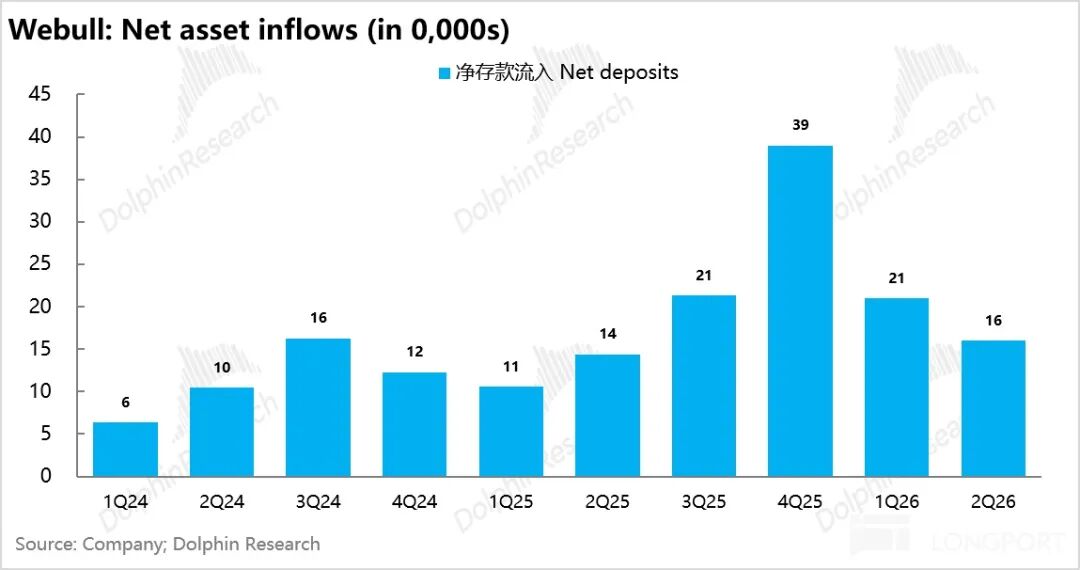
Second, as users consolidate accounts from different brokers, more of them choose Webull to trade. However, since these users typically transfer cash rather than positions, it is difficult to track exactly how much has moved—only new deposit amounts can be observed.
The company expects PDT reform could structurally boost trading volume by 20%, but now believes this figure was conservative. Furthermore, in terms of trends, July's options trading volume nearly matched June's market frenzy, and August is performing on par with June, better than July. Therefore, trading volume is unlikely to return to levels seen under the old PDT rule.
In other words, this is a structural improvement. Dolphin agrees with this point. However, an important question is whether, after this structural lift,Webull will enter a phase of rising market share, or return to a flat market share period.
Currently, Dolphin believes that there isn't evidence of sustained user or asset inflow. Unlike Robinhood, Webull's key numbers in user acquisition and fund inflow are relatively flat.
In Q2, the number of users with assets increased by only 20,000, and net asset inflow was $1.6 billion, not a record high, despite a hot market.
Whether PDT-driven traffic can become a breakout event and bring new users remains to be seen. So far, it is not obvious.
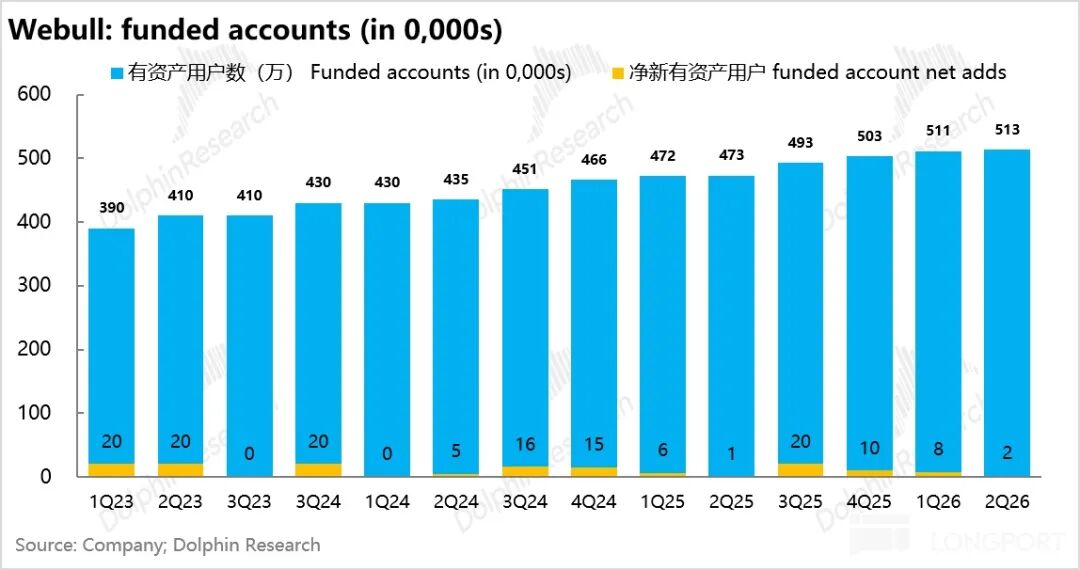
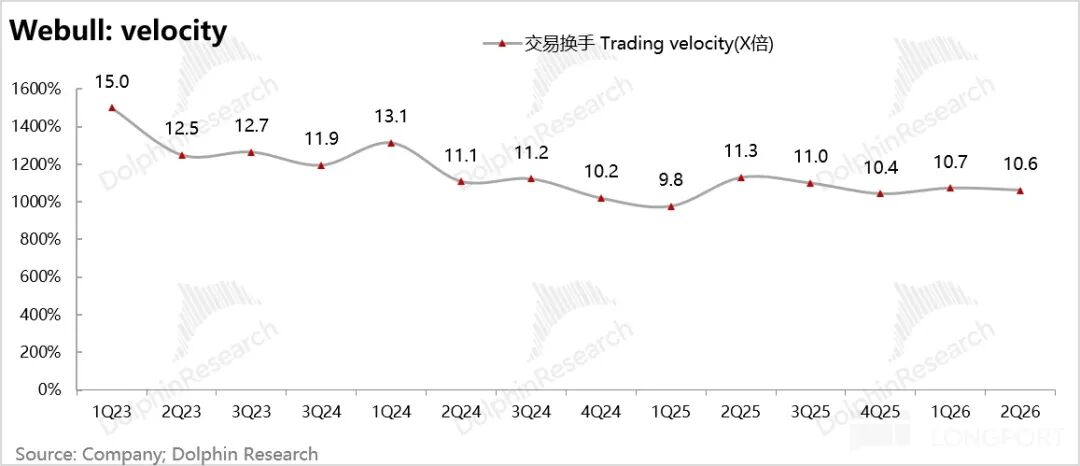
Even trading activity in Q2 hasn't increased significantly, the turnover rate remains at 10.6x.
III. Launching a True Cash Cow Model?
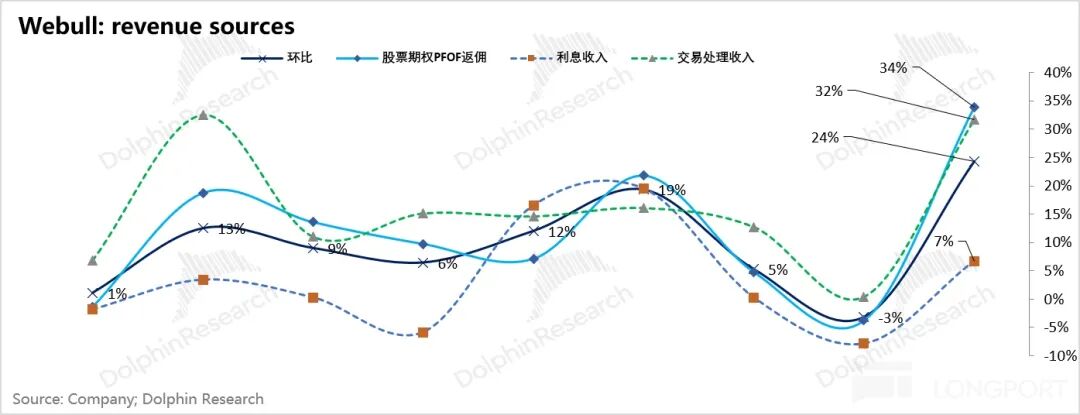
Previously, Webull's unstable or even declining market share made it difficult for revenue to pick up, and the company hovered around break-even. This quarter, due to increased trading activity, it finally shows some profitability at scale.
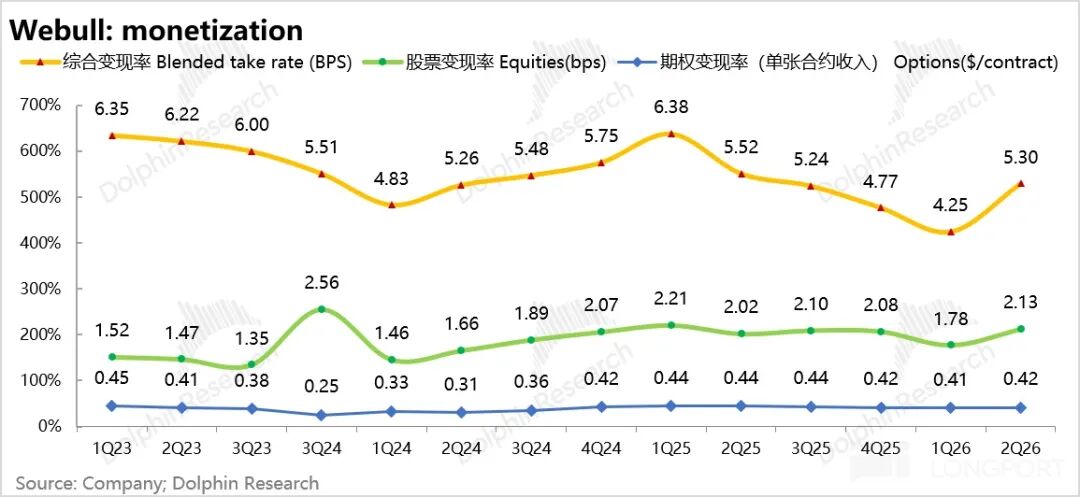
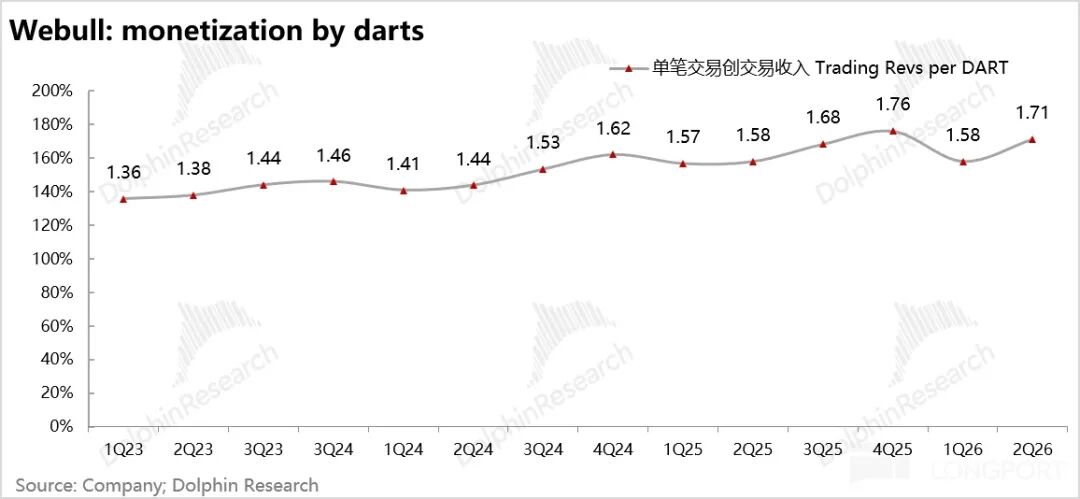
Incremental details from the financial report: the monetization rate edged higher, especially in stocks, where it rose from 0.0178% of each dollar traded to 0.0213%. DART revenue per trade reached $1.71—the second-highest since IPO.
In addition, the lifting of the PDT rule pushed the company's margin balance from $800 million in May to $1 billion; but margin income barely increased, up just $1 million quarter-over-quarter, meaning much of the increased margin balance may be interest-free margin used in intraday trading under the new PDT rule.
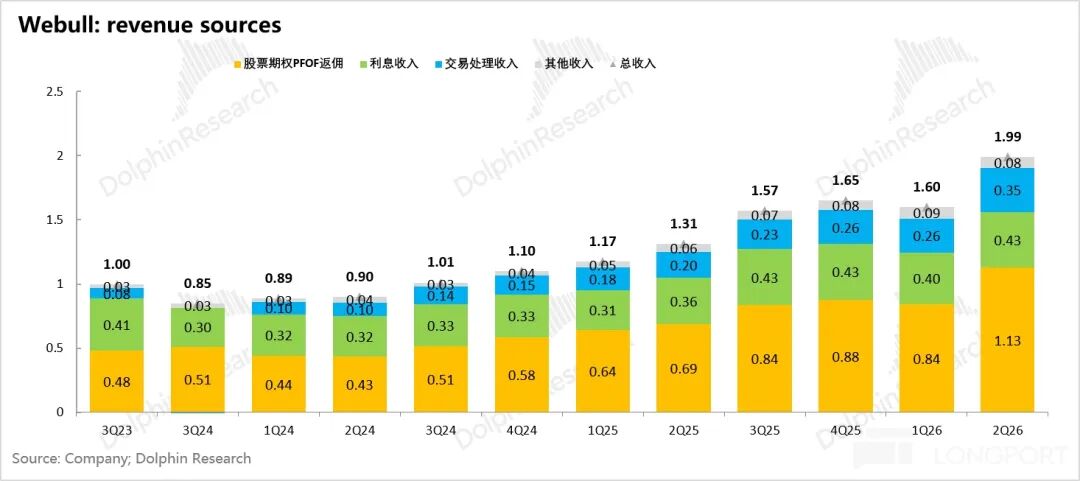
Total revenue in Q2 was $199 million, a quarter-on-quarter increase of 24%.
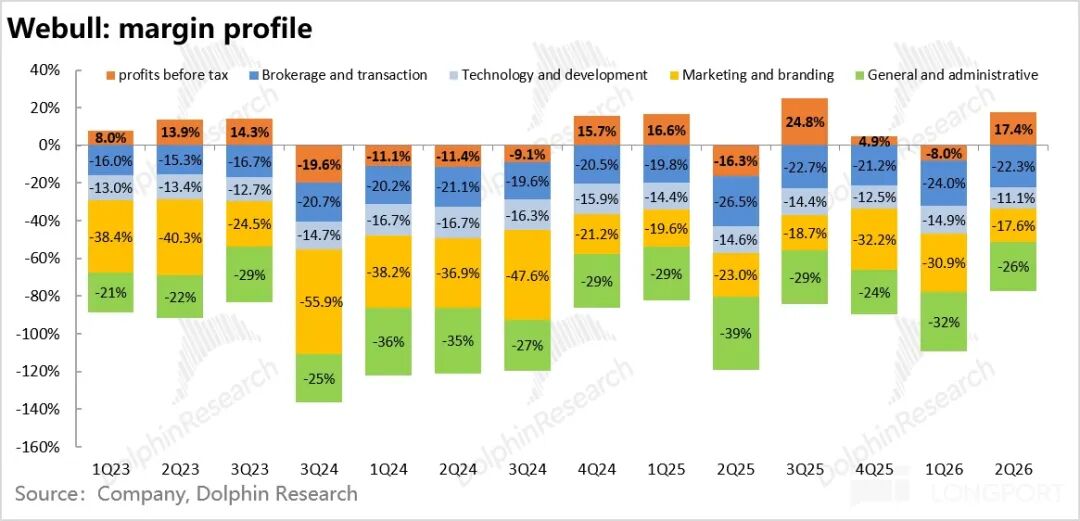
But costs shrank by 5.5% quarter-on-quarter, mainly due to a 29% drop in marketing expenses. The company explained that last year, more user incentives for account transfers were offered, which are amortized and had a bigger impact on last quarter than this quarter.
Going forward, this type of marketing amortization will become less relevant, and current marketing expenses will more directly reflect actual current spending rather than prior period amortization, making the cost base more controllable.
However, within the three main expenses, administrative costs remain notably high, likely due to upfront investments in international market expansion.
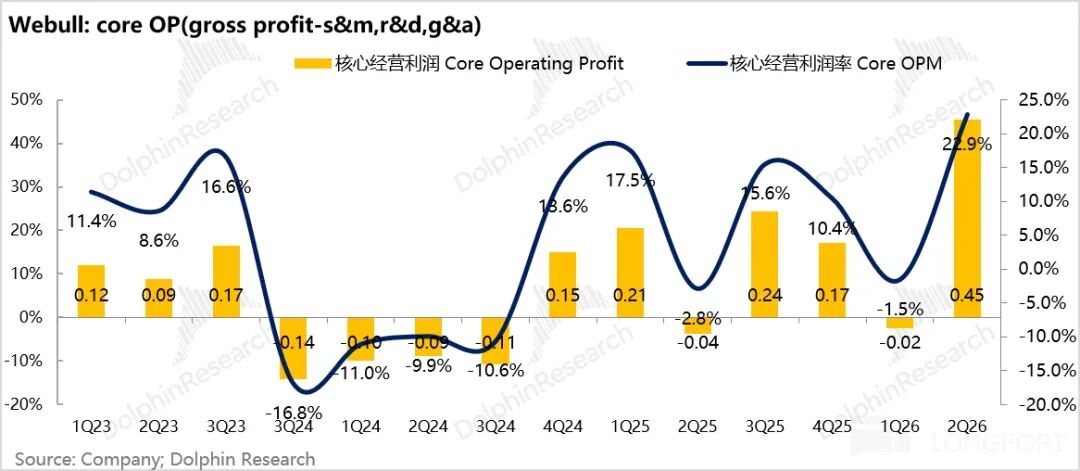
As a result, in Q2, the company's core operating profit (revenue minus cost minus three main expenses, excluding other net gains/losses) was $45 million, with a margin of 22%.
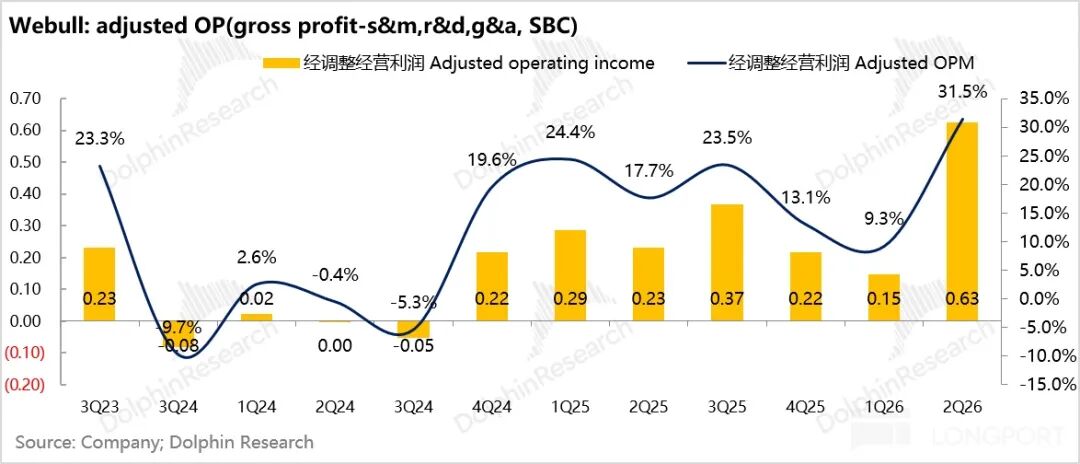
Excluding non-cash, options-related compensation expense, adjusted operating profit reached $63 million, a margin of 31.5%.
- END -

This article takes effort, hit“Share”to energize me~
Disclaimer: The content of this article solely reflects the author's opinion and does not represent the platform in any capacity. This article is not intended to serve as a reference for making investment decisions.
You may also like
The Dollar Index takes its floor from a Fed non-voter
Moderna Is Up 350% Since Our Recommendation. Here's What to Do Next. -- Barrons.com
From Buying Yen to Increasing U.S. Treasury Repo, Yellen Becomes the Most Active U.S. Treasury Secretary in Market Intervention in Decades
In the past month, Besant has led the first yen-buying operation in the United States in thirty years, hinted at cutting the size of long-term bond issuance, and announced plans to "at least double" repurchases of 10-year to 30-year U.S. Treasury bonds. This series of measures has made it difficult for the market to ignore the underlying policy intentions. Analysts noted that Besant is arguably the most proactive Treasury Secretary in terms of intervention since the early 2000s, with a clear objective to curb rising yields.
Tokenized stock market reaches $3B across 3,374 assets
Crypto prices
More


