
Weekly Outlook: With the Federal Reserve Minutes and PMI Approaching, Can There Be a Breakthrough in the Strait of Hormuz Situation?

This week, risk appetite in global financial markets rebounded overall.
In the stock markets, both the S&P 500 and the Nasdaq indices hit new cycle highs this week. The main trading theme appears to have shifted back from a defensive, risk-averse stance to anticipating rate cuts and realizing AI-driven profits, with tech stocks and chipmakers leading gains again. South Korea's KOSPI also rallied strongly, rising by a cumulative 11.5% and ending a seven-week losing streak, officially returning to bull market territory.
In the forex market, the US Dollar Index was virtually flat overall for the week. Improved inflation data led the market to trim Fed rate hike expectations, pressuring the dollar at times. However, safe-haven demand due to Middle East tensions limited its decline. On Friday, US retail sales surprisingly contracted month-on-month, accelerating the dollar's drop.
Major non-dollar currency moves diverged. The euro fell on choppy trading as markets focused on the ECB’s future policy options. The yen showed weakness, with the USD/JPY pair rising back above 159, as risks of Japanese official intervention and Bank of Japan rate path remained in focus. The Australian dollar benefited from improved risk appetite but was still affected by commodity price swings.
For precious metals, spot gold once climbed near its two-month high midweek, reaching an intraday peak close to $4,450/oz before profit-taking brought it back near $4,320. It rebounded on Friday, eking out a second consecutive weekly gain.
Crude oil prices rose first, then fell. Early in the week, escalating US-Iran tensions and Hormuz Strait transit risks sent both Brent and WTI sharply higher. Later, a large US crude stock build and the International Energy Agency's demand downgrade drove prices back down as the market returned to trading the themes of ample supply and slowing demand.
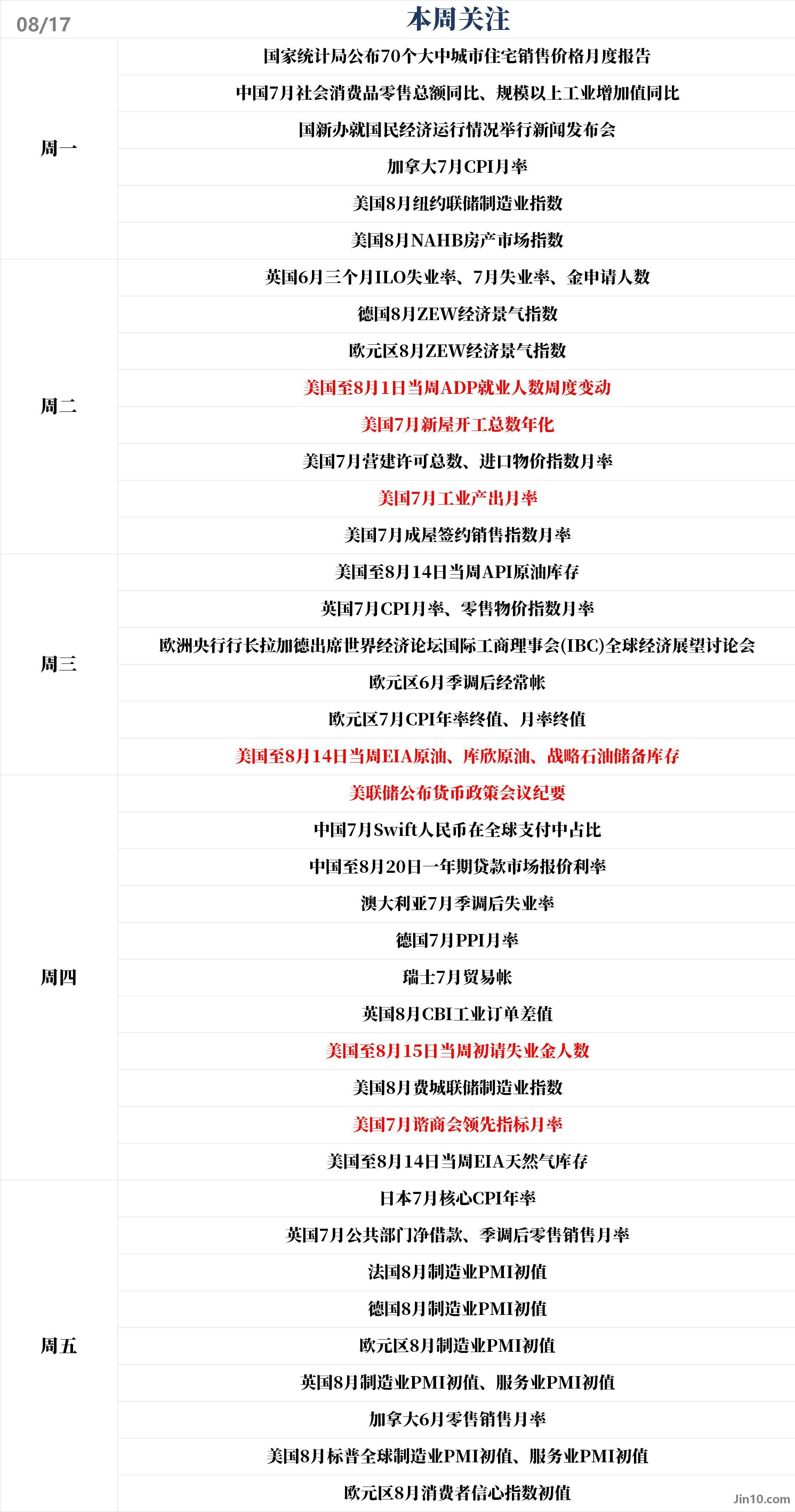
Below are the key focal points for markets in the coming week (all times UTC+8):
Key Event: Possible Iran-Oman Hormuz Deal, with US as a Major Variable
The most closely watched geopolitical variable in global markets next week remains whether the Strait of Hormuz can progress from "arranging routes" to a real resumption of commercial shipping.
This weekend, the market faces not a pending formal US-Iran interim agreement, but three interconnected, yet unresolved, threads: Can Iran and Oman finalize new shipping routes, can the US and Iran narrow their differences on ceasefire terms and maritime restrictions, and will there be substantive improvements in security conditions and traffic volume within the Strait.
According to foreign media reports, Iran and Oman appear to be gradually reaching an agreement on the management of the Strait of Hormuz, with both sides already agreeing on shipping routes through this vital waterway.
Iran’s foreign ministry spokesman Baghaei stated that finalizing a "shipping map" is part of a broader deal on managing Hormuz Strait shipping, and an independent arrangement between Iran and Oman. This deal would safeguard the sovereignty of both countries and ensure ships can transit safely. Iran’s state news agency did not clarify whether vessels would pay tolls or what security measures would be adopted, only noting more negotiations are planned.
These developments come as attacks in the Strait of Hormuz have increased recently. The US is not involved in talks and is unlikely to accept any deal that doesn't fully restore free transit through the waterway.
Iran frames the negotiations as a bilateral matter with Oman, but the US remains the key to fully restoring traffic through the Strait. Whether Washington will lift its maritime blockade of Iranian ports, accept new shipping management mechanisms, and if Iran will allow ships not under its direct control free passage—all will determine if a deal can move from paper to practice.
The latest weekend statements show the US and Iran remain firm in their positions. Iranian Foreign Minister Aragchi said Tehran has not yet decided to resume talks with the US, and that the US must meet Iran's demands for shipping to restart. Iranian officials also demanded the US admit failure. Trump claimed paying more for gasoline is worth it to prevent Iran from obtaining nuclear weapons and declared he would pronounce the Strait US territory after defeating Iran—highlighting that diplomatic breakthroughs are not visible for now.
Actual shipping conditions remain grim. According to vessel tracking firm Kpler, only two ships passed through the Strait last Friday, with no oil tankers detected, compared to over 130 ships per day before the conflict. The UAE also accused Iran of again attacking an Abu Dhabi National Oil Company vessel. There is still significant distance between policy progress and real restoration of safe, unimpeded transit through the strait.
Therefore, next week’s focus should be on four signals: Whether Iran and Oman issue a formal joint statement detailing tolls, passage permits, and security; whether the US offers reciprocal conditions for lifting the blockade, or ramps up sanctions as previously indicated; whether the IRGC and US military adjust maritime enforcement and blockades; whether the number of oil tankers, insurance rates, and traffic volumes see sustained improvement over several days.
The true market focus is not a written declaration, but whether tankers can safely and steadily transit the Strait. If a joint declaration materializes, the US signals blockade relief, and shipping steadily recovers, the geopolitics premium in crude may fall, and global risk appetite could stage a temporary rebound.
Conversely, if a declaration is delayed, the two sides can’t compromise over tolls and vessel controls, or the US steps up sanctions or more tankers are hit, oil prices could spike again, and defensive assets like gold may find support. Treasuries, however, may not rally in tandem, as higher energy costs would likely boost inflation expectations.
Central Bank Updates: Rising Odds Fed Holds Rates in September, Next Week’s Minutes in Spotlight
Federal Reserve:
Thursday 02:00 (UTC+8): Federal Reserve releases FOMC meeting minutes.
At 2 a.m. (UTC+8) Thursday, the Fed will publish the July FOMC minutes. In the July meeting, the FOMC voted 9-3 to keep the federal funds rate at 3.5%-3.75%; Cleveland Fed President Mester, Minneapolis Fed President Kashkari, and Dallas Fed President Logan advocated an immediate 25 bps rate hike.
This clear split contrasts with current market pricing. According to LSEG data as of Friday, money markets are pricing only a 27% probability of a 25 bps rate hike in September, not fully pricing in a hike until early 2027. Thus, the market will be looking for two answers: aside from the three dissenters, do more members think July was rate-hike ready; and for those supporting a pause, what further evidence would prompt them to back a hike.
However, these minutes are inherently “backward-looking.” After July’s meeting, US economic data deteriorated: July nonfarm payrolls unexpectedly shrank, CPI growth slowed to 3.4% YoY from 3.5%, PPI was flat MoM, and retail sales fell -0.6%. These collectively weakened the case for a near-term September hike, making “wait and see” the current market consensus.
Yet, inflation risks are unresolved. Headline CPI remains well above the Fed’s 2% target, and energy prices or Middle East events could ignite inflation again. So, what matters most in the minutes is not whether policymakers acknowledge some cooling, but how they assess energy and tariff shocks: do they see these as purely temporary, or already filtering into services, wages, and inflation expectations. If officials increasingly fear second-round effects, the market’s current sub-30% September hike pricing may look too low.
Waller’s communication style amplifies the importance of these minutes. Since taking over in June, he has pushed the Fed to drop forward guidance, shorten statements, and provide fewer policy path signals. Lower policy visibility now compels investors to rely more on inflation, jobs, and corporate earnings as benchmarks.
Still, earnings only inform on equity fundamentals—they cannot substitute for direct Fed statements regarding the policy reaction function. After the minutes come out, the Jackson Hole Economic Policy Symposium, August 27–29, will be the next major window for Waller to articulate Fed thinking on inflation, growth, and communications strategy.
Therefore, traders should combine these Fed minutes with Friday’s flash S&P Global manufacturing and services PMIs. If the minutes show support for hikes limited to the three dissenters and PMIs weaken further, the case for a September hold will solidify; if more officials are near supporting a hike—even with soft data—Treasury yields and the dollar may resume climbing.
Other Central Banks:
Wednesday 15:10 (UTC+8): ECB President Lagarde attends the WEF International Business Council’s “Global Economic Outlook” panel;
Thursday: Sweden’s Riksbank announces rate decision.
On Wednesday, ECB President Lagarde speaks on the global outlook at the WEF International Business Council and the ECB releases its latest consumer expectations survey; both may impact market pricing of the ECB’s H2 policy path.
On Thursday, Sweden’s central bank delivers its rate decision. At its June meeting, the Riksbank held rates at 1.75% but warned Middle East conflicts and rising energy prices heightened upside inflation risks, leaving further hikes possible in 2024. JPMorgan analyst Allan Monks expects a clearer acknowledgment of a hiking bias this time, especially as rates have reached the bottom of the “neither restrictive nor stimulative” range, with policymakers likely keeping the door open for H2 hikes. Australia also reports July unemployment, with market consensus that the RBA has ended its tightening cycle.
Key Data: PMIs in the Spotlight
Monday 20:30 (UTC+8): Canada July CPI MoM, US August NY Fed Manufacturing Index;
Monday 22:00 (UTC+8): US August NAHB Housing Market Index;
Tuesday 14:00 (UTC+8): UK June three-month ILO unemployment, UK July unemployment, UK July claimant count change;
Tuesday 17:00 (UTC+8): Germany August ZEW Economic Sentiment, Eurozone August ZEW Economic Sentiment;
Tuesday 20:15 (UTC+8): US August 1 week ending ADP employment change;
Tuesday 20:30 (UTC+8): US July housing starts, building permits, import price index MoM;
Tuesday 21:15 (UTC+8): US July industrial production MoM;
Tuesday 22:00 (UTC+8): US July pending home sales MoM;
Wednesday 14:00 (UTC+8): UK July CPI MoM, UK July retail price index MoM;
Wednesday 16:00 (UTC+8): Eurozone June adjusted current account;
Wednesday 17:00 (UTC+8): Eurozone July final CPI YoY, MoM;
Thursday 09:30 (UTC+8): Australia July seasonally adjusted unemployment;
Thursday 14:00 (UTC+8): Germany July PPI MoM, Switzerland July trade balance;
Thursday 18:00 (UTC+8): UK August CBI industrial orders balance;
Thursday 20:30 (UTC+8): US August 15 week ending initial jobless claims, Philadelphia Fed Manufacturing Index;
Thursday 22:00 (UTC+8): US July Conference Board Leading Index MoM;
Friday 07:30 (UTC+8): Japan July core CPI YoY;
Friday 14:00 (UTC+8): UK July public sector net borrowing, UK July retail sales MoM;
Friday 15:15 (UTC+8): France August manufacturing PMI (flash);
Friday 15:30 (UTC+8): Germany August manufacturing PMI (flash);
Friday 16:00 (UTC+8): Eurozone August manufacturing PMI (flash);
Friday 16:30 (UTC+8): UK August manufacturing PMI (flash), services PMI (flash);
Friday 20:30 (UTC+8): Canada June retail sales MoM;
Friday 21:45 (UTC+8): US August S&P Global manufacturing PMI (flash), services PMI (flash);
Friday 22:00 (UTC+8): Eurozone August consumer confidence (flash).
Among US data, the S&P Global August composite PMI flash on Friday is the most closely watched—offering an initial look at private sector business activity for the month. If US manufacturing, housing, and business activity all soften together, and this combines with a dovish FOMC minutes, the case for the Fed to remain on hold will be further cemented.
UK jobs and inflation data will also be key to gauging the Bank of England’s H2 policy path. The UK’s June three-month ILO unemployment, July unemployment and claimants count on Tuesday, and July CPI and RPI on Wednesday will jointly provide a core assessment of inflation stickiness in the UK.
LSEG data show that the market has now fully priced in no BoE rate hikes this year, and anticipates a second hike by June 2027. RBC Capital Markets strategists highlight wage growth as the key labor market gauge for tracking second-round Gulf conflict effects on inflation. TD Securities expects UK July CPI data to show a gentle uptick, mainly due to UK regulator Ofgem raising the price cap.
Canada reports July CPI MoM next Monday. RBC Economics economist Abbey Xu noted that June’s headline inflation slowed from 3.2% in May to 2.8%, with inflation ex-gasoline staying at 2.2%. She thinks June’s data matches the Bank of Canada’s latest assessment that underlying inflation remains near target; while global unpredictables mean headline inflation is highly sensitive, broader price pressures are in check and growth is stabilizing, thus supporting keeping rates unmoved through the rest of 2026.
In commentary this week, Kitco analysts Gary Wagner and Joseph Wagner noted that gold continues to see buying near the $4,400 level, despite World Gold Council data showing total US demand in Q2 collapsed to 8 tons, well below the 10-year quarterly average of 90 tons, with weak H1 demand overall. However, CME's FedWatch tool shows markets pricing just 32.5% odds of a September rate hike—the lowest since this tightening cycle began.
The repricing of expectations, alongside a weaker dollar and ongoing geopolitical uncertainty, has pushed gold up by about 10% so far in August, briefly hitting a two-month high above $4,449 before consolidating. The charts show “consolidation, not capitulation,” and the fundamental backdrop is tilting in gold’s favor: Weak US Q2 gold demand contrasts with global central bank buying and an ETF inflow recovery.
Friday’s flash S&P Global manufacturing and services PMIs, combined with Thursday's Philadelphia Fed manufacturing index, initial jobless claims, Conference Board leading index, and Monday's NY Fed manufacturing survey, will together outline the early Q3 growth and inflation picture for the US. Manufacturing surveys and jobs data provide a read on private sector activity and sentiment, while persistently high long bond yields imply that even if the Fed stays on hold short term, tight financial conditions have not fully dissipated.
Corporate Earnings: Retail Giants to Set the Tone for US Consumer Resilience
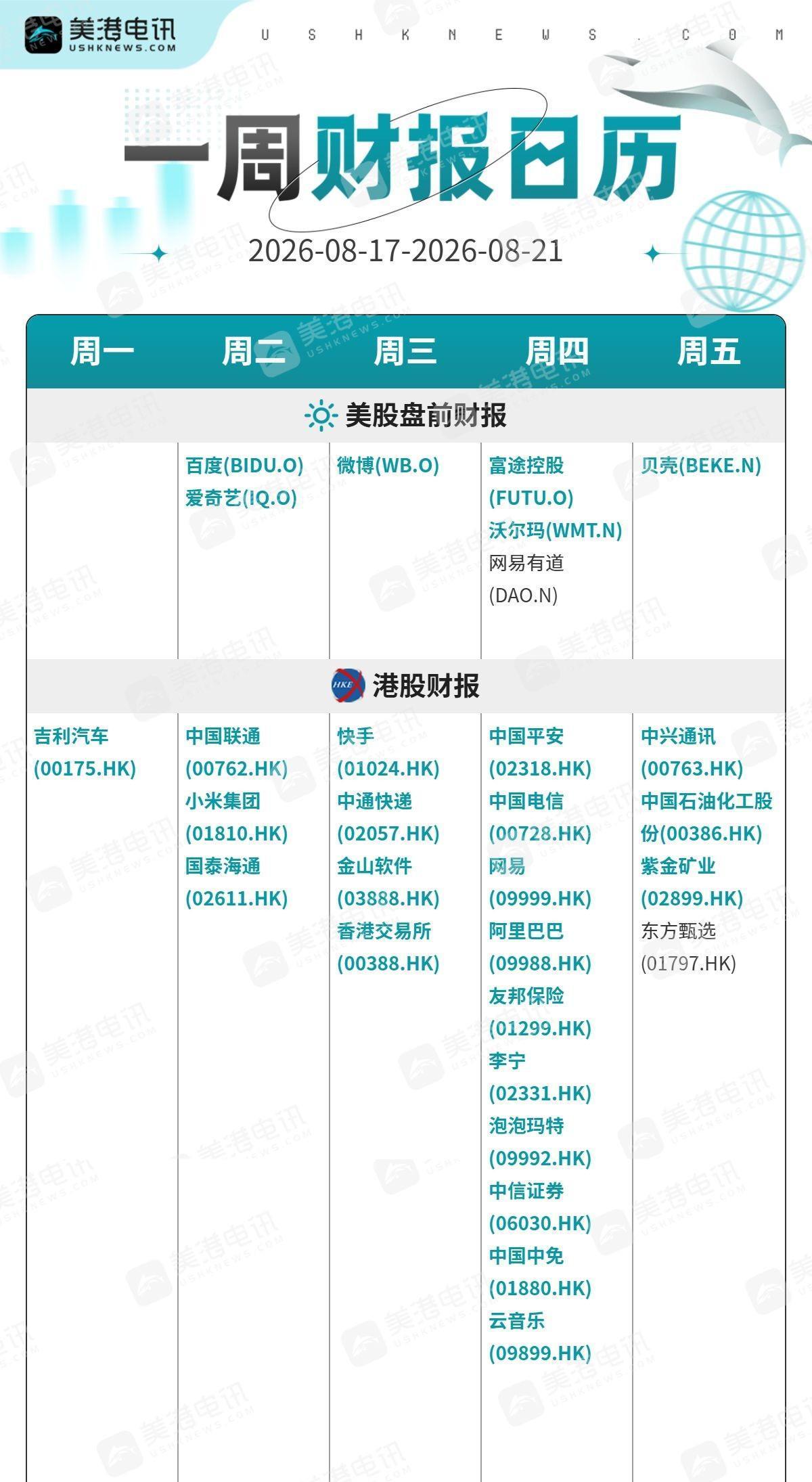
Next week, US earnings season’s focus shifts to retail, with Target (TGT) reporting results pre-market Wednesday, followed by Walmart (WMT) pre-market Thursday. According to Investor's Business Daily’s FactSet analyst roundup, Target’s July quarter EPS is seen up 13% YoY, with revenue up ~4%; comps are expected up 2.2% after -1.9% last year. Target shares, buoyed by transformation narratives, have run up this year, and the market has high hopes for delivery.
For Walmart, FactSet sees EPS up nearly 9% with 5% sales growth, but comp sales growth slowing to 3.8%, reflecting a tightening consumer environment and tough compares from last year;
Analysts will focus on e-commerce, digital ads, and grocery sales stability. Walmart shares have retreated since the last report—can the company reignite growth? Management outlooks at both companies, especially on consumer demand heading into back-to-school season, will be a key gauge of US consumer resilience—retail bellwethers often offer the earliest real sign of macro strength or weakness, even before aggregate data, especially with labor markets softening and tariff passes not fully evident.
Beyond the retail giants, next week’s earnings highlights include Viking Holdings, Toll Brothers, and Analog Devices. Investor's Business Daily notes that AI chip stocks like Nvidia have recently broken out past early entries, making AI infrastructure demand a core theme this earnings cycle. However, Cisco dropped over 8.4% in a day this week after guidance disappointed, highlighting that growth stock valuations still require real earnings follow-through. Other key reports include Home Depot (HD.N) and Ross Stores (ROST.O), whose results, alongside Walmart and Target, round out the peak of retail earnings season;
Overall, next week’s earnings led by the retail giants will set the tone for US consumption resilience; breakout moves in AI semis and industrials will underpin risk appetite. With the Fed’s September path still unclear and tariffs gradually passing through, the market will be more sensitive to corporate guidance than pure quarterly numbers. The upcoming reports from Home Depot and Ross Stores will further test post-cycle housing and discount retail demand in a high-rate environment.
Holiday Reminder:
Next Monday (August 17), the Korea Exchange in Seoul will be closed for Liberation Day compensation holiday.
Disclaimer: The content of this article solely reflects the author's opinion and does not represent the platform in any capacity. This article is not intended to serve as a reference for making investment decisions.
You may also like
‘Bitcoin doesn’t need MSCI’ – Strategy fires back as MSTR deletion odds hit 73%
Five factors are combining to intensify, JPMorgan: Global food crisis may erupt next year
JPMorgan has warned that driven by the combined effects of war, weather, storage, water resources, and waste, a global food crisis may erupt in the first half of 2027. The global food inflation rate is expected to rise from 2.8% in the first half of 2026 to 5% in the first half of 2027. The overlap of a super El Niño and energy shocks will push the Food CPI up by an additional 1.5 percentage points, with emerging markets such as India, Indonesia, and Brazil being the most affected.
The Altcoin Volcano Is Erupting: 4 Coins Traders Are Watching for the Next Parabolic Move

Tron Inc. boosts TRX holdings above 709.9 million, price eyes $0.36 resistance
Crypto prices
More


