
Kuwait power plant attacked, Iraqi gas field shut down: US-Iran conflict crosses “civilian red line,” crude oil surges nearly 16% in a week

Energy infrastructure and civilian facilities have successively become targets, marking a new and dangerous phase in the US-Iran conflict.
Kuwait reported on Friday that Iran had expanded its attacks to include Kuwait's power and desalination plants. Iraqi officials stated on Thursday that the largest gas field in the Kurdish region in the north has been shut down due to credible threats, while US airstrikes have extended as far as Chabahar Port, over 350 miles from the Strait of Hormuz. Neither side has shown any intention of de-escalation.
Shipping volume through the Strait of Hormuz has dropped to a three-week low, and international crude oil futures saw double-digit surges this week. By Friday's close, Brent and WTI front-month contracts were up about 15.9% and 15.5% respectively for the week, both hitting their highest in a month for the fourth consecutive day.
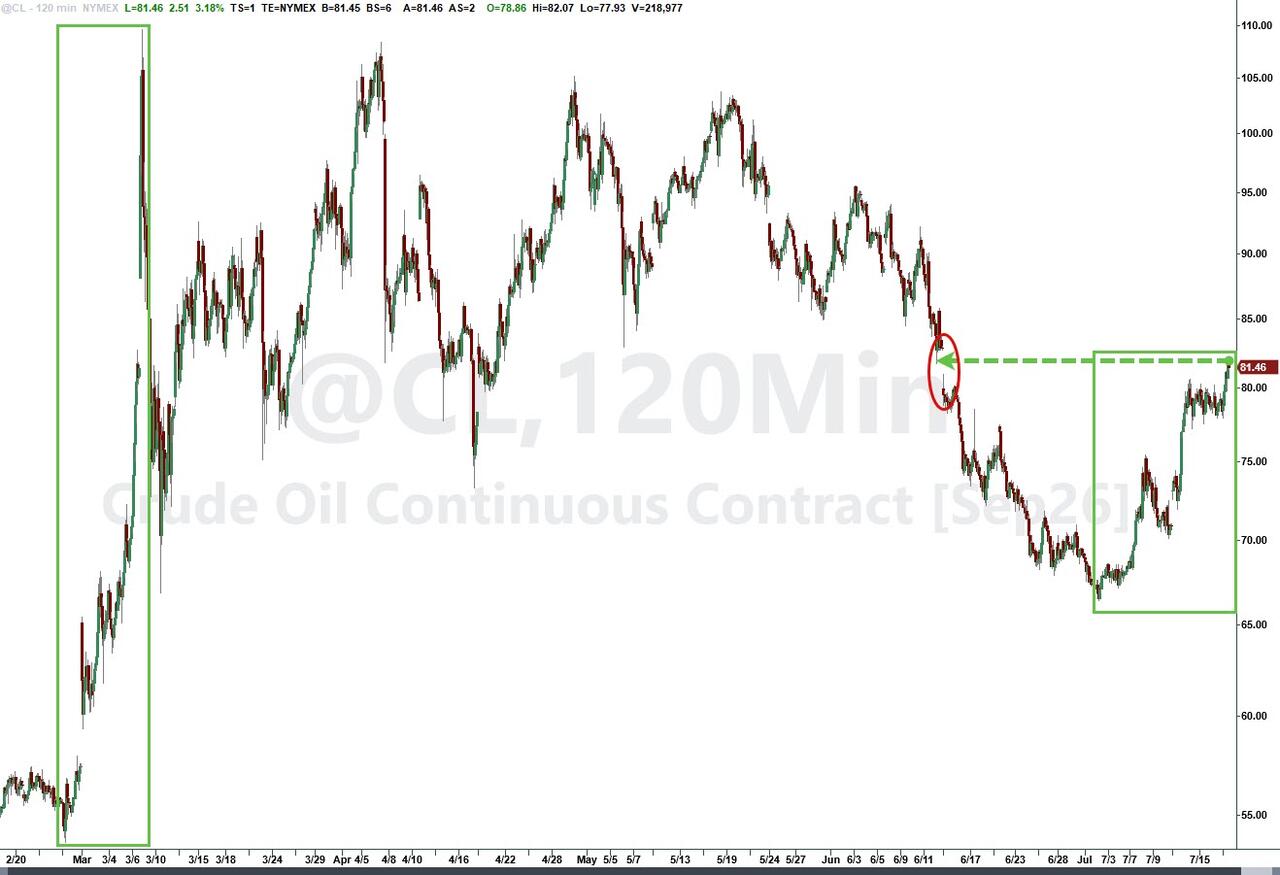
The oil price performance shows that the market is accelerating the pricing in of escalation risks—the current escalation is no longer limited to bilateral military confrontation, but has begun impacting the livelihood and energy lifelines of neighboring countries. Saeid Golkar, an Iran security expert at the University of Tennessee at Chattanooga, warns that the situation is “rapidly spiraling out of control. Even if neither side wants an all-out war, we still face the risk of returning to full-scale warfare.”
Civilian Infrastructure Targeted for the First Time
Media commentaries point out the most significant shift in this escalation is that the conflict has crossed the previously respected "civilian red line."
The Kuwaiti government announced Friday that an Iranian drone attack damaged a power and desalination plant. With high summer temperatures, the attack forced Kuwait to initiate emergency protocols, carrying strong provocation. Kuwait’s military stated that since early Thursday morning, they have intercepted drones on 32 occasions.
Meanwhile, according to Iraqi officials, a drone attacked an oil tanker and a container ship in the nation's southern port on Thursday, as well as the Kurdish northern region. The region’s largest gas field was subsequently closed due to “credible threats of attack”. The Kurdish authorities added that more drones were intercepted over Erbil, the regional capital, on Friday. No party has claimed responsibility for the attacks in Iraq, but Iran and its local allies have previously carried out frequent drone strikes in the area.
Iran has also begun targeting Qatar and Oman—two nations heavily involved in diplomatic mediation—and has intensified attacks on passing vessels.
US Military Extends Strikes Deeper Inland, Chabahar Port Hit
The US military likewise broke previous boundaries, expanding targets from the Strait to deep inland Iran.
US Secretary of Defense Hegseth publicly released a photo of a maritime communications tower in Chabahar Port that had collapsed. Located over 350 miles east of the Strait of Hormuz near Pakistan’s border, this is Iran's only deep-water ocean port. Iranian authorities confirmed the facility was struck, stating it is solely for civilian use, including maritime search and rescue for fishing vessels. Former Royal Navy officer Chris Long, who served in the Persian Gulf, argued the tower may also be used for observation and intelligence gathering.
On the opposite end of the Strait at Bandar Abbas, the US has conducted nighttime strikes on several bridges in succession, aiming to cut off supply routes to this strategic port and naval base. Iranian state broadcaster IRIB reported that several bridges in and around Bandar Abbas had been hit, and highways linking the port city to neighboring provinces were declared closed.
According to The Wall Street Journal citing US officials, Iran has used port facilities here to launch attacks against vessels. Under normal conditions, Bandar Abbas handles 90% of Iran's container shipping.
Reportedly, US airstrikes have been ongoing for six consecutive days, the largest escalation since the initial agreement in June. In addition to bridges, targets include weapons and surveillance systems used by Iran to attack commercial vessels, such as fast assault craft, coastal radar stations, air defense systems, and missile and drone storage.
Navigational Disruption in the Strait, Oil Price Risk Premiums Repriced
The deepening military confrontation has directly impacted global energy markets.
According to ship tracking firm Kpler, shipping volumes through the Strait have fallen to a three-week low, with half of all transiting vessels now Iranian, most navigating via the Iranian coast. The UK's Maritime Trade Operations (UKMTO), affiliated with the Royal Navy, reported another vessel near the Strait being hit by an unidentified projectile on Friday.
International oil prices have surged over 10% this week. Trump had previously voiced concern over the economic impact of rising oil prices on the global economy.
This round of conflict originated from a memorandum of understanding signed a month ago between Trump and Iran—the agreement was intended to reopen passage through the Strait, but after Iran launched fresh attacks on US convoys guarding the Oman coast, it collapsed last week. Iran insists the agreement grants it the right to manage traffic through the strait, requiring ships to use the northern route along its coast.
Both Sides Motivated to Show Restraint, but Risk Spirals Higher
Despite the deteriorating situation, both sides have significant reasons to avoid full-scale war.
Iran faces immense post-war reconstruction pressures, and domestic discontent with the government is rising. The Trump administration is under political pressure from the surge in oil prices hitting the US economy.
US officials stated earlier this week that Trump leans toward expanding military action to break the diplomatic deadlock. According to flight tracking data and a source, US jets are being redeployed from Europe to the Middle East. Over 2,000 Marines from the 11th Marine Expeditionary Unit are also active in the region, with military-released photographs showing boarding actions on commercial vessels in the Gulf of Oman, reinforcing the blockade of Iranian ports.
In a prime-time speech Thursday night, Trump stated, "We have also achieved substantial victories in Iran. Soon, you’ll see the results of these efforts."
However, Saeid Golkar remains cautious. He points out that Tehran’s consistent strategy is to escalate in intensity to pressure its adversaries and to prolong conflict, wearing down the United States. As both sides maneuver for leverage but refuse to back down, an uncontrollable escalation spiral has become an unavoidable core risk for the market.
Disclaimer: The content of this article solely reflects the author's opinion and does not represent the platform in any capacity. This article is not intended to serve as a reference for making investment decisions.
You may also like
MSCI revisits index exclusion for Strategy and Metaplanet

Portal Price Prediction: PORTAL Holds Bullish Structure as Profit-Taking Risk Rises
The more you earn, the more you lose! Amid the AI computing frenzy, how big is the "debt bomb" lurking behind CoreWeave (CRWV.US)?
CoreWeave (CRWV.US) investors are rejoicing over the explosive growth in computing power demand, but they are overlooking potential "landmines" on the company’s balance sheet that could threaten its survival.

Bitcoin stock futures update: Fed rate hike odds drop to 25%
Crypto prices
More


