
A Research Report: Hundreds of Billions in Market Cap Evaporated—Unveiling the Most Mysterious Intelligence Agency of the AI Era, SemiAnalysis

A Research Report Wipes Out Tens of Billions in Market Cap: Inside the Most Mysterious Intelligence Agency of the AI Era—SemiAnalysis
On June 9, 2026, US AI optical communication stocks experienced a sudden collective sell-off.
Coherent $COHR plunged over 11%, Marvell $MRVL dropped nearly 9%, and companies such as Corning $GLW and Lumentum $LITE—key players in AI optical modules and devices—all saw their stock prices plummet. The entire industry chain lost tens of billions of dollars in market capitalization in a single day.
That day featured no Federal Reserve meeting, no major geopolitical event, and no new product release from Nvidia.
What truly triggered the volatility was a research report of less than 100 pages.
Even more surprising, the report didn't come from Goldman Sachs, Morgan Stanley, or Bernstein, but from an independent research firm with only a few dozen employees—SemiAnalysis.
This wasn’t the first time it changed the market narrative.
Just four days prior, another SemiAnalysis report on Nvidia’s next-generation Vera Rubin platform HBM configuration prompted the market to reassess future memory demand, causing Micron’s share price to plunge 13% in a single day.
In just a few days, two reports reshaped market pricing twice.
Now, in global AI investment circles, more and more people are believing this statement: those who can move the valuation of a multi-hundred-billion-dollar AI value chain are no longer just Nvidia—but those who know the industry’s reality before anyone else.
So, who exactly is SemiAnalysis?
Why Can They Get the Answers Before Wall Street?
Many investors first heard about SemiAnalysis because of DeepSeek.
In early 2025, DeepSeek's claim that it trained a world-class large model with just $6 million nearly upended the entire logic of AI investment.
The market quickly drew a conclusion: if AI training had become that cheap, global capex for GPUs, HBM, and data centers would decline in the future.
That very day, Nvidia’s market capitalization dropped by about $600 billion, setting a record for the largest single-day value wipeout in US stock market history.
While all the media debated the "$6 million miracle," SemiAnalysis broke down the numbers themselves.
They believed the $6 million figure only represented a small fraction of the direct GPU training cost, ignoring server procurement, network equipment, storage, electricity, data center construction, long-term operations, and total AI infrastructure investment.
Based on their revised model, the true capital invested behind DeepSeek far exceeded market speculation. Their GPU cluster was about 50,000 Hopper-series GPUs, including H100, H800, H20, and other models—far from the market’s myth of a "low-cost miracle."
The market later realized that what really needed correcting was not AI demand, but everyone’s cost perceptions.
Similar events kept happening.
At the end of 2024, they spent five months performing real-world server benchmarks on the AMD MI300X, not simply parroting the official PPT.
Their conclusion was not a crowd-pleaser.
They saw AMD hardware as competitive, but the CUDA ecosystem remained a deep moat on the software side, making it hard to truly challenge Nvidia’s lead in AI training in the near-term.
The day after the report's release, AMD CEO Lisa Su personally reached out to founder Dylan Patel. What was scheduled to last half an hour turned into a 90-minute conversation.
In 2026, SemiAnalysis again forecasted that the large-scale commercialization of 800V direct current power and CPO (Co-Packaged Optics) would be delayed until 2028-2029, much later than the market previously expected.
Their reasoning wasn't a simple “We think it’ll be delayed”—they broke down manufacturing yields in detail.
If an ASIC needs to integrate 32 optical engines and each individual engine’s yield is as high as 95%, the total system yield is still only around 19%.
This means there’s still a long engineering road ahead before true large-scale mass production.
The market believed them.
As a result, the entire optical communication sector repriced itself.
After several years of precisely calling industry trends, SemiAnalysis is no longer just an opinion provider—it actually influences market expectations to a certain degree.
It Doesn't Sell Research, It Sells Intelligence
Many people mistake SemiAnalysis for a tech media outlet.
In reality, this is completely wrong.
Its real business model is closer to a hybrid of Bloomberg, Gartner, and industry consulting firms.
The core products on its official website aren’t articles, but a whole set of institutional-level databases, forecasting models, and industry advisory services.
They sell a variety of predictive models—such as GPU supply-demand models, HBM forecasting models, foundry capacity models, AI data center models, Token Economics models, and the ChipBook database—to large hedge funds, mutual funds, semiconductor firms, cloud providers, and governmental agencies worldwide.
Many of their products aren’t even PDFs, but Excel databases that can be directly integrated into DCF models and earnings forecasting systems.
For a fund managing tens of billions, if they can learn TSMC CoWoS capacity changes, the Nvidia GPU shipment rhythm, or the HBM supply-demand gap three months ahead of time, it’s worth far more than tens of thousands in consulting fees.
Therefore, the $500 per year for individual subscriptions is just the outermost layer of their offerings.
The real money comes from institutional clients.
One annual contract with a large institutional client can easily equal hundreds or even thousands of personal subscribers.
In other words, what SemiAnalysis really sells isn’t news—it’s data no one else can access.
Its True Moat: A Global Intelligence Network
What truly awes Wall Street is not Dylan Patel's analytical ability, but his information-gathering capability.
While others are still reading public quarterly disclosures, they’ve already started analyzing satellite images.
SemiAnalysis tracks the construction of thousands of data centers around the globe, combining satellite imagery with computer vision models to automatically identify construction progress, building area, and pace of expansion.
When necessary, they even apply for drone flight permits to conduct aerial filming of data center construction sites.
They study public shipping manifests, government procurement files, FOIA requests, supply chain data, and various open databases, in an effort to piece together the truest operating state of the AI infrastructure value chain.
Meanwhile, Dylan Patel attends almost all important semiconductor conferences.
He’s constantly communicating with engineers, equipment suppliers, packaging houses, material vendors, and supply chain players, gradually building his own industry database from these fragmented pieces of information.
On Reddit, many insiders even call him the "Ming-Chi Kuo of the AI era."
The difference: he doesn’t just rely on supply chain rumors. He prefers engineering verification and data cross-referencing to validate each judgment.
To test AMD’s GPU, he was willing to spend five months benchmarking.
To study AI data centers, he was willing to build his own satellite recognition model.
In the AI era, more and more institutions believe: the information that truly matters rarely appears immediately in financial statements. It's hidden in the supply chain, job sites, logistics, and engineering details.
Why Has a Beekeeper Become One of the Most Influential People in Global AI?
Even more extraordinary, Dylan Patel is almost not a semiconductor analyst in the traditional sense.
Born in 1996, he studied management and law in college, without any electronics engineering background.
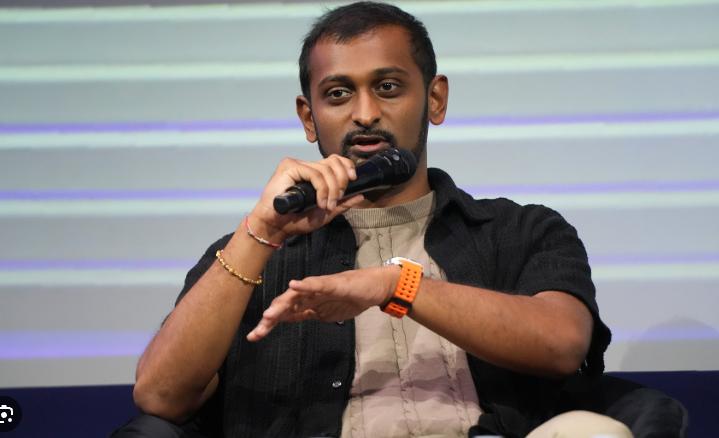
Before starting his venture, he even worked as a beekeeper.
What truly changed his fate was passion.
In his youth, he was highly active on Reddit’s hardware forums, publishing semiconductor analysis articles anonymously and running his own tech blog.
Later, at the suggestion of his friend Doug O'Laughlin, he began writing under his real name.
In 2020, at age 24, Dylan Patel officially founded SemiAnalysis.
No one could have expected that in only a few years, what started as a technical blog would become one of the most influential research institutions in the global AI value chain.
At the 2026 GTC conference, Jensen Huang mentioned only two industry figures by name during his over two-hour keynote speech.
One of them was Dylan Patel.
Huang even put the SemiAnalysis logo on the big screen and publicly stated that Dylan’s analysis of Nvidia’s inference performance was basically correct.
For an independent research organization, that’s about the highest industry recognition possible.
Controversy Has Followed
The greater the influence, the greater the controversy.
In late June 2026, Tema ETFs announced an exclusive partnership with SemiAnalysis, launching two new ETFs focused on the AI value chain.
The timing was sensitive.
Just weeks earlier, SemiAnalysis had published several reports adjusting AI value chain expectations, causing sharp sector volatility.
The market quickly raised questions.
If an organization publishes research, partners in ETFs, provides consulting, operates databases, and possibly invests, can it still maintain true independence?
Currently, US sell-side analysts must follow rules such as Regulation AC for conflict-of-interest disclosure. Short-sellers typically also publicly disclose their positions.
But for independent research institutions, there isn’t an equally strict disclosure requirement.
Thus, the real debate is not about the conduct of one firm, but the new regulatory challenges the entire independent research industry may face in the future.
As more research organizations run databases, consulting, ETFs, and investment businesses, the line between research and commerce is becoming more and more blurred.
In the AI Era, Data—Not Chips—Is Most Expensive
Looking back on SemiAnalysis's development, you'll see its true revolution is not in the semiconductor industry, but in how the capital markets produce information.
In past decades, Wall Street analysts mostly relied on public company earnings calls, reports, and executive exchanges.
Today, in the AI era, the most valuable information increasingly comes from the supply chain, job sites, logistics data, satellite images, and industry databases.
Whoever pieces these fragments together the fastest gains the greatest advantage in the market.
Essentially, SemiAnalysis has industrialized and systematized information gathering, then sells it to those most willing to pay for it.
Ordinary investors likely don't have these resources or a global intelligence network at their disposal.
But what’s truly worth learning from them is not any single bullish or bearish report, but industry research methodology itself.
Don’t worship any organization blindly.
No matter how accurate calls are in recent years, no one is right forever.
What truly creates excess long-term returns isn’t chasing the latest news, but building your own industry knowledge framework—understanding the logic behind technology trends, supply chain changes, and capex decisions.
Because every research report will become outdated, and every market favorite will eventually cool off.
Only cumulative knowledge compounds as true wealth.
Maybe this is also the biggest inspiration SemiAnalysis leaves for all investors.



Disclaimer: The content of this article solely reflects the author's opinion and does not represent the platform in any capacity. This article is not intended to serve as a reference for making investment decisions.
You may also like
Curve founder says FATF pressure could make DeFi safer and more decentralized
Solana Price Prediction Eyes $83 As Solana Tops Every Chain In RWA Inflows
iQIYI (IQ.US) Releases 2026 Q2 Financial Report: Total Revenue of 6.29 Billion RMB, Fully Committed to Strategic Transformation
iQIYI releases its unaudited second quarter financial report for the period ending June 30, 2026.

Crypto prices
More


