
EtherFi deploys $100 million into Plume to expand institutional RWA yield access

EtherFi is deploying $100 million into Plume to power its institutional earn product, giving more than $6 billion in customer deposits access to real world asset yield opportunities through Plume’s open finance platform.
EtherFi Liquid RWA is LIVE!
A new way to earn institutional-grade rewards on stables – in partnership with @plumenetwork.
Deposit at:
The vault has a $25m cap, APY is variable and not guaranteed. More details on strategies below👇
— ether.fi (@ether_fi) June 4, 2026
The launch brings EtherFi Liquid RWA live as a new vault for earning institutional grade rewards on stablecoins. The vault has a $25 million cap, with variable APY currently sitting at 7.25%.
Through Plume, the product gives depositors access to traditionally restricted yield markets, including high quality fixed income and institutional credit. The initial allocation includes BlackRock’s iShares AAA CLO ETF, Fidelity Total Bond ETF, and FalconX’s Credit Pool.
EtherFi Liquid RWA is also live as spend collateral on EtherFi Cash at 70% loan to value, allowing users to earn rewards on stables while unlocking spending power through the company’s card and cash product.
The launch extends EtherFi’s broader push into onchain banking. Earlier this year, the company said EtherFi Cash would migrate to Optimism’s OP Mainnet, moving active cards, accounts, and user assets to support faster and more scalable payments.
Disclaimer: The content of this article solely reflects the author's opinion and does not represent the platform in any capacity. This article is not intended to serve as a reference for making investment decisions.
You may also like

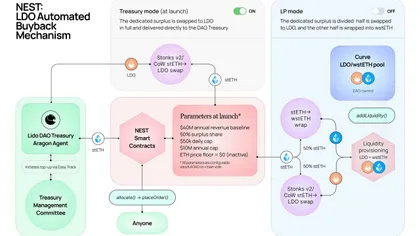
Lido launches $10M LDO buyback – But NEST may remain idle until…
From Struggle to Luxury: 5 Crypto Coins to Watch Before the Next Massive Bull Run

Behind the AI Debt Frenzy: $70 Billion Off-Balance Sheet Hidden Liabilities Trigger Concerns Among Bond Investors
As Nvidia announces a $500 billion AI financing collaboration, concerns in the bond market over nearly $70 billion in off-balance-sheet debt among AI companies have sharply increased. This structure allows chip giants like Nvidia and Broadcom to guarantee customer debt without recording the liabilities on their own balance sheets. Multiple institutions have warned that this is a pro-cyclical financial engineering practice, and risks could be exposed all at once if the industry turns downward.
Crypto prices
More


