
Crypto ETF Update: Bitcoin ETFs Smash Inflows as Ethereum & Solana ETFs Hold Steady

The week of March 2–6 was a tale of two halves for crypto exchange-traded funds. While early momentum looked like a runaway freight train, a late-week chill hit the market, reminding investors that institutional sentiment can turn on a dime. By Friday, the broader picture was one of resilience, though the appetite for risk was clearly being filtered through a more selective lens.
Bitcoin ETFs Remain the Champion
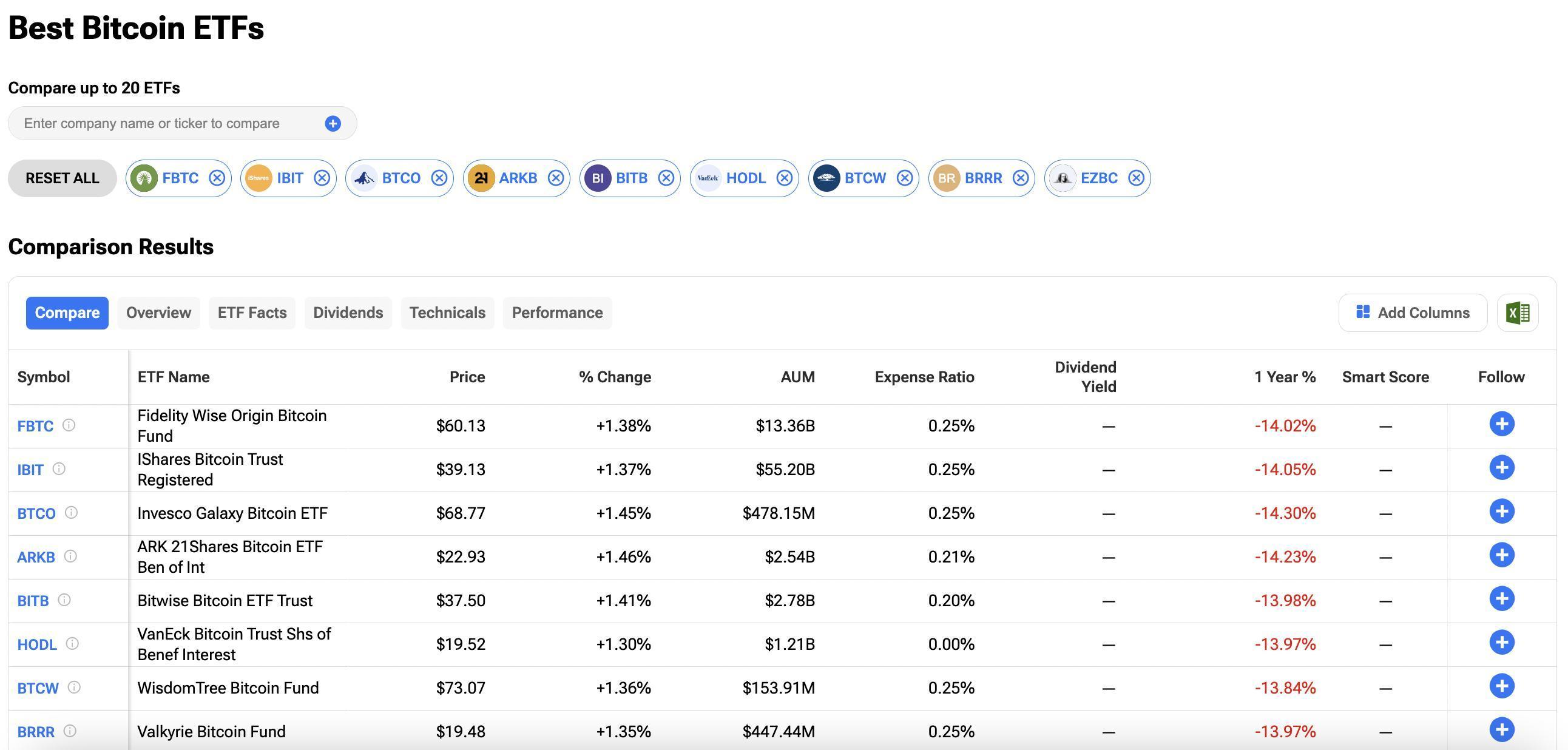
Bitcoin remained the heavyweight champion, pulling in $568 million in net inflows for the week. BlackRock’s iShares Bitcoin Trust (IBIT) led the charge, stacking up roughly $660 million in new capital. However, the week wasn’t a total runaway victory for the bulls. Fidelity’s Wise Origin Bitcoin Fund (FBTC) finished with about -$153 million in outflows, largely due to heavy selling pressure late in the week.
Other players kept their heads above water. Grayscale’s Bitcoin Mini Trust (BTC) added about $46 million, while Franklin Templeton’s Franklin Bitcoin ETF (EZBC) and Invesco’s Invesco Galaxy Bitcoin ETF (BTCO) posted gains of $22 million and $15 million, respectively. WisdomTree’s WisdomTree Bitcoin Fund (BTCW) brought in $16 million, VanEck’s VanEck Bitcoin Trust (HODL) added $10 million, and Valkyrie’s Valkyrie Bitcoin Fund (BRRR) gained $17 million.
On the flip side, funds like Bitwise’s Bitwise Bitcoin ETF (BITB), Ark & 21Shares’ ARK 21Shares Bitcoin ETF (ARKB), and Grayscale’s Grayscale Bitcoin Trust (GBTC) faced a tougher week, seeing outflows of $24 million, $7 million, and $35 million, respectively.
Ether Funds Feel the Heat
Ether ETFs had a much quieter week, managing a total net inflow of $23.56 million. BlackRock’s iShares Ethereum Trust ETF (ETHA) was the star performer, pulling in $133 million. Grayscale’s Grayscale Ethereum Mini Trust (ETH) also had a solid showing, adding about $84 million, with Grayscale’s Grayscale Ethereum Trust (ETHE) tacking on nearly $16 million. Despite these gains, Fidelity’s Fidelity Ethereum Fund (FETH) saw massive withdrawals of $218 million, which acted as an anchor on the sector’s overall performance.
Solana Stays Steady while XRP Slips
Solana funds quietly accumulated capital, recording $24.05 million in weekly inflows. This performance was almost entirely driven by Bitwise’s Bitwise Solana Staking ETF (BSOL), which pulled in roughly $34 million. Meanwhile, XRP ETFs faced a rough patch, closing the week with $4.08 million in net outflows. While Canary’s Canary XRP ETF (XRPC) stood out with $6 million in inflows, it wasn’t enough to offset the combined selling from 21Shares’ 21Shares XRP ETF (TOXR), Franklin Templeton’s Franklin XRP ETF (XRPZ), Grayscale’s Grayscale XRP Trust (GXRP), and Bitwise’s Bitwise XRP ETF (BITX).
Copyright © 2026, TipRanks. All rights reserved.
Disclaimer: The content of this article solely reflects the author's opinion and does not represent the platform in any capacity. This article is not intended to serve as a reference for making investment decisions.
You may also like
WTI posts modest gains above $88.50 on unexpected EIA draw, Middle East conflicts in focus

Betting on 'U.S. Treasury yields plunging', bullish options trading volume for long-term U.S. Treasury and utility sector U.S. stock ETFs surges
The increasing activity in long-term U.S. Treasury options “very directly” reflects traders’ expectations for a decline in long-term interest rates. Utility stocks have added a new logic due to rising power demand from AI data centers. Historically, whenever U.S. Treasury yields retreat, these two sectors are often the first to benefit and see sharp rebounds. Analysts believe that the battle between high interest rates and the AI frenzy has become the core narrative in the current market.
Impact of Surging US Treasury Yields: US Stock PE Ratio Shrinks Significantly, Mag 7 Dominates Small Caps
The 10-year US Treasury yield has reached a 24-year high, quietly reshaping the landscape of the US stock market. The S&P 500 forward price-to-earnings ratio has compressed from 22.2 times at the beginning of the year to 19.3 times, marking a “three-tier decline in valuation.” Meanwhile, the Russell 2000 Index is approaching technical correction territory, while Mag 7 stocks like Microsoft and Nvidia continue to support the broader market with the AI narrative and strong earnings. Market concentration is nearing historic extremes.
Has the "only buyer" of Korean stocks left early?
Over the past two months, Samsung and SK Hynix have alone absorbed over $25 billion in sell pressure. Now, Samsung Electronics has completed its buybacks ahead of schedule, and SK Hynix is left with only about $500 million to finish up. On their "exit" day, the KOSPI instantly dropped by 2%. More dangerously, Samsung's Q3 results missed expectations for both revenue and profit. Coupled with ETF rebalancing and options expiry, a "liquidity vacuum" has become a reality, leaving the question of who will step in as the biggest mystery.
Crypto prices
More


