
Bitcoin price weakens, but BTC derivatives remain healthy

From cointelegraph by Marcel Pechman
Bitcoin BTC$95,946 has struggled to rally above $98,000 from Nov. 25 to Dec. 2, frustrating investors despite achieving a 38% monthly gain. Market participants worry that prolonged consolidation below the $100,000 psychological barrier could embolden bearish strategies to suppress BTC's price.
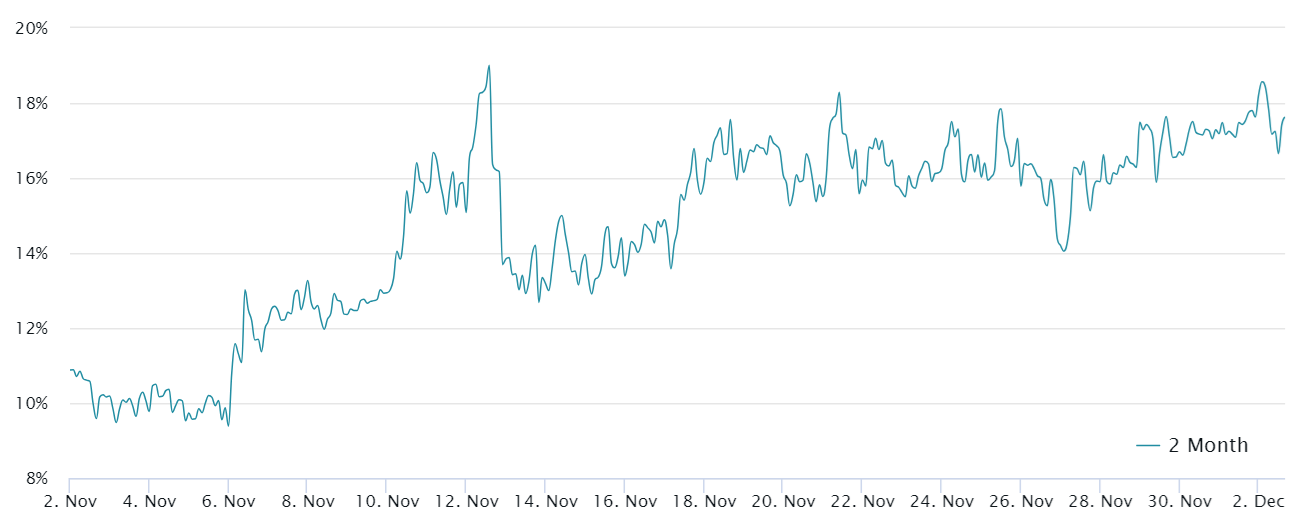 Bitcoin 2-month futures annualized premium. Source: Laevitas.ch
Derivatives markets suggest resilience, with traders paying a 17% annualized premium for leveraged positions compared to the BTC spot price. While lower than the 40% levels typically observed during strong bull runs, the current premium reflects healthy bullish demand and does not indicate excessive optimism.
Even though Bitcoin has failed to surpass its $99,609 peak from Nov. 22, derivatives data reveals continued trader confidence. However, questions persist about the sustainability of recent aggressive buying, particularly from spot Bitcoin exchange-traded funds (ETFs), MicroStrategy, and Marathon Digital.
MicroStrategy added 15,400 BTC between Nov. 25 and Dec. 1, using $1.5 billion raised through a stock sale. The purchases were made at an average price of $95,976, increasing the company’s total BTC holdings to 402,100, currently valued at $38.4 billion—a 64% rise.
Similarly, Marathon Digital acquired 6,484 BTC between Oct. 1 and Nov. 30, spending over $600 million at an average price of $95,352 per coin. The firm announced plans to issue $700 million in convertible senior notes, aiming to acquire more Bitcoin while repurchasing existing debt.
It is inaccurate, however, to attribute Bitcoin’s price resilience solely to institutional purchases. Notably, spot ETFs have recorded net inflows of $3.22 billion since Nov. 18, according to Farside Investors. BTC was already trading above $90,000 before these inflows began, underscoring robust demand beyond corporate balance sheet additions.
Bitcoin options and futures indicate market confidence
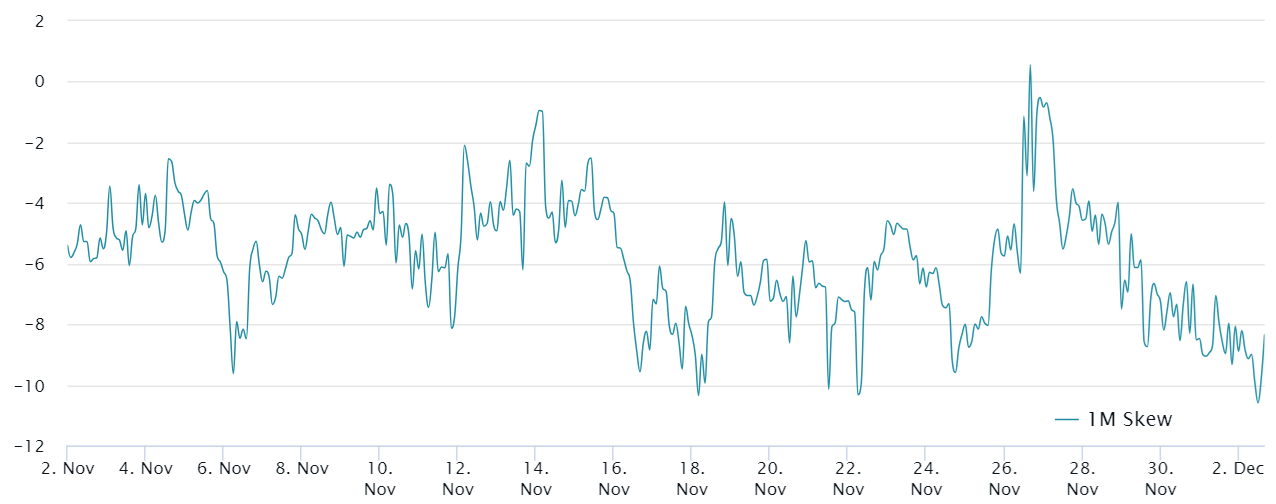 Bitcoin 1-month put-call options delta 25% skew, %. Source: Laevitas.ch
Bitcoin options markets reflect optimism from whales and arbitrage desks, as put (sell) options trade at an 8% discount compared to call (buy) options. Typically, when traders feel uneasy about Bitcoin’s price, hedging demand rises, pushing this indicator above 6%.
Retail traders, although managing smaller positions than institutional players, also play a critical role. The 1,000% Bitcoin price surge in 2017, for instance, coincided with the Coinbase app topping download charts and peak Google searches for "buy Bitcoin." Hence, dismissing the influence of average traders would be shortsighted.
Related: Bitcoin set for ‘insane long opportunities’ as it enters price discovery: Traders
To gauge retail leverage demand, monitoring perpetual contracts (inverse swaps) is essential. These contracts, which settle every eight hours, closely track the spot BTC price. The funding rate—used to balance demand between leveraged buyers and sellers—offers a key signal of market sentiment.
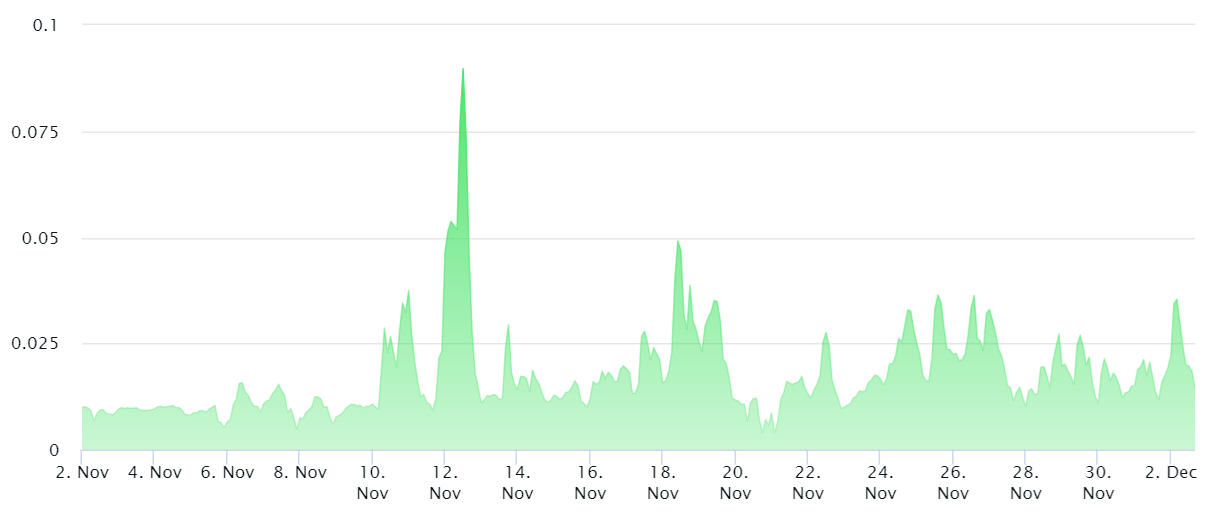 Bitcoin perpetual futures annualized premium. Source: Laevitas.ch
Normally, longs (buyers) pay a monthly funding rate of 0.5% to 2.1%. However, during periods of heightened excitement, this rate can spike to 6% or more. Presently, the 1.4% cost paid by leveraged longs falls within the neutral range. Even last week’s temporary peak of 3.5% is not alarming and poses no immediate liquidation risks.
Bitcoin's inability to breach the $98,000 level should not be interpreted as a weakness, given the robust state of BTC derivatives markets. Both institutional and retail participants exhibit confidence in Bitcoin’s continued bull run. The trend is supported by rising adoption among corporations and nations seeking BTC as a hedge against inflationary fiat currencies.
Disclaimer: The content of this article solely reflects the author's opinion and does not represent the platform in any capacity. This article is not intended to serve as a reference for making investment decisions.
You may also like
21Shares Renames Polkadot ETF to Staking Version, Registers TDOT Ticker
Surging over 8%, market cap soars by $440 billion! Nvidia breaks the "earnings curse" and saves tech stocks
A stellar financial report from Nvidia led to a one-day market value surge of $442 billion, marking the second-largest single-day increase in history and completely shattering the "earnings day drop" curse. Strong performance dispelled the gloom over AI-related trades, caught short sellers off guard, and propelled the entire technology sector higher. According to JP Morgan, although Nvidia's guidance has already far exceeded expectations, it may still be conservative. The company clearly defines the current stage as "supply constrained," and if there were no supply restrictions, actual demand would be significantly higher.
Marvell Technology (MRVL.US) Q3 Earnings Beat Expectations but Shares Still Drop; Google's $10 Billion Order Offers Little Immediate Relief
Marvell Technology (MRVL.US) released its Q2 FY2026 financial report after the market closed on Thursday, with adjusted earnings per share and revenue both slightly surpassing market expectations. Additionally, the guidance for the third fiscal quarter also exceeded analysts’ forecasts.

Autodesk (ADSK.US) earnings reveal “AI anxiety” among software stocks: Q3 and full-year profit guidance miss expectations, acquisition of MaintainX drags on profits
Autodesk released its financial report for the second quarter of fiscal year 2027.

Crypto prices
More


