
Gold prices rise as PCE inflation cools, lowering the probability of a Fed rate hike in October

Forex Network, September 30—— During early US trading hours on Wednesday (September 30), spot gold prices strengthened, while spot silver prices edged lower. US inflation data cooled, easing the immediate pressure on the Federal Reserve to tighten monetary policy. However, US Treasury yields remained high and the dollar stayed firm, limiting the rebound space for precious metals. Spot gold traded around $4,184.55 per ounce, up 0.07% on the day; spot silver was quoted at $60.974, down 0.79%.
During early US trading hours on Wednesday (September 30), spot gold prices strengthened, while spot silver prices edged lower. US inflation data cooled, easing the immediate pressure on the Federal Reserve to tighten monetary policy. However, US Treasury yields remained high and the dollar stayed firm, limiting the rebound space for precious metals. Spot gold traded around $4,184.55 per ounce, up 0.07% on the day; spot silver was quoted at $60.974, down 0.79%.
The US August Personal Consumption Expenditure (PCE) data was released, with overall PCE rising 0.3% month-on-month and 3.4% year-on-year; core PCE rose 0.2% month-on-month and 3.0% year-on-year. Personal income increased by 0.2% month-on-month, disposable income grew by 0.3%, and resident consumption spending jumped by 0.9%. The data indicates that even with resilient end demand, inflation has cooled.
The ADP private sector employment data was impressive. The market is focusing on Friday's upcoming nonfarm payrolls report, scheduled for 8:30 a.m. US Eastern Time; this report will become the next key signal in assessing the Federal Reserve's rate path. Before the inflation data was released, the market-implied probability for a Fed rate hike in October had retreated to the low 40% range, versus about 70% earlier in the week. Meanwhile, the 10-year US Treasury yield remained near 5.2%. The pullback in inflation has lowered rate hike expectations, which favors gold, but strong resident consumption and robust private employment data have weakened gold’s upward momentum.
The situation in the Strait of Hormuz and between the US and Iran remains unresolved, but crude oil exports from the Gulf region have resumed, easing immediate pressures in the oil market. Gulf oil-producing countries have circumvented blockades through shuttle tankers, ship-to-ship transfers, and the Saudi East-West oil pipeline. Middle Eastern crude exports have returned to their highest level since the outbreak of the Iran conflict. West Texas Intermediate (WTI) crude traded near $91 per barrel, and Brent near $98.63 per barrel. Oil prices remain high enough for energy inflation to be considered in Federal Reserve policy decisions, but have moved away from Monday's peak that triggered precious metals selling.
Oil prices have a two-way impact on gold: falling oil prices weaken the inflationary forces driving up US Treasury yields and the dollar; however, ongoing negotiation deadlocks and persistent shipping risks provide safe haven support for gold.
There was a divergence in global risk appetite ahead of the US equity market open. US stock index futures were weaker, with S&P 500 futures down 0.1%, Dow Jones futures down 0.2%, and Nasdaq futures down 0.3%; high Treasury yields continued to suppress stock valuations. European markets were mixed, with French and German stocks edging lower and UK stocks closing slightly higher; most Asian equities recorded gains. The dollar fell slightly against the yen and the euro, providing some support for gold prices, but Treasury yields remained elevated, making it difficult for precious metals to recover the main uptrend lost during Monday’s breakdown.
Other major markets: NYMEX WTI crude oil rose to $91 per barrel; Brent crude was quoted at $98.63 per barrel. The US 10-year benchmark Treasury yield stayed near 5.258%. The dollar index retreated from Tuesday's two-month high.
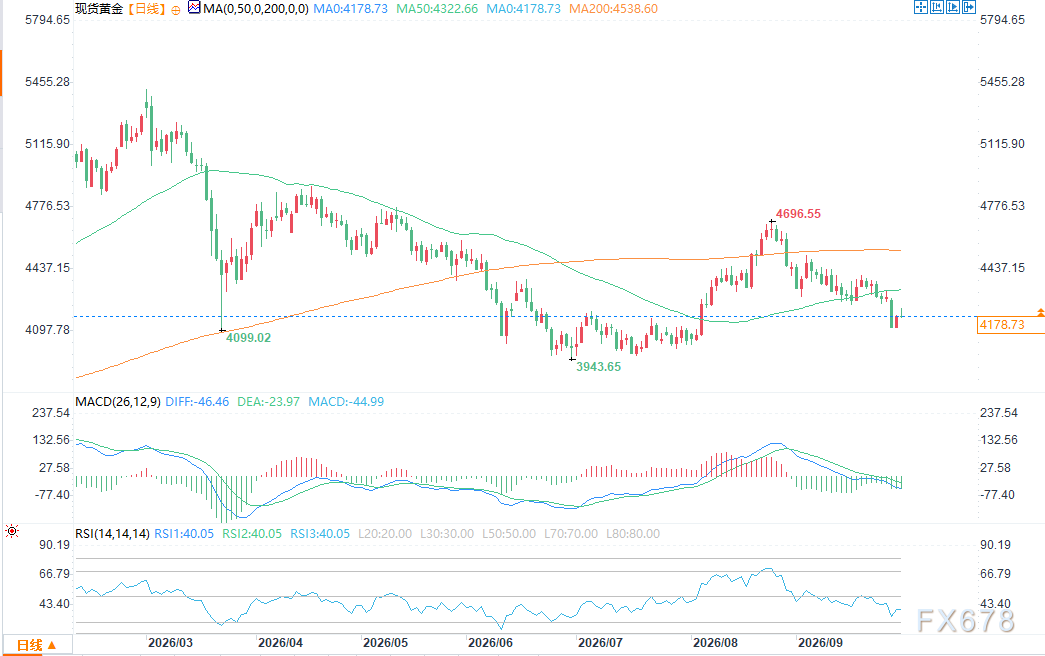
The next upward target for the bulls is to push gold steady above the resistance zone of $4,210.63–$4,222.11. If a valid breakout occurs, the price will look further to $4,238.00, followed by $4,254.44.
The short-term target for the bears is to push gold below $4,162.06, with the next support at $4,136.44, and further down at the $4,000–$4,020 range.
First resistance: $4,210.63; second resistance: $4,222.11. First support: $4,162.06; second support: $4,136.44.
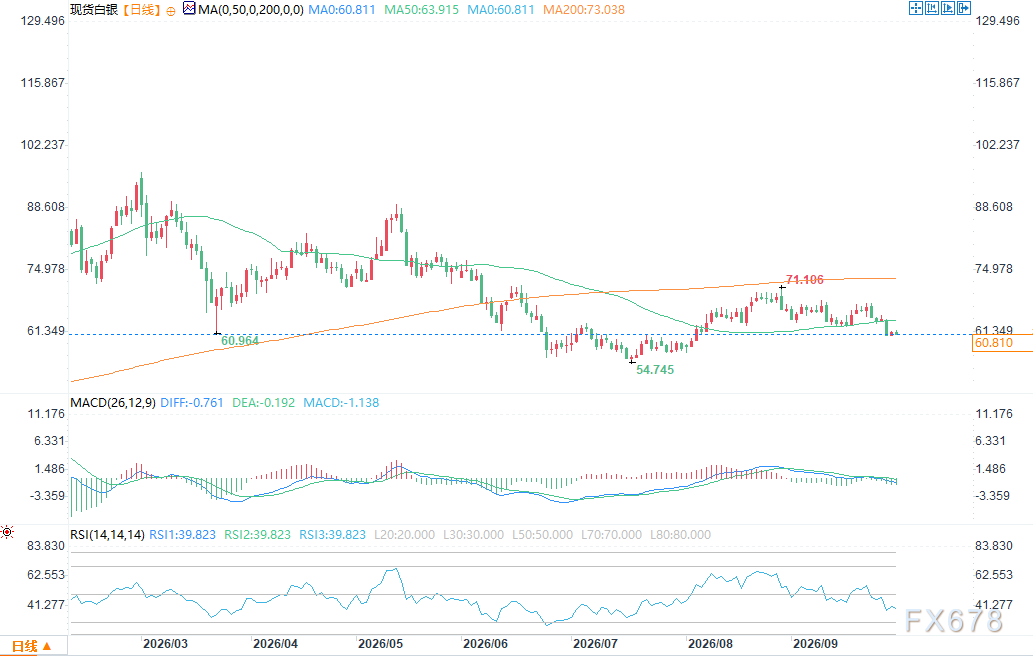
Bulls in silver need to push the price back above the $62.069–$62.834 zone. After that, the target is the 50-day moving average around $63.890, followed by $64.080.
The downside target for the bears is to break below $60.639, with further downside at $59.706 and a deeper target in the $56–$57 range.
First resistance: $62.069; second resistance: $62.834. First support: $60.639; second support: $59.706.
Disclaimer: The content of this article solely reflects the author's opinion and does not represent the platform in any capacity. This article is not intended to serve as a reference for making investment decisions.
You may also like
XRP trades flat at $1.51 despite Ripple and CSD BR $15 billion integration
New Zealand Dollar weakens toward 0.5600 as bitterly fought election looms
Forex Today: US Dollar shows resilience ahead of next batch of data
Swiss Franc reaches fresh 16-month lows ahead of CPI data
Crypto prices
More


