
US energy stocks remain "cheap" after surging: High oil prices may lead to a valuation recovery

The Energy Select Sector SPDR ETF, which tracks US energy stocks, has surged over 43% year-to-date, far outperforming other S&P 500 sectors. Despite this, the energy sector remains one of the lowest-valued sectors within the S&P 500. High oil prices have led to excess profits for energy stocks; although Wall Street previously viewed this round of earnings growth as a temporary phenomenon, if elevated oil prices persist longer than expected, the valuation recovery of energy stocks may have only just begun.
Energy stocks are experiencing a rare period of strong performance over the years, and oil prices returning to triple digits could further prolong this trend.
Since 2026, the energy sector has accumulated gains of over 43%, far outperforming other S&P 500 sectors. The State Street Energy Select Sector SPDR ETF, which tracks US energy stocks, has significantly outperformed crude oil prices themselves in recent months.
On Wednesday, Brent crude oil broke above $100 per barrel, hitting its highest level since May. On the same day, the S&P 500 Index fell 0.5%, while the energy sector rose against the trend. Major energy stocks such as Exxon Mobil and Chevron received significant support.

However, from a valuation perspective, energy stocks have not become expensive just because of the surge in their stock prices.
According to Bloomberg, the energy sector remains one of the lowest-valued sectors in the S&P 500. Although its profit growth has again become one of the strongest in the index, Wall Street still tends to view this round of profit growth as only temporary, and thus has not given energy stocks a higher valuation premium.
But as oil prices remain high, inventories decrease, and spare supply capacity narrows, analysts are starting to reassess this view.
With oil above $100, energy companies' earnings forecasts may continue to be raised
The key to this rally in energy stocks is not just oil prices breaking through the psychological barrier of $100.
The breakout of Brent crude above $100 reflects market concerns over ongoing Middle East conflicts and further disruptions to global supply. As inventories fall and spare supply capacity dwindles, the oil market's buffer to absorb supply shocks is shrinking.
For energy companies, persistently high oil prices mean higher upstream profits and cash flow. More importantly, if high oil prices last longer than the market previously expected, Wall Street analysts may further raise their earnings forecasts for energy companies in the coming quarters.
Even by the end of 2027, the operating profit margin of the energy industry is expected to fall back to around 15%, which will still be significantly higher than the level of about 9% before the outbreak of the Iran war.
Therefore, the market is currently pricing in not just the “short-term profits from the rise in oil prices,” but also that the improvement in energy companies' profit margins may be more durable than previously expected.
Energy stocks may become a “safe haven” in a high oil price environment
Another advantage of energy stocks is that their performance shows a clear distinction from the broader market.
On September 9th, after Brent crude broke above $100, the US stock market came under pressure, with the S&P 500 Index falling about 0.5% and the Nasdaq dropping about 0.6%. Meanwhile, the energy sector bucked the trend and strengthened, with major energy stocks like Exxon Mobil and Chevron receiving support.
The reason is that high oil prices have completely different effects on energy companies compared to other sectors.
For energy companies, rising oil prices mean improved revenues and profits; but for the broader economy, rising energy prices raise corporate costs and consumer spending, reigniting inflationary pressures.
After Brent crude broke above $100, the US 10-year Treasury yield rose to its highest level since October 2023, and the market began to reassess the impact of rising energy prices on inflation and monetary policy.
This gives energy stocks a certain relative defensive attribute: if rising oil prices eventually lead to higher inflation, higher bond yields, and suppressed equities overall, energy companies may instead continue to benefit from high oil prices.
The real question for the market is “How long can high oil prices last?”
Of course, the strong performance of energy stocks also faces a key issue: Are current high oil prices merely a short-term geopolitical premium, or are they the beginning of a new round of lasting supply shocks?
If the Middle East situation quickly eases and global oil supply is restored, falling oil prices will once again drive down earnings expectations for energy companies; but if the conflict continues and the Strait of Hormuz is further impacted, with inventories continuing to decline, then the profit recovery currently seen as “temporary” by the market could last much longer.
Therefore, for energy stocks, what really matters is not whether Brent holds above the $100 mark, but rather whether $100 oil prices can be sustained and whether corporate earnings can be further raised in line with oil prices.
After energy stocks have already shown rare strength in recent years, if oil prices remain high, profit margins stay elevated, and valuations have not yet expanded significantly, the logic for the sector’s continuing rally may not be over.
Disclaimer: The content of this article solely reflects the author's opinion and does not represent the platform in any capacity. This article is not intended to serve as a reference for making investment decisions.
You may also like
"The Most Unsexy Investment Strategy" is Timely! As Bonds Collapse and Stocks Soar, Investors Face a Great Opportunity for Rebalancing
Financial advisors indicate that, amid global bond sell-offs, stock markets hovering near historic highs, and investors facing geopolitical uncertainties, now may be an especially suitable time to consider portfolio rebalancing.

They boosted the Yen but failed to hold U.S. Treasury bonds! Is Basent a "weak teammate" for U.S. stocks?
This week, Besant made high-profile calls to suppress yen short positions and raised the US Treasury repo limit to $6 billion. As a result, the yen strengthened, but US Treasuries declined—10-year yields hit their highest level since October 2023, and 30-year yields approached a twenty-year peak. Analysts noted that the combination of a stronger yen and rising US Treasury yields is simultaneously impacting carry trades and stock valuations, posing a dual threat to the US stock market bull run. This is described as "the greatest risk facing the bull market."
SK hynix US stocks surge to new highs, storage sector strengthens across the board! Goldman Sachs declares: The worst days are over
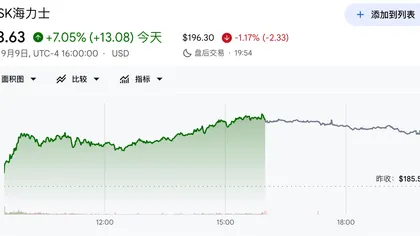
A Goldman Sachs research report ignited the storage sector, with SK Hynix soaring 7% on the US stock market in a single day to a record high. Micron and SanDisk also rose in tandem, outperforming the broader market. Goldman Sachs pointed out that a technical breakout in the storage sector, combined with low hedge fund positions, has shifted the "pain trade" direction upward. However, on the same day, the CEO of Kioxia poured cold water on the rally, stating bluntly that NAND "prices have risen enough." Amid this tug-of-war between bulls and bears, Micron's September 30 earnings report will be a key deciding factor.
Crypto prices
More


