
The race between US Treasury yields at 5% and oil prices at $100: If both thresholds are breached at the same time, which assets are most vulnerable?

Huitong Network, September 8 — This week's market focus revolves around two main lines: the bond market and the oil market. On one hand, the situation in the Middle East is driving oil's risk premium to surge; on the other, the long-end yield on US Treasuries is approaching 5%, impacting global asset pricing. If you trade crude oil, US Treasuries, gold, or foreign exchange, the most important thing now is not single headlines, but understanding how these variables reinforce or hedge each other.
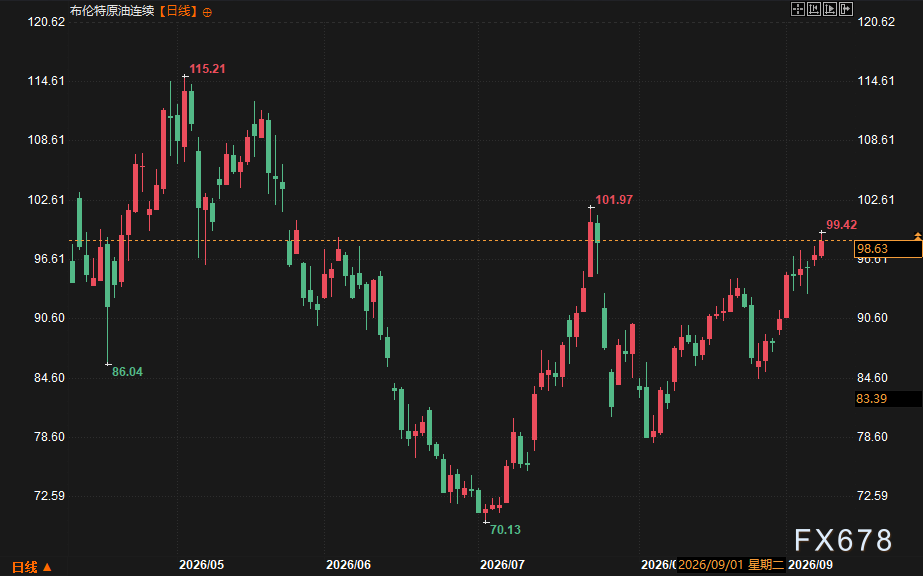
On Tuesday (September 8), Middle East tensions escalated, with Brent crude approaching $99 and WTI strengthening accordingly; the US 10-year Treasury yield is close to the psychological 5% mark with real rates on the rise. Traffic through the Strait of Hormuz has dropped to its lowest in months, and the US finished product inventories are tight, pushing markets to price in supply disruptions. Safe-haven and inflation expectations are intertwined, putting pressure on risk assets; traders should be alert to amplified volatility.
This week, all eyes are on the bond and oil markets. On one side, the Middle East is driving a spike in crude's risk premium; on the other, long-end US Treasury yields are closing in on 5%, steering global asset pricing. If you trade oil, US Treasuries, gold, or FX, what matters most is understanding how these variables reinforce or offset each other, not just single events. This article translates public information into trader-focused insights, highlighting pivot points in sentiment and risk boundaries to help you filter noise and see the capital logic behind conflicting signals.
Physical Tightness in Hormuz Pushes Oil Prices Higher: Ship Counts Tell a Truer Story than Headlines
Ship tracking data shows that only seven commercial vessels passed through the Strait of Hormuz on Monday, with a ten-day daily average of about ten—the lowest since May. Some ships have turned off tracking systems, but the flow constraint is real. Houthi militants have attacked Saudi energy infrastructure, Iran is threatening to strike Gulf energy facilities, and supply disruptions are no longer hypothetical. Meanwhile, US EIA data shows crude oil, gasoline, and distillate inventories are all below the five-year average—gasoline down about 6%, distillates down about 14%. Asian demand provides extra support. Brent is near $99, with WTI following suit. In the short term, oil prices are being set by physical tightness and geopolitical premiums together, not simply by headline sentiment.
US Treasury Yields Near 5%: Tug of War Between Real Rates and Fiscal Deficits
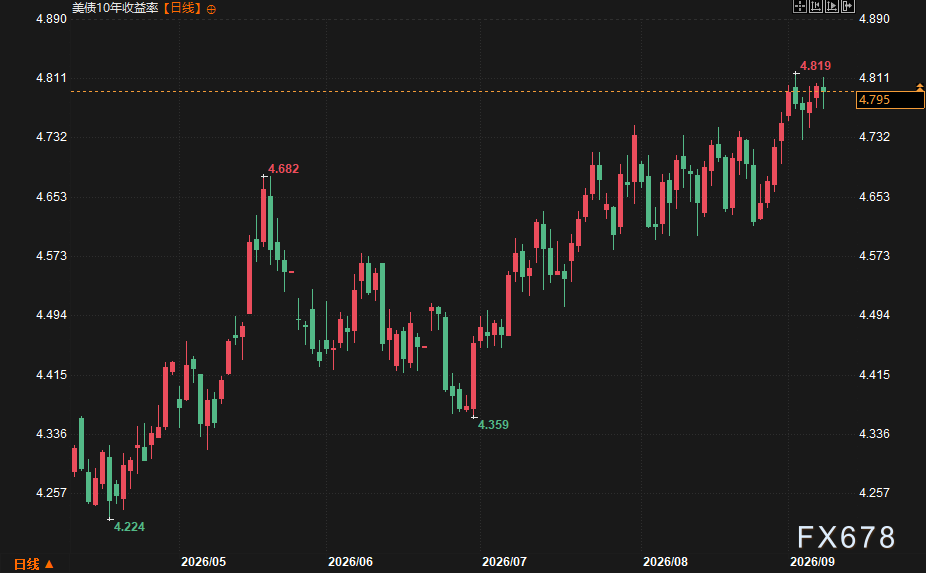
The 10-year US Treasury yield has climbed above 4.8%, nearing 5%. This move is largely driven by real rates, with the long-term real yield average rising from 2.55% at the end of last year to 2.92%. Nominal GDP growth remains higher than yields, giving some buffer to fiscal expansion, but the margin is shrinking. Government debt has breached $40 trillion, and with expanding deficits, traders are repricing "risk-free" assets. Corporate borrowing costs are rising and investment-grade credit spreads are at historical lows, so if credit conditions deteriorate, the buffer is thin. Stock market valuations are facing competition from bonds; the ratio of long-term Treasury yields to equity dividend yields is now the highest since the dot-com bubble in 2000. Highly valued markets are more vulnerable to negative news.
Investment Bank Forecasts Diverge: Short-Term Premium vs. Long-Term Benchmark
Major overseas investment banks' views are notably divided. UBS has raised its year-end Brent crude forecast to $95, while Goldman Sachs offers seemingly contradictory signals: they warn that if Gulf production stays below pre-war levels, Brent could break $120, but their base case only raises December Brent by $5 to $85, well below current prices. This suggests that the market is trading on geopolitical premium short-term, while long-term pricing is still anchored in supply substitution and non-OPEC output growth. Trump posted on social media that oil prices will plummet, with gasoline falling from $4.15 to $3 or even $2, sharply contrasting with investment bank warnings. Traders need to distinguish between risk scenarios and baseline scenarios to avoid getting swept up by a single narrative.
Cross-Asset Transmission: Repricing in Gold, the Dollar, and FX
Oil prices are raising inflation expectations and higher yields are suppressing gold, but geopolitical safe-haven demand offers a counterbalance, so gold is more likely to consolidate at high levels rather than fall unilaterally. The dollar is supported by both rate expectations and safe-haven demand, but high oil prices put pressure on importers' currencies, making safe-haven currencies like the yen relatively strong. Commodity currencies benefit from oil but are weighed down by risk-off sentiment, leaving limited directional opportunities. If US Treasury yields break and hold above 5%, risk assets could see a wave of deleveraging; if there is progress in negotiations, the oil premium could quickly recede, easing inflation concerns and favoring stocks and emerging market currencies.
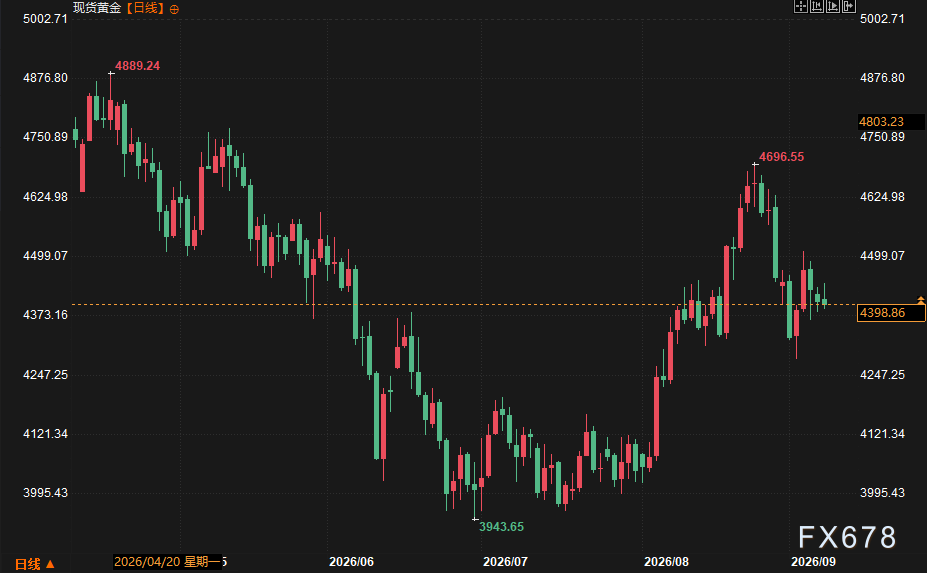
In the short term, Brent is likely to fluctuate between $95 and $100; a sustained break above $100 would require further deterioration in Hormuz traffic or a US military escalation against Iran. US Treasury yields may continue to test the 5% area; a sustained breakout may trigger an equity repricing and wider credit spreads. Gold remains biased to a choppy uptrend but is capped by real rates. In the longer term, if tensions persist into the winter, high oil prices together with low European gas inventories may force central banks to turn more hawkish, pushing up core Treasury yields and volatility in risk assets. However, any substantive progress in US-Iran talks could reverse this dynamic, with the oil premium evaporating quickly, long-end rates coming down, and Goldman's $85 Brent baseline re-anchoring market expectations.
[FAQ]
Why has oil gone up but not broken $100?
Because the market is pricing in risk premium, not actual supply cuts. Although Hormuz flows are low, about 11 million barrels/day of West Asian crude are still leaving via alternative routes, and non-OPEC supply is also rising, so Brent is facing resistance near $99.
What does the US Treasury yield approaching 5% mean for equities?
Borrowing costs for businesses rise and stock valuations compete with bonds. The current ratio of equity yields to long-term Treasury yields is at extreme historic levels; high-valuation sectors are more sensitive to negative news, and if yields hold above 5%, a phase of correction could be triggered.
Why hasn't gold surged on safe-haven demand?
Oil is pushing inflation expectations higher, while rising real rates are suppressing gold. Safe-haven demand is supportive, but the two forces offset, making gold more likely to swing in a high range rather than trend one way.
Will the dollar strengthen or weaken now?
Short-term biased stronger, as rate expectations and haven demand both support the dollar. But high oil weighs on US consumer and import costs, and if economic data deteriorates, the dollar's gains may be capped. Euro, yen, and other currencies' performance depends on their respective central banks' stances.
Where is the biggest risk point?
Actual closure of the Strait of Hormuz, or a total breakdown of US-Iran talks leading to escalation. The former would push oil above $120 instantly, while the latter could spark a simultaneous bond and equity selloff. Both are medium probability for now, but closely tracking shipping numbers and diplomatic signals is crucial.
Disclaimer: The content of this article solely reflects the author's opinion and does not represent the platform in any capacity. This article is not intended to serve as a reference for making investment decisions.
You may also like
ETH bridge deposits on Robinhood Chain surge 150% to $700 million in September
Bitcoin News Today: BTC Holds $79K Ahead of Fed Risk While MemeToro Publishes New Contract Code
The United States Accelerates the "Next-Generation Computing Revolution"! GlobalFoundries (GFS.US) Secures $375 Million Quantum Computing Subsidy, New Quantum Forces Also Receive Funding
GlobalFoundries announced on Tuesday that it has finalized an agreement with the U.S. Department of Commerce CHIPS Act Research and Development Office to receive $375 million in R&D funding, aimed at accelerating the growth trajectory of its Quantum Technology Solutions (QTS) business.

3 Altcoins Ready for Ascent: ETH, KAS, NEAR
Crypto prices
More


