
A Century of Struggle Between U.S. Finance and Central Banking: Historical Review and 2026 Trend Projections

FX168 Finance, September 1—— Reviewing a Century of Checks and Balances between U.S. Fiscal Authorities and the Central Bank, Dissecting the Logic of Policy Hedging in 2026 and the Future Economic Outlook
In the grand game of modern macroeconomics, the government’s fiscal ambitions and the central bank’s monetary rationality remain perennial bedfellows with diverging dreams.
On one side, the government is eager to stimulate growth with fiscal policy and fulfill political promises; on the other side, the central bank must uphold independence, vigilantly defend the inflation threshold and monetary credibility.
Throughout America's century-long economic history, the tug-of-war between the Treasury and the Federal Reserve represents the most dramatic sample of such high-stakes play.
From the post-WWII bloody showdown over the White House White Paper and the foundation of the central bank’s independence in the "1951 Accord", to the behind-the-scenes interventions for presidential elections, and to today’s “shadow easing” via short-term issuance against hawkish high interest rates—this power struggle has spanned decades without pause.
When political impulse collides with monetary iron law, who truly controls the highest lever of the U.S. economy?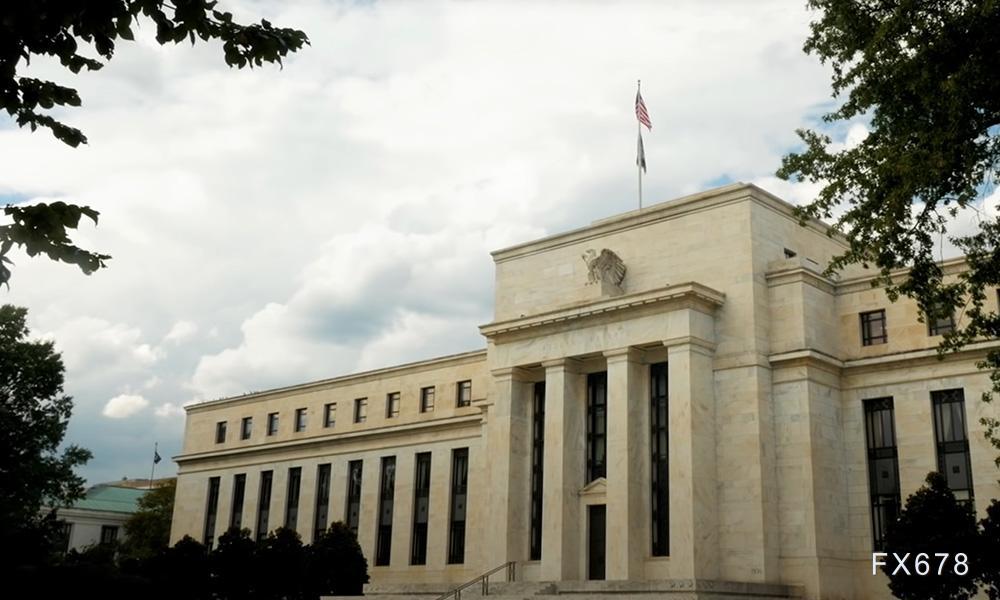
The Eve of the Great Depression: Mellon's “Wall Street Feast” and the Crash
On Wall Street in the 1920s, Treasury Secretary Andrew Mellon was the absolute economic autocrat.
As the third wealthiest American at the time and controller of major financial groups, Mellon also concurrently served as Chairman of the Federal Reserve Board while handling both national taxation and monetary valves at the Treasury.
To maximize profits for his business and the consortia of his friends, Mellon initiated an extremely aggressive “government intervention model”:
On the one hand, he slashed taxes dramatically: cutting the top individual income tax rate from 66% to 24%;
On the other hand, he heavily pressured the Fed to lower interest rates: In 1927, with the economy already overheating, Mellon forcefully implemented a low-rate policy under the pretense of “helping the UK restore the gold standard,” but in truth to inject huge liquidity into the U.S. stock market.
This dual dose of “fiscal + monetary” easing directly spawned the wild “Roaring Twenties.” Both retail and institutional investors leveraged to speculate on stocks, and margin loans on Wall Street ballooned by 300%.
The moment of collapse (October 1929): Without independence, the Fed had become a tool for politicians. Only when the bubble was too large to contain did the Fed hastily raise rates—far too late, as “Black Tuesday” ravaged Wall Street and the Great Depression began.
Even more absurd was the post-crash handling—Mellon used political power to hijack monetary policy, famously declaring the “Liquidationist Theory”: “Liquidate labor, liquidate stocks, liquidate farmers, liquidate real estate… That will purge the rottenness out of the system.”
Under his grip, the Fed watched as thousands of banks failed and the money supply contracted by a third, without intervention.
The Dow Jones Industrial Average plummeted from a peak of 381 points in September 1929 to just 41.2 points in July 1932—a total collapse of 89%.
This tragedy made Congress realize profoundly: placing monetary levers in the hands of politicians and treasury secretaries was a recipe for catastrophic economic disaster.
The 1951 White House Showdown: Truman’s “Red Machine” Roar and the Postwar Inflation Nightmare
The 1935 Banking Act expelled the Treasury Secretary from the Fed Board, but WWII forced the Fed to become the Treasury’s “money printer” once again.
To help fund the war, the Fed was compelled to cap long-term Treasury yields at a low 2.5%—effectively committing to print whatever money the Treasury needed for bond issuance.
After the war, the removal of price controls unleashed surging pent-up consumer demand; coupled with the outbreak of the Korean War, this led to a global buying frenzy and, by early 1951, U.S. inflation soared to 21%.
The policy struggle inside the White House: Fed Chair Thomas McCabe could no longer sit by; he called for halting bond buys and raising interest rates to tackle inflation. This enraged President Truman.
To maintain cheap funding for government debt, Truman embarked on a series of outrageous interventions:
The “White House Door Incident”: Truman summoned all members of the FOMC into the White House.
After the meeting, the White House unilaterally released a press statement falsely claiming: “The Fed has assured the President it will continue to support government low-rate Treasuries.”
Public rebuttal and betrayal: Facing a forced hand, the Fed exploded internally.
The FOMC disclosed the meeting minutes directly to Congress, publicly embarrassing Truman and exposing the White House’s fabrication.
Truman was furious, privately branding Fed officials as “betrayers.”
The Birth of the 1951 Treasury-Fed Accord: Seeing both sides hurt, Assistant Treasury Secretary William McChesney Martin mediated. Ultimately, in March 1951, a compromise was reached:
The Fed stopped pegging Treasuries at 2.5% yields;
The Fed regained independent monetary policy decision-making, no longer backstopping Treasury debt;
Truman forced McCabe to resign, installing his own man, Martin, as Fed Chair.
Unexpectedly for Truman, Martin immediately demonstrated unwavering professional independence.
Martin left behind the famous phrase: “The central bank’s job is to take away the punch bowl just as the party gets going.” From then, the 1951 Accord cemented the Federal Reserve’s modern independence.
Comparative Assessment: The Essence of the 2026 “Short Issuance, Long Purchase” Hedge
Compared with history, the 2026 standoff between Treasury Secretary Besant and Fed Chair Walsh is a latent replay of the “1951 model” in the era of financial engineering.
Tactical upgrade (“Shadow Easing”): Unlike Truman’s direct orders for Fed rate cuts, 2026’s Treasury Secretary Besant employed asset and liability maneuvers—sharply reducing long-term Treasury issuance, while aggressively increasing short-term T-Bill supply.
This “issuing short, buying long” strategy essentially suppresses long-term market interest rates without Fed consent—a type of “shadow monetary policy” that circumvents legal constraints.
The Fed’s counterattack: At the Jackson Hole symposium, Chair Walsh’s hawkish remarks laid bare the rivalry: “If you use fiscal instruments to flood liquidity at the front-end, I will maintain higher policy rates at the terminal.”
Brief analysis: 2026’s interventions are no longer the crude administrative kidnappings of the past, but a sophisticated policy hedging game.
The Treasury boosts short-term growth with T-Bills, the Fed defends long-term inflation with high rates—this “one foot on the accelerator, one foot on the brake” tension is sharply increasing the macro friction cost for the overall market.
Linear Projection: Where Will the Century-Long Game Ultimately End Up?
As the Treasury continues “short issuance to flood liquidity” and the Fed insists on “high-pressure anti-inflation,” their policy divergence risks creating severely inverted or abnormally steep yield curves.
This will create substantial arbitrage opportunities utilizing “fiscal liquidity” versus “central bank high rates,” leading to significant volatility in asset prices—especially U.S. stocks and gold.
Fed independence has historically yielded under the pressure of monstrous Treasury principal and interest payments. Should U.S. Treasury debt keep rising, high rates will see interest expense explosively rise (even surpassing the defense budget).
Projections indicate that the Fed will eventually be forced to compromise again between “allowing a higher inflation anchor” and “rescuing from fiscal default risk,” transitioning from absolute independence to implicit cooperation.
Just as the 1935 Banking Act and the 1951 Accord arose out of crises, today’s fiscal-monetary hedging is unsustainable. The endpoint will likely be a new “policy restructuring”: Congress may pass new legislation redefining the legal boundaries of the Treasury and Fed in managing Treasury market liquidity—the Fed may gain implicit veto power over the Treasury’s debt duration structure, in exchange for a moderate concession on inflation targets (raising, for instance, to 3%).
Disclaimer: The content of this article solely reflects the author's opinion and does not represent the platform in any capacity. This article is not intended to serve as a reference for making investment decisions.
You may also like
XRP stalls below $1.54 resistance as weekly close approaches
Apple files ‘shocking evidence’ against ex-engineer in OpenAI trade-secret suit
Bitcoin price August rally holds near $78,000 despite oil, Fed pressure
Fake Claude app infects Windows with RevStealer malware targeting crypto wallets
Crypto prices
More


