
When will the long-term bond turmoil end, and how much is AI really worth?

Show original
By:新全球资产配置
Bitget offers one-stop trading for cryptocurrencies, stocks, and gold. Trade now!
A welcome pack worth 6200 USDT for new users! Sign up now!
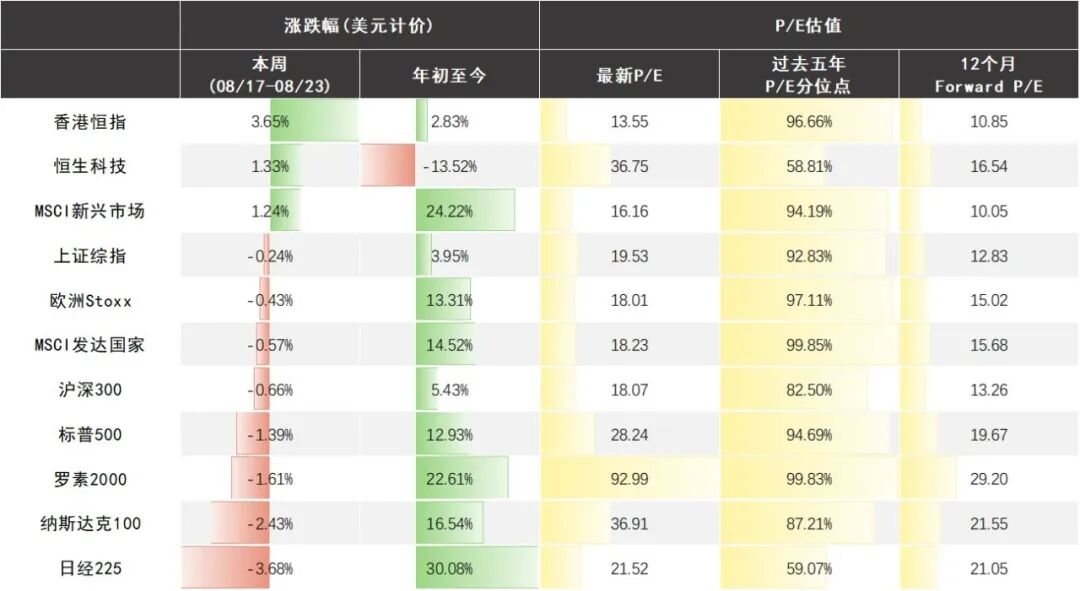
Performance and Valuation of Major Global Stock Indices (USD denominated) and Valuation
Data Source: Bloomberg
Key Points
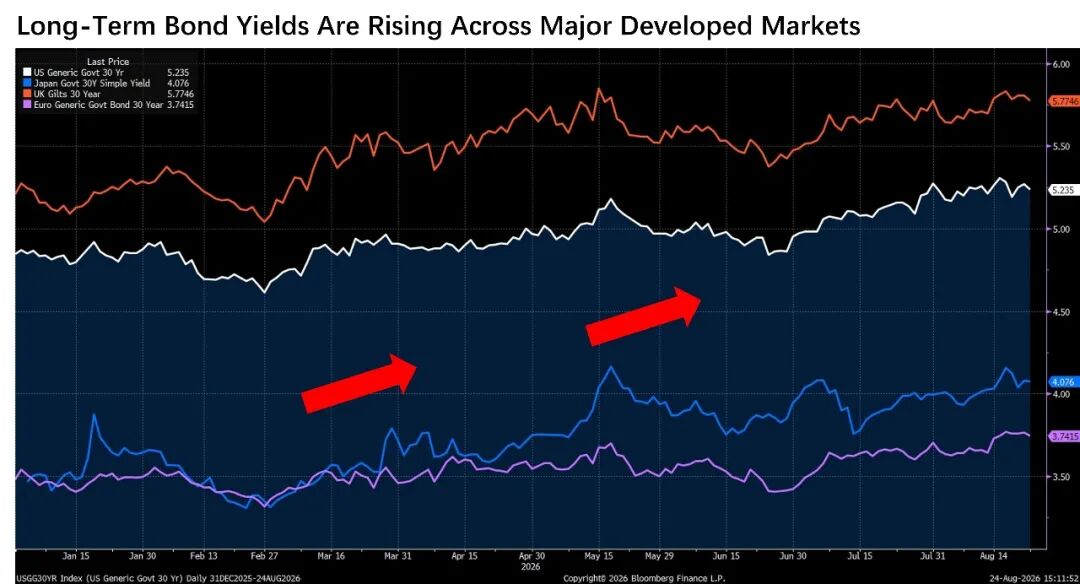
Last week, global risk assets came under pressure overall, with the three major US stock indices closing lower on the week, and the semiconductor sector falling by about 5%; at the same time, long-term interest rates around the world rose rapidly again, with the US 30-year Treasury yield reaching new highs since 2007, and long-term bonds in Japan, Europe, and the UK also coming under pressure. The core contradiction in market trading is shifting from a pure “growth vs. inflation” debate toward growing concerns over the competing demand for capital among fiscal expansion, debt supply, and AI capital expenditures.
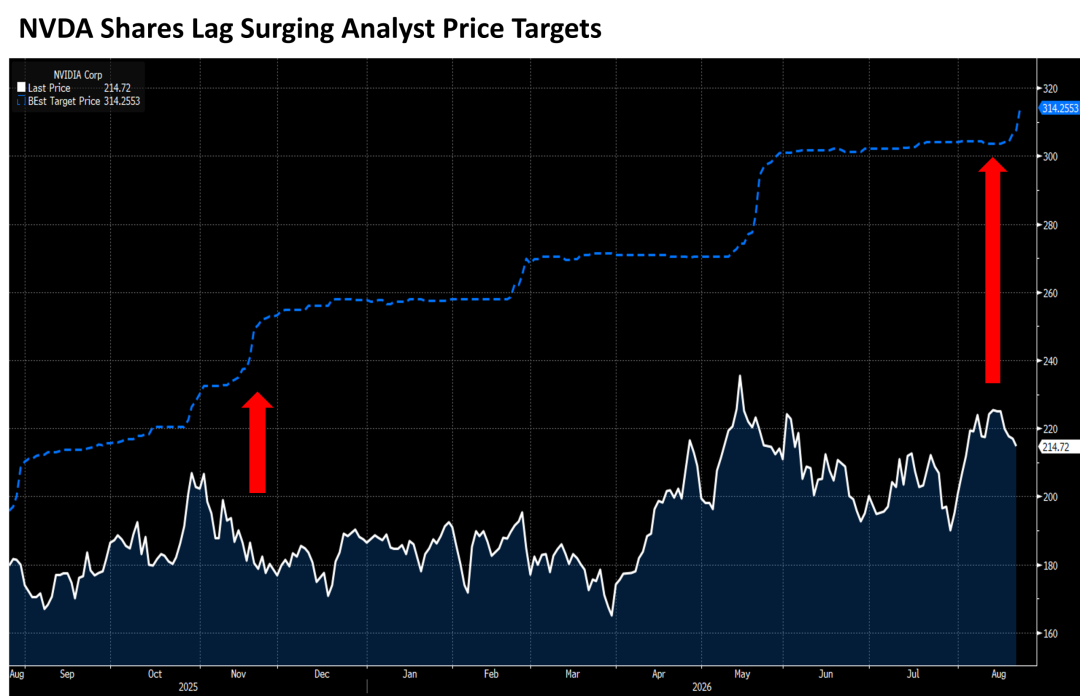
We believe that recent market volatility is more due to the transmission effect from the bond market rather than a weakening of industry trends. As AI enters a phase of heavy capital investment, the market focus has shifted from “can revenue grow rapidly” to “can growth cover the cost of financing.” Whether the pressure on long-term bonds can ease in the short term depends partly on whether Waller can build a credible policy framework linking increases in AI productivity to the return of inflation, and partly on AI’s continued ability to prove its growth potential. Nvidia’s earnings report this week will be the first critical test. If demand for computing power, pricing power, and gross margins remain robust and refocuses the market’s attention from macro concerns to the industry itself, the AI sector could resume its upward trajectory.
This Week's Key Focus

US Market & Greater China Market
Recently, long-term bond yields have been rising simultaneously around the globe, reflecting a reassessment of the risks of fiscal and capital spending expansion in the era of deglobalization.Last week, US, Japanese, European, and UK long bond yields all moved higher in succession, showing that the US is not an isolated phenomenon. Against a backdrop where countries are bringing industries back by means of fiscal subsidies, investing in defense and infrastructure, and AI-related smart infrastructure continues to compete for capital, investors are demanding higher term premiums for fiscal deficits, debt supply, and inflation uncertainties.
Data Source: Bloomberg
In the short term, the US Treasury’s expansion of long-term bond buybacks can be viewed as a fiscal version of a mini “Operation Twist”: replacing old 10–30 year bonds with shorter-term financing, with each operation involving $4 billion, about 5% of the monthly long-term bond issuance, improving the liquidity of old bonds but insufficient to digest new fiscal financing. We also don’t expect Waller to announce at the annual gathering of global central banks that the Fed would buy long and sell short; a more realistic path for relief is for him to clearly articulate a new policy framework, explaining how the AI revolution can alleviate inflation through productivity and supply improvements, and establish a credible path to bring inflation steadily back to 2%.If both conditions are met, the risk premium associated with policy uncertainty may fall, and upward pressure on long-term yields could ease in the short term.
From an industry perspective, the trend in AI remains strong; recent pressures stem more from rising capital costs and valuation compression. The capabilities of large models are still advancing rapidly, with RSI (Recursive Self-Improvement) becoming a new evolution direction; the boom in open-source models has significantly lowered the threshold for application, inference demand keeps transferring to midstream cloud computing and upstream hardware sectors, as reflected in the continued rise in new cloud GPU rental prices. However,as AI construction shifts from light-asset expansion to a heavy capital cycle relying on SPV, long-term leasing and residual value guarantees, the market’s requirements have risen from “can revenue grow rapidly” to “can that growth cover the ever-increasing financing costs”.
Therefore,Nvidia’s earnings report this week will be the first test of whether the AI financing cycle can continue.If Q2 revenue reaches around $94–95 billion, Q3 guidance exceeds $106–108 billion, and Nvidia can maintain a gross margin of about 75% even with rising storage costs, it will indicate that demand for computing power, Nvidia’s pricing power, and the asset value of GPUs remain strong, supporting a “growth-to-digest-debt” model where income growth absorbs financing pressure.
Data Source: Bloomberg
However, for this logic chain to truly close, it will require cloud providers to synchronously step up, proving that the growth in cloud revenue, orders, and customer prepayments can sustainably cover financing burdens such as interest and lease costs. On this basis,if market attention shifts back from short-term macro pressures to breakthroughs in new models, accelerating inference demand, or increases in cloud service prices, the AI sector could return to an upward trajectory.Of these, the cloud computing sector, which can directly absorb computing demand and validate investment returns with income and cash flow, may become the most direct beneficiary.
0
0
Disclaimer: The content of this article solely reflects the author's opinion and does not represent the platform in any capacity. This article is not intended to serve as a reference for making investment decisions.
Understand the market, then trade.
Bitget offers one-stop trading for cryptocurrencies, stocks, and gold.
Trade now!
You may also like
Solana reached new weekly activity peak with 1.3B non-voting transactions
Cryptopolitan•2026/08/24 14:24
Ethereum Name Service (ENS) Rallies 50.8% in 7 Days — What Is Driving the Move?
Coinsprobe•2026/08/24 14:06

Stacks (STX) Rallies 93.9% in 7 Days — Bitcoin L2 Surges to $0.2346
Coinsprobe•2026/08/24 14:03

Crypto prices
More
Bitcoin
BTC
$79,329.82
+2.42%

Ethereum
ETH
$2,515.31
+2.25%

Tether USDt
USDT
$0.9998
-0.03%

XRP
XRP
$1.5
-2.08%

USDC
USDC
$1
-0.01%

Solana
SOL
$95.6
+0.23%

TRON
TRX
$0.3440
-0.00%

Hyperliquid
HYPE
$79.72
-0.89%

Dogecoin
DOGE
$0.09161
-2.90%

Zcash
ZEC
$852.37
-0.73%
How to buy BTC
Bitget lists BTC – Buy or sell BTC quickly on Bitget!
Trade now
Become a trader now?A welcome pack worth 6200 USDT for new users!
Sign up now