
Atour: Burning Cash for Growth—How Long Can the Retail Myth Last?


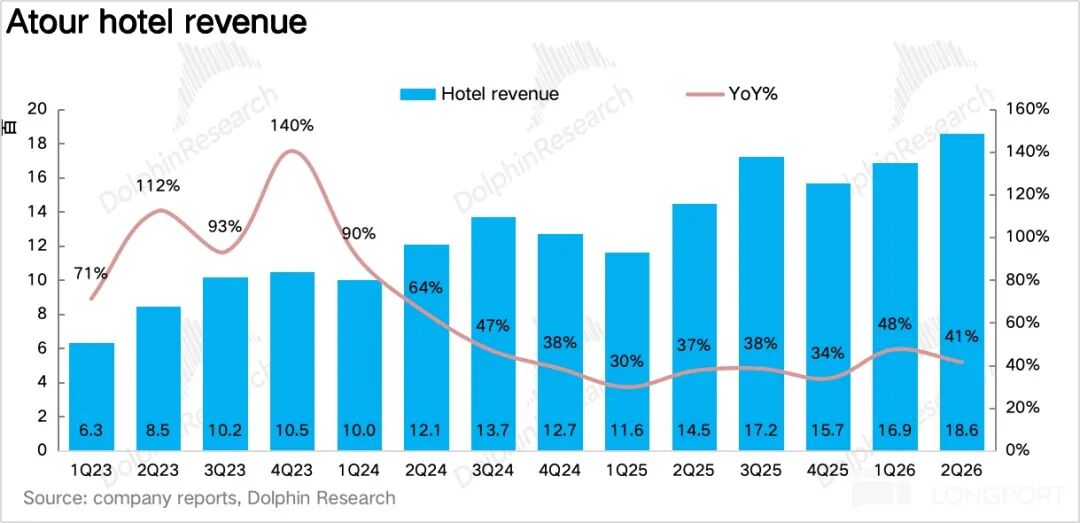
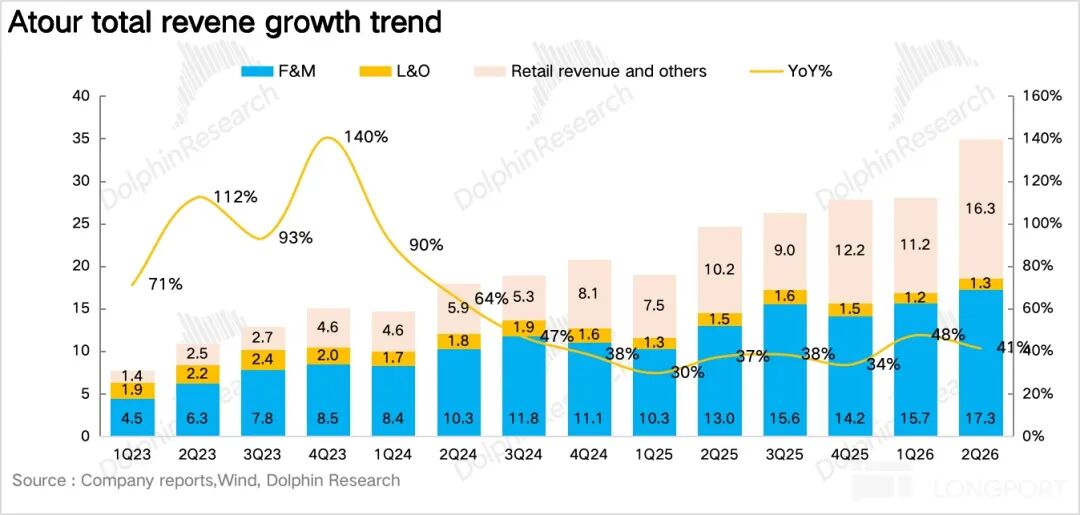
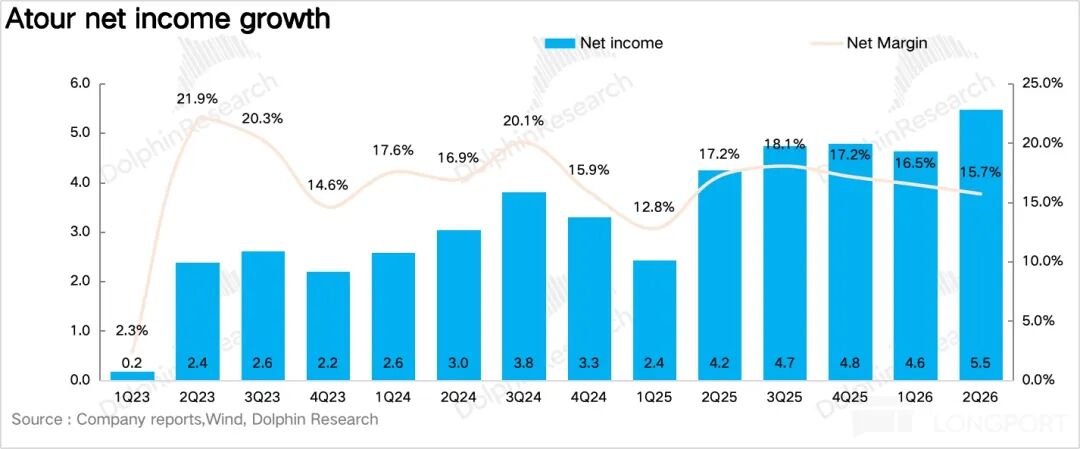
On August 20, 2026, before the US stock market opened (GMT+8), Atour (ATAT) released its Q2 2026 financial report. Although total revenue exceeded expectations and the company further raised its full-year revenue guidance from +24%-28% to +30%, profit growth did not meet expectations due to the drag from its retail business.
Specific highlights are as follows:
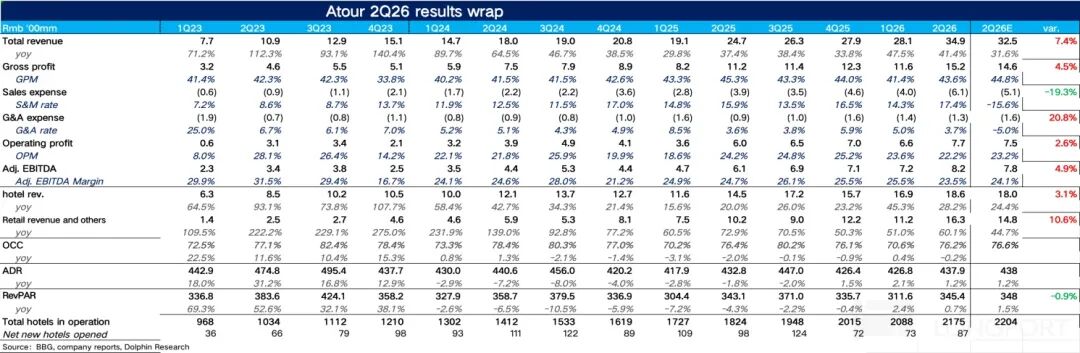
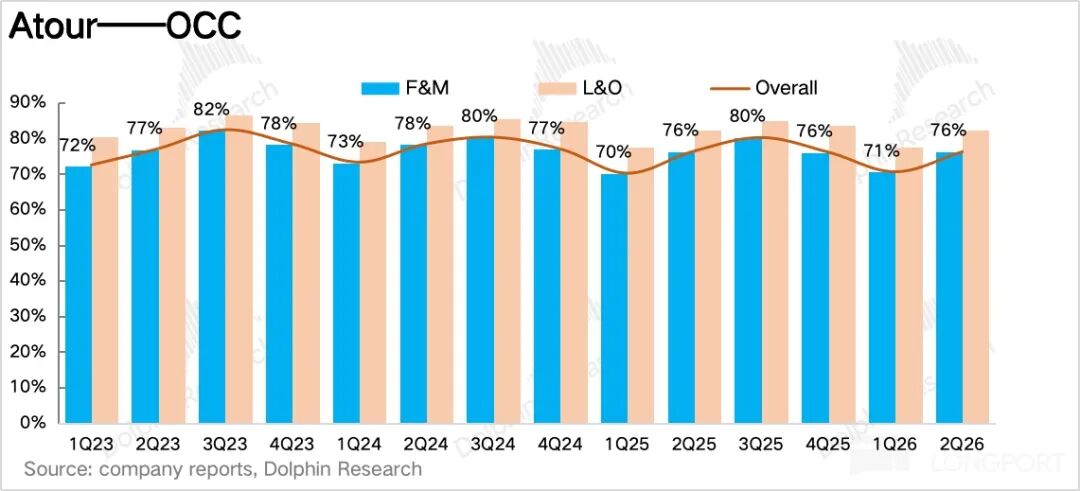
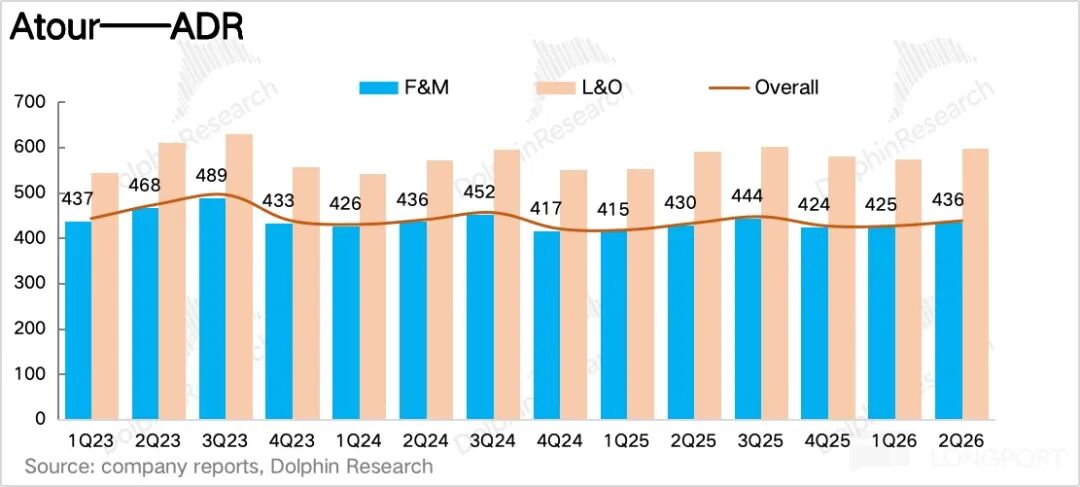
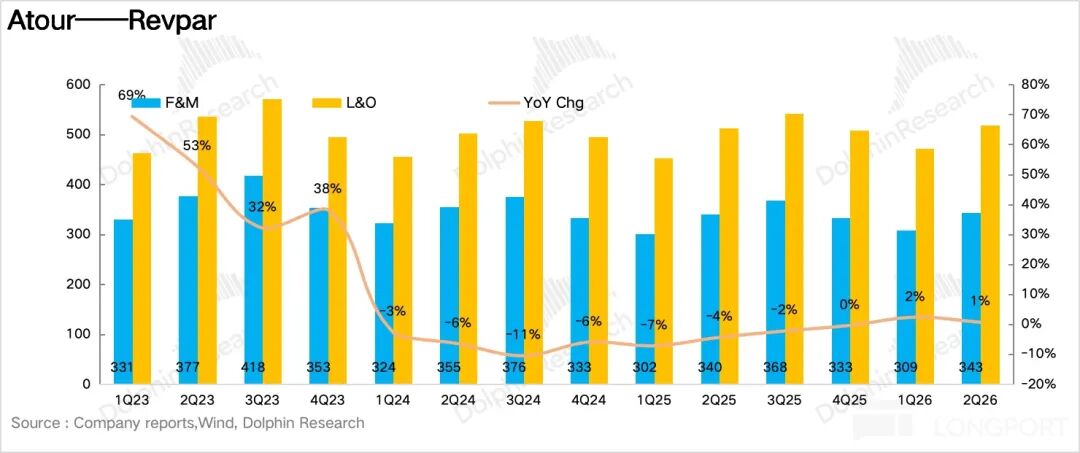
1. RevPAR saw a quarter-on-quarter decline. Looking at the core operating indicator, revenue per available room (RevPAR), Atour's Q2 RevPAR was 345.4 yuan/night, representing a 0.7% year-over-year increase, barely maintaining positive growth. Specifically, ADR increased by 1.2% year-over-year and was still the only positive driver, while OCC declined slightly by 0.2% year-over-year.
According to STR tracking data, after the Chinese hotel industry's RevPAR surged by +4.9% year-on-year in April, it fell back month-on-month in May and June.
The reason behind this is that, following the Iran conflict, higher oil prices drove up aviation fuel surcharges, which peaked in May. Combined with weather disturbances in some regions, overall travel costs rose, suppressing both leisure and business travel demand. As a cross-check, the recently released Huazhu blended same-store growth was -3.0%, showing this is a challenge faced by the entire mid-to-upscale hotel industry, not just Atour's own operational issue.
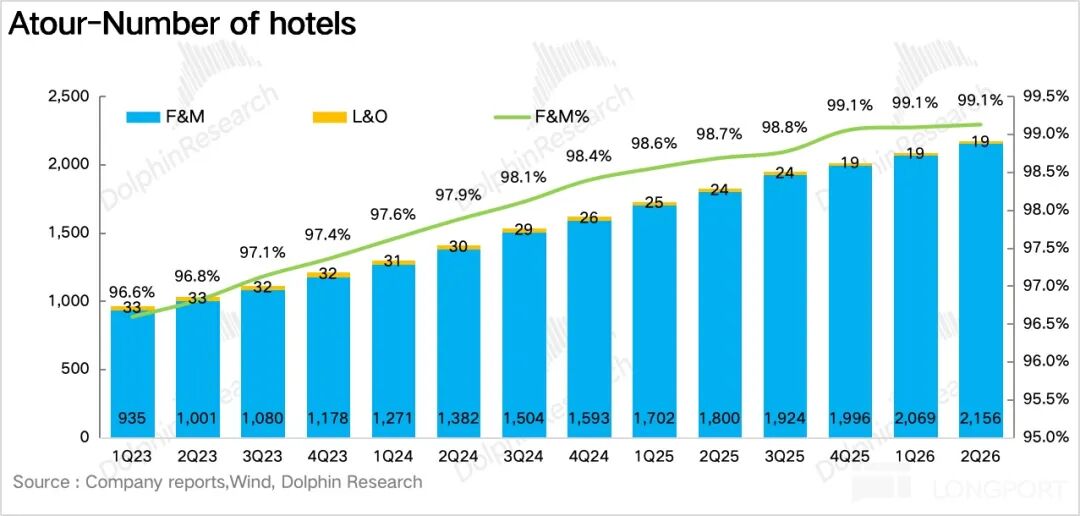
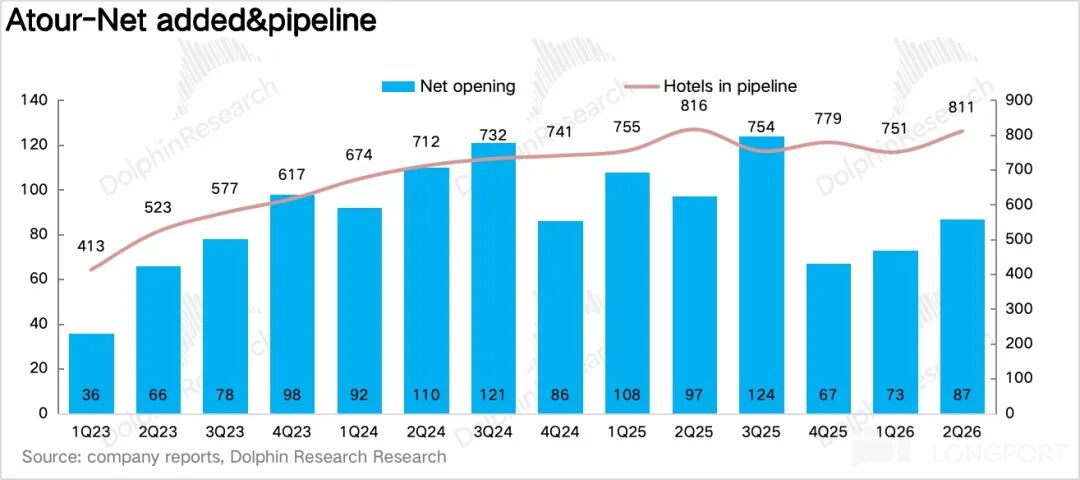
2. Store-opening pace slows down. In terms of store counts, Atour opened 101 new stores and closed 14 in Q2, for a net increase of 87—a slower pace compared to the same period last year. By brand, Atour (including 1,611 franchise and 13 self-operated flagship hotels) remains the absolute main force. Given the -3.0% same-store RevPAR background, the company’s decision to slow down new signings and openings and shift resources to project selection is a more rational choice, in the view of Haitun-jun,— because blindly opening stores when same-store numbers are under pressure would only cause new stores and existing ones to cannibalize each other, resulting in poor performance on both fronts.
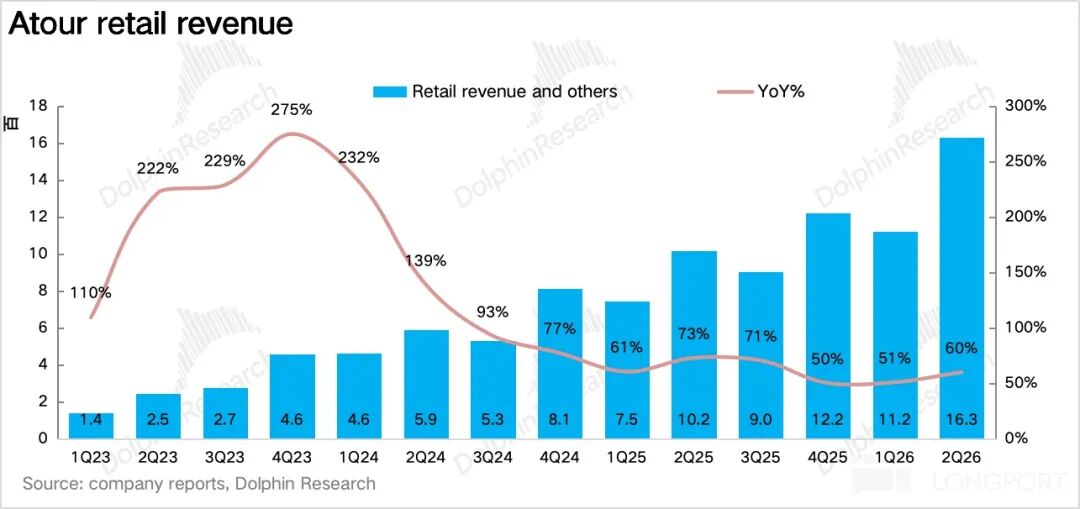
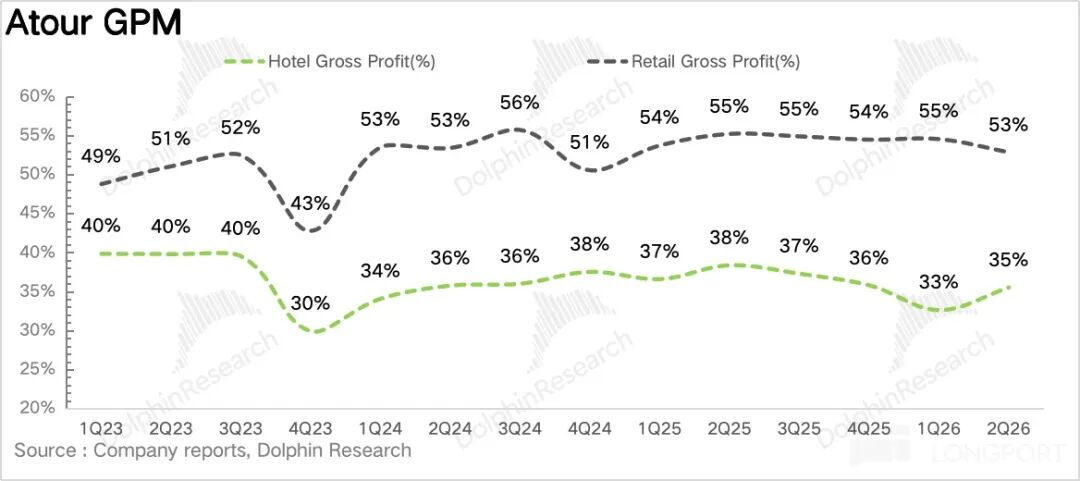
3. Retail share expands but core product prices start to decline. Benefiting from enhanced brand recognition and effective product innovation and development, retail revenue reached 1.58 billion yuan, up 63% year-on-year, with the revenue share jumping from 39% a year ago to 45%. However, according to Jiuqian data, prices of June items such as pillows and duvets fell by high single digits year-on-year, causing the retail gross margin to decrease by 1.9 percentage points to 51.4%.
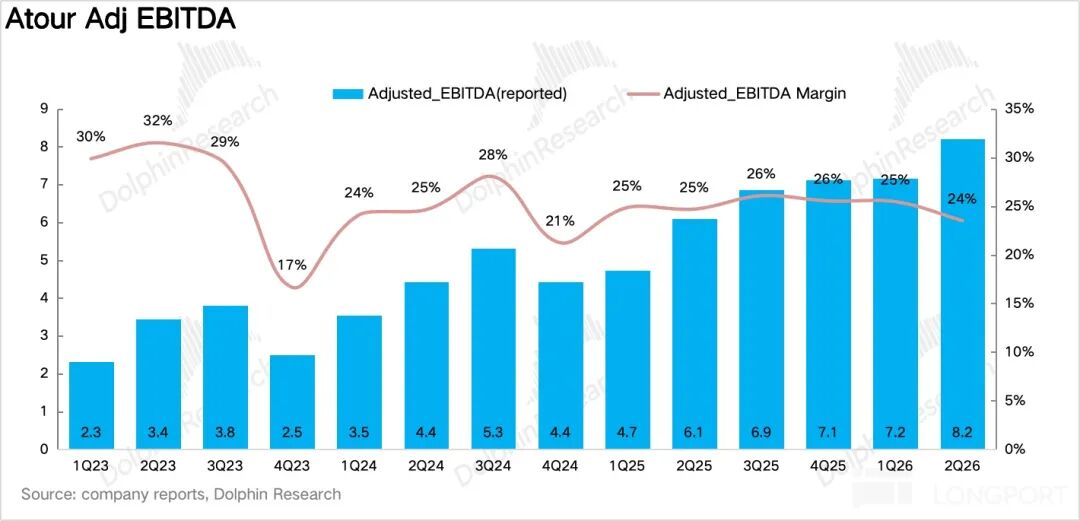
4. Expense input increases, profitability declines. The decrease in retail gross margin combined with a higher share of low-margin supply chain revenue led Atour's gross margin to drop 1.7% to 43.6% year-on-year. In addition, due to increased investment in online branding, selling expenses soared 54% year-on-year to 610 million yuan, and the expense ratio rose 1.5 percentage points to 17.4%. As a result, the company’s operating margin dropped 1 percentage point to 23.2%.
5. An overview of the financial data:
Haitun-jun’s overall views:
First, in the hotel business, the slowdown in Q2 is very clear: the Iran conflict drove up oil prices, aviation fuel surcharges peaked in May, overall travel costs increased, and weather disturbances further added to this. As a result, the 4.9% industry-wide RevPAR growth in April was pressed down to -1.0% by June in just two months.
On the bright side, upon entering Q3, overall fuel prices have begun to fall, aviation fuel surcharges decreased twice on June 5 and July 5, and the summer travel season started after schools closed around July 10. This means that from a demand perspective, the macro environment is marginally improving quarter-on-quarter.
On the other hand, the core contradiction in the industry actually hasn’t been resolved yet—the supply in lower-tier cities is still increasing rapidly, and Atour’s blended same-store RevPAR declines are expanding (Q1: -1.7%→ Q2: -3.0%), showing that pricing power at legacy stores is being eroded. Therefore, like Huazhu, the best path for Atour is to further increase the share of light-asset franchised business and reduce the impact of RevPAR on the company’s business.
As for the retail business, Haitun-jun commented after Q1 that the core plus of retail was “Atour did not rely on price reductions and promotions for growth.” However, the results this quarter obviously broke that logic. This is also consistent with high-frequency data— June pillow ASP fell 7% year-on-year to 442 yuan, duvet ASP fell 11% to 506 yuan, and overall ASP grew by just 2% and was wholly reliant on the product mix tilting toward higher-priced duvets. Combined with a 54% year-on-year increase in selling expenses, it indicates that much of the retail business’s growth was actually “bought.”
Additionally, in terms of channel shifts, Tmall/Taobao only grew 8% in June while Douyin grew 51%, meaning the increment is shifting from shelf e-commerce to content e-commerce. When content commerce traffic is largely bought, the repurchase rate is clearly weaker than shelf or self-owned channels, so if incremental growth becomes too dependent on Douyin, there’s limited long-term room to reduce the selling expense ratio.
However, if retail gross margins continue below 50% in Q3, the market’s valuation framework for the retail segment might revert from “consumer brand” to “home textile manufacturer,” posing further valuation risk.
The following are detailed charts:
- END -
// RepostKaibai

This article is not easy to write, please click"Share" to give me some energy~
Disclaimer: The content of this article solely reflects the author's opinion and does not represent the platform in any capacity. This article is not intended to serve as a reference for making investment decisions.
You may also like
CFTC Chairman Selig calls compute the most important commodity of our day, opens door to GPU futures
EMERGING MARKETS-LatAm markets set for weekly gains as softer dollar buoys risk appetite
Crypto Biz: Treasury’s ‘Not-QE’ playbook sends Bitcoin higher
Best Altcoins to Watch: 3 Coins Worth Your Attention
Crypto prices
More


