Bitget App
Trade smarter
Buy cryptoMarketsTradeFuturesEarnSquareMore
SpaceX's Second Major Lockup Expiration Hits Today, The First One Sparked a 35% Rally. Will It Happen Again?

SpaceX's Second Major Lockup Expiration Hits Today, The First One Sparked a 35% Rally. Will It Happen Again?

BitgetBitget2026/08/20 12:46
By:Bitget
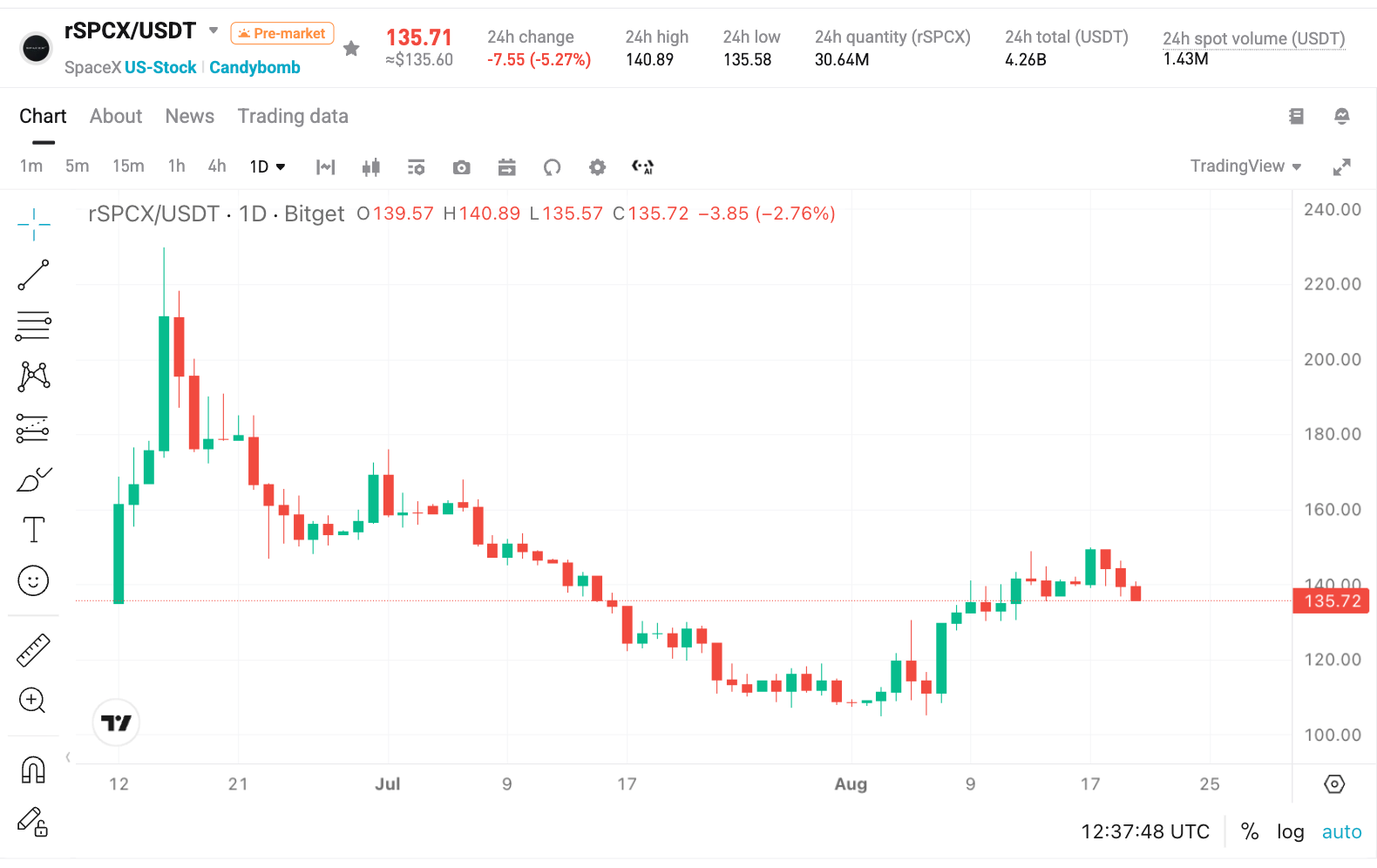
Earlier this month, SpaceX saw its first major post-IPO lockup expiration. Everyone was bracing for a selloff — instead, the stock surged. SPCX gained 6% on the day of the unlock, then rallied an additional 35% over the next five trading days, adding roughly $500 billion in market cap and reclaiming the $135 IPO price from as low as $108.
 
Today, can the story repeat itself?
The second lockup expiration is roughly one-third the size of the first, with 319 million shares becoming eligible to trade today. As of yesterday's close, the stock sat at $139.65, down 2.57% on the session.
SpaceX's Second Major Lockup Expiration Hits Today, The First One Sparked a 35% Rally. Will It Happen Again? image 0
Two Lockups, Two Very Different Setups
The first lockup expiration (August 6) hit when SpaceX was trading near its post-IPO lows, down nearly 20% from the $135 IPO price. With insiders largely underwater, their incentive to sell was limited. Sidelined buyers quietly accumulated into the fear, ultimately triggering a FOMO-driven surge that caught most of the market offside.
 
This time, the setup is fundamentally different. After the post-lockup rally, early investors are sitting on substantial unrealized gains, and the motivation to take profits is meaningfully stronger. The lockup tranche may be smaller, but the question the market now has to answer is harder: at these levels, is there still enough buying demand to absorb the supply?
 
If selling pressure is absorbed smoothly once again, the "bad news is priced in" dynamic could trigger another leg higher, pushing toward the $150 resistance zone. If profit-taking comes in concentrated waves, volatility will spike sharply. Today's close will be the verdict.
 
Key Technical Levels
Two layers of resistance above current price: $145–$146 is the near-term ceiling, the stock opened into this zone yesterday and was immediately turned back; $149–$150 is a stronger resistance band, where two separate rallies over the past two weeks were rejected. Core support sits at $135 — the IPO price, which was tested intraday yesterday before recovering into the close.
 
For investors already holding a profitable position, the $135–$136 zone is the key area to monitor. A quick dip into this range followed by a contraction in volume and a stabilization would suggest selling pressure is fading, offering a short-term add-on setup; a stop below $130 is a reasonable reference in that scenario. First target: $145–$146. If the lockup overhang is fully absorbed and the stock breaks $150 on elevated volume, the move can extend further. If $135 gives way convincingly, the risk of a deeper pullback increases, in that case, disciplined position management should take priority over reacting to every swing in either direction.
 
0
0

Disclaimer: The content of this article solely reflects the author's opinion and does not represent the platform in any capacity. This article is not intended to serve as a reference for making investment decisions.

Understand the market, then trade.
Bitget offers one-stop trading for cryptocurrencies, stocks, and gold.
Trade now!

You may also like

Can the Bank of Japan's "twist operation" really suppress long-term interest rates? Goldman Sachs: Fiscal issues are the real root cause, and term premium may persist for a long time.

Goldman Sachs pointed out that the factors driving the recent rise in long-term U.S. yields include the U.S. fiscal deficit, inflation uncertainty, large-scale AI-related debt issuance, and market concerns about an increase in the equilibrium real interest rate. Meanwhile, Treasury repo operations and adjustments in issuance structure do not affect these factors. Therefore, Goldman Sachs believes that this intervention can only temporarily relieve pressure and cannot change the trend direction of long-term yields.

华尔街见闻2026/08/20 15:36