
Interpretation: Signals from July Foreign Exchange Settlement and Sales Data

Morning FX
July, the hot summer, but corporate enthusiasm for FX settlement has cooled down.
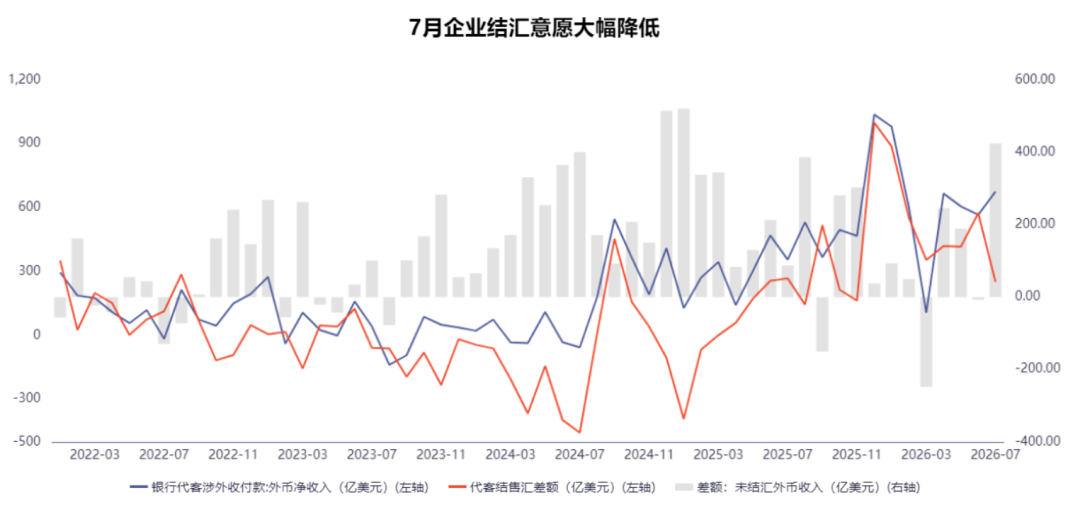
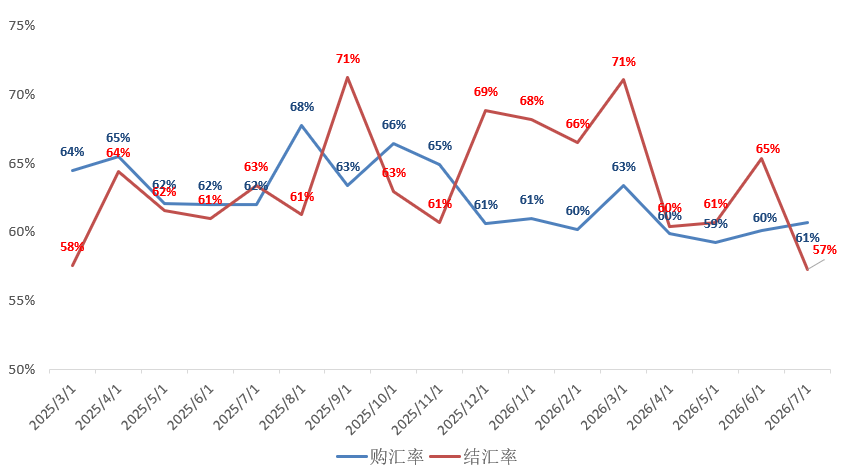
On the one hand, this is reflected in a clear drop in the FX settlement rate. Despite a month-on-month rebound in foreign currency net receipts, the scale of net FX settlement for clients dropped to its lowest since December 2025. Unsettled foreign currency income reached USD 42.4 billion in a single month, close to a historical high, and the settlement rate fell to 57%.
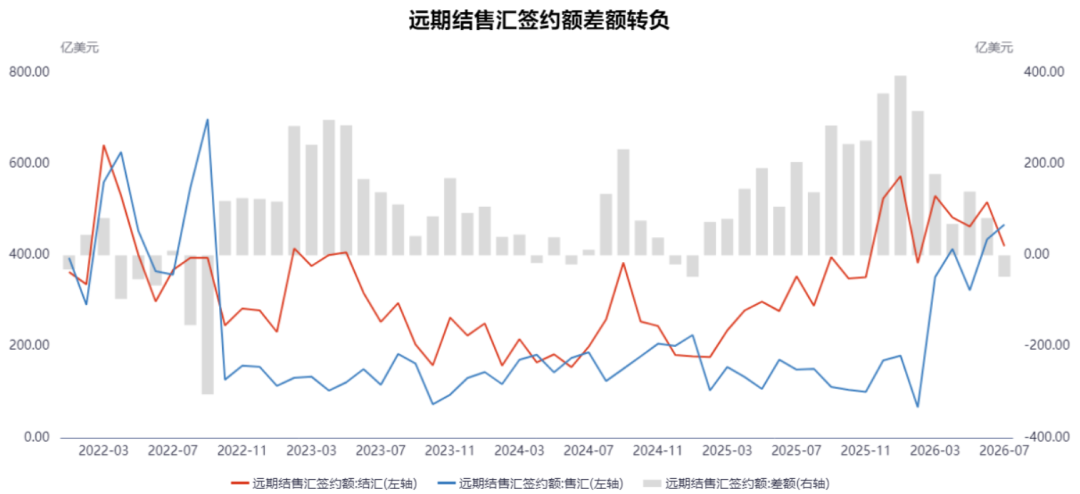
On the other hand, the forward FX settlement/ purchase sign-up gap fell and turned negative. New forward FX settlement contracts fell, combined with continued growth in new forward FX purchase contracts, resulting in a negative forward sign-up balance for the first time since February 2025.
Why is this happening? Have companies reversed their appreciation outlook on CNY?
Looking at the following two “record high” segmented data points, it doesn’t seem to be the case:
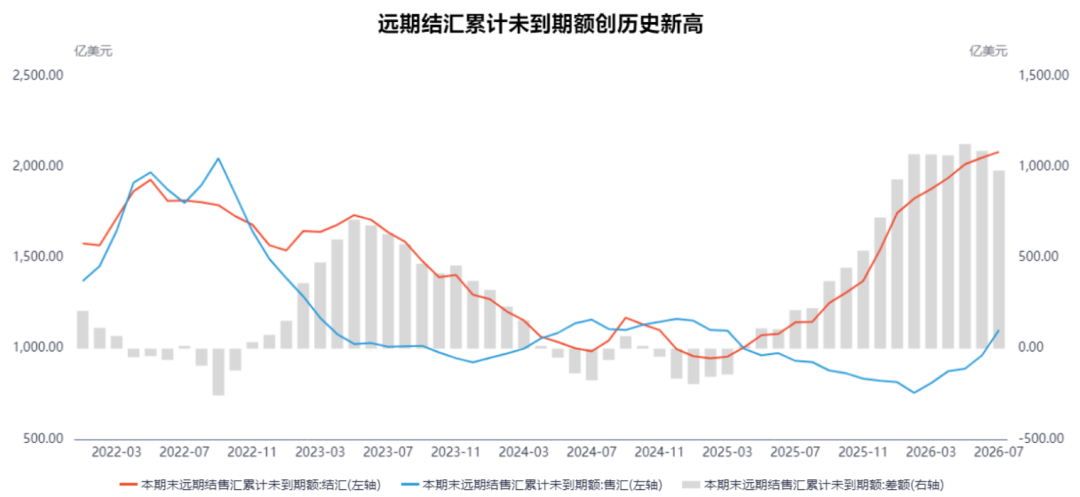
The outstanding amount of forward FX settlements reached USD 208.27 billion, a record high, and although the outstanding amount of forward FX purchases also increased, their gap remains elevated.
Outstanding option delta net exposure is the second highest in history, only lower than June this year. This figure reflects the delta net exposure direction of banks resulting from taking client options: when clients buy a large amount of put options or sell call options, banks thus sell puts/sell calls to clients, resulting in a net long delta. A positive and high historical level indicates enterprises still hold a significant number of unexpired CNY-appreciation options.
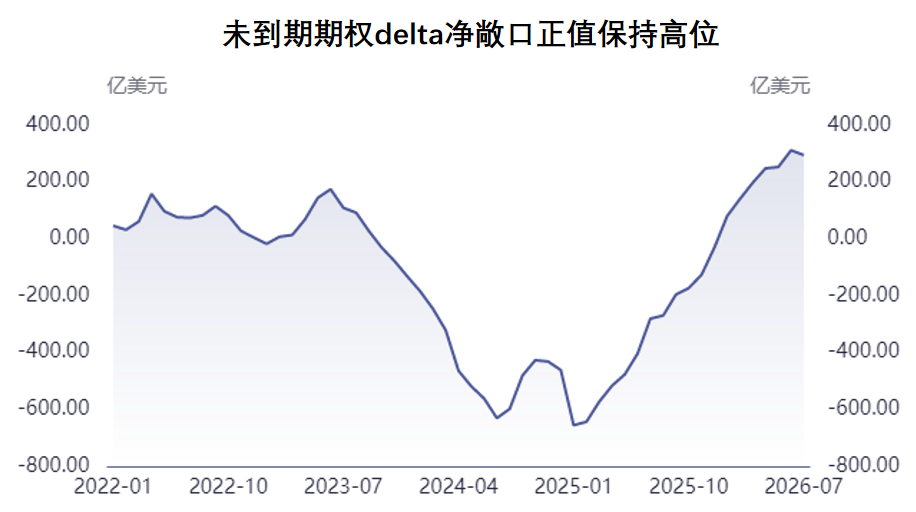
It can be seen that corporate hedging strength on the FX settlement side is not weak.
Combined with two major recent features of the CNY FX market, it’s evident that the July cool-down in corporate FX settlement and uptake in FX purchase is actually about optimal cost-effectiveness:
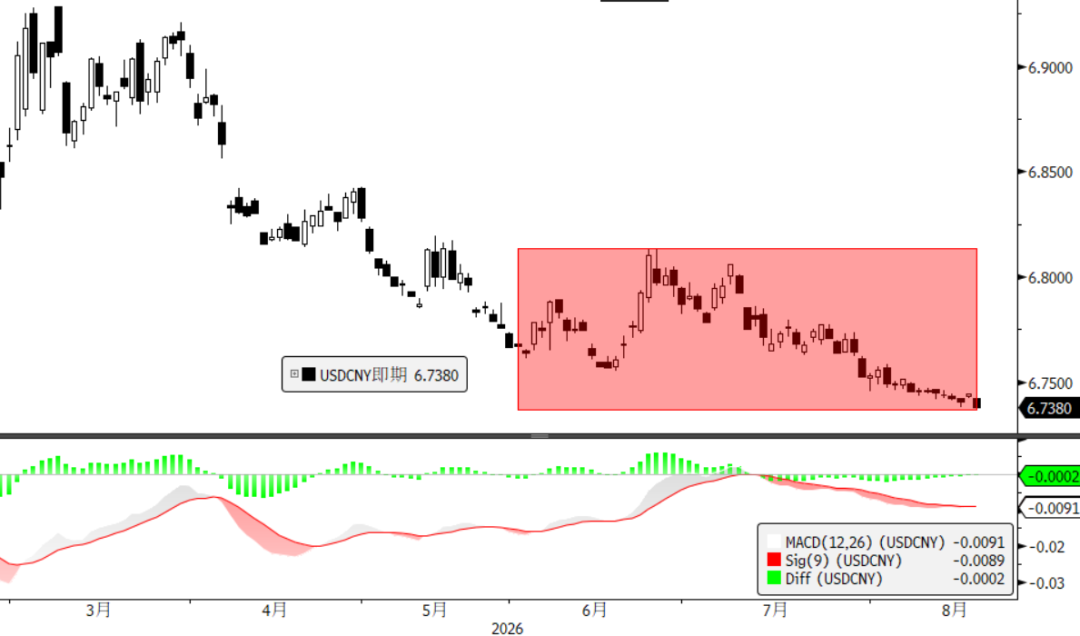
Appreciation pace slows, swap discount impact magnifies. Since June, affected by seasonal dividend FX purchases, renewed US-Iran tensions, and other factors, the pace of CNY appreciation has slowed significantly compared to early this year, making the average -140 pips per month swap cost particularly salient. Moreover, with USDCNY around 6.75 not considered high, FX settlement clients have already built up plenty of positions, so momentum for further accumulation naturally decreases. Conversely, for FX purchase clients, now is a good time to lock in more positions; the earlier you lock in, the more you can earn from swap points on the purchase side.
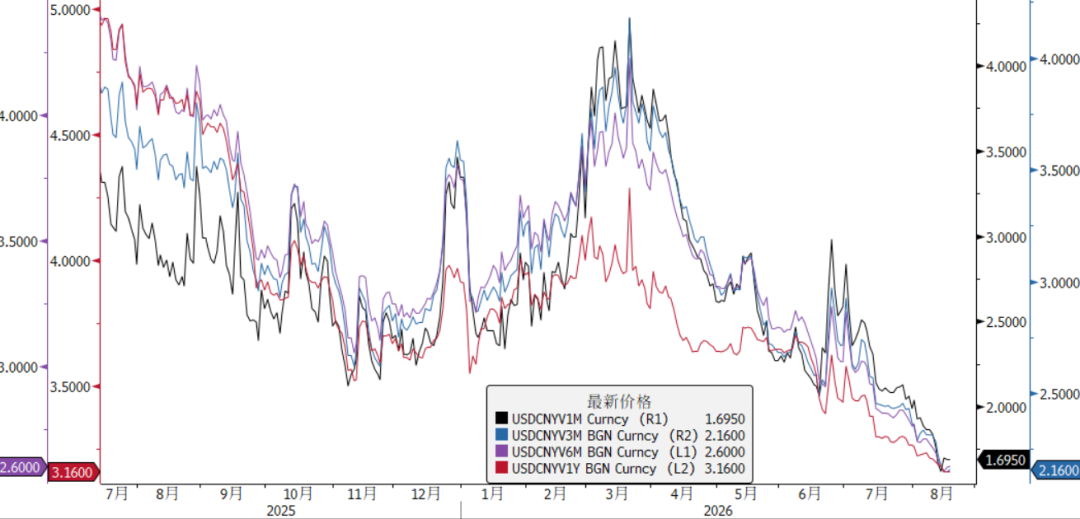
Option volatility is hitting new lows, reflecting the market’s view that CNY is stable and tail risks are receding, so there’s no urgency for companies to add positions.
In summary, my view is that: The marginal cool-down in corporate net FX settlement enthusiasm in July is more of a shift from “accelerated position building” to “maintaining high levels”, rather than a reversal of the corporate view on CNY appreciation.
Summary:
In July, banks’ client-side FX settlement/purchase gap and FX settlement rate fell sharply, and new forward FX settlement/purchase sign-up gap turned negative—evidence of cooling corporate enthusiasm for FX settlement.
But both the cumulative outstanding forward FX settlement amount and option delta net exposure remain historically high, indicating the FX hedging ratio of exporting companies is not low.
Since June, CNY volatility decreased and swap point impact intensified, marginally dampening corporate enthusiasm for FX settlement and pushing up FX purchase demand. In my view, the July cool-down in net FX settlement is merely ashift in pace, not a reversal of corporate CNY appreciation outlook.
Disclaimer: The content of this article solely reflects the author's opinion and does not represent the platform in any capacity. This article is not intended to serve as a reference for making investment decisions.
You may also like
Elon Musk aims to revolutionize AI programming: After Cursor, SpaceX attempted to acquire Cognition but was rejected.
After spending 60 billion dollars to acquire Cursor, SpaceX once again attempted to purchase the AI programming unicorn Cognition AI, but was publicly rejected by CEO Scott Wu on social media—"Not for sale, and not in negotiations." With a valuation already at 26 billion dollars and an ambition to reach 40 billion dollars, Cognition is determined to remain independent, causing a setback for Musk's expansion in the AI sector.
Light AI holds annual shareholder meeting in Vancouver
Another "White House insider trading"? The day before the U.S. Treasury unexpectedly intervened, U.S. long-term bond ETFs saw the largest single-day net inflow in history.
The day before the U.S. Treasury Department announced a significant expansion of its long-term bond repurchase program, a highly sensitive long-term bond ETF recorded a historic single-day net inflow of $123 million, with trading volume nearly doubling. Following the announcement, the yield on 30-year U.S. Treasury bonds fell by as much as 10 basis points in a single day, and the ETF surged by 3.2%. The unusual timing of this capital inflow has once again triggered market concerns over insider trading, echoing earlier controversies surrounding "White House insider trading."
AIAI CEO Todd Furniss buys 1,000 shares worth $5,590
Crypto prices
More


