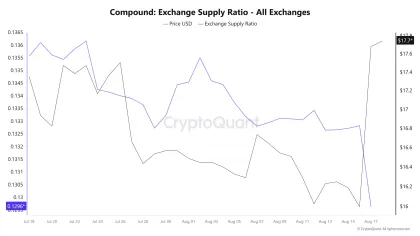
Decentralization helps to distribute control and decision-making to individuals instead of a single authority or organization. Centralized systems collate power and control in one place; this has been true for traditional financial systems. One of the core principles behind cryptocurrency and blockchain systems has been challenging this, taking away power from a central authority and distributing it among users.
Decentralized exchanges use liquidity pools rather than a conventional order book for buyers and sellers. A liquidity pool can be defined as a smart contract that contains assets that traders can swap against. Liquidity providers are users who deposit tokens into the pools and can get a share of applicable trading fees.
Here is our list of the top 8 decentralized exchanges to try out in August 2026:
1. PancakeSwap

PancakeSwap is a decentralized exchange built around the BNB Chain and evolved into a broad multi-chain trading ecosystem. It has a token swap option that works through decentralized liquidity pools and also supports various liquidity mechanisms. The platform also has farming options and other DeFi services for both traders and liquidity providers.
The platform offers a broad selection of tokens and also serves as one of the most popular exchanges in the space. Low transaction costs are a major factor that helps to facilitate on-chain trading.
2. Uniswap

Uniswap is another popular option in the DEX space, and it was launched on Ethereum. The Automated Market Maker, or AMM, model lets users swap tokens against liquidity pools rather than a traditional centralized order book.
The expansive liquidity base and developer ecosystem have helped Uniswap become one of the most popular options. It has also expanded from Ethereum into other blockchains and Layer-2 ecosystems.
3. Orca
Orca operates within the Solana ecosystem and is popular for its focus on user experience and liquidity provision. The platform has concentrated-liquidity mechanisms that give liquidity providers more control over the price ranges where their capital is deployed.
With Solana’s growth over the years, Orca has become important not just for traders who provide liquidity infrastructure but also for other aggregators. It is also one of the largest individual spot venues by trading volume.
4. Raydium
Another major decentralized exchange in the Solana ecosystem is Raydium. Users can access token swaps and liquidity pools while also supporting a wide range of assets. It has a traditional AMM pool along with an on-chain central limit order book, giving traders low fees, fast execution, and deep liquidity.
It also aims to solve high gas fees, liquidity fragmentation, and unnecessary failed orders. Raydium allows for near-instant trading and provides liquidity to cryptocurrency markets.
5. Meteora
Meteora is a liquidity and trading protocol within the Solana ecosystem that focuses on developing liquidity products that are designed to improve capital efficiency. The platform has a native token called MET that functions as the utility and governance asset.
It has a Dynamic Liquidity Market Maker (DLMM) that concentrates liquidity into specific price ranges and adjusts fees based on real-time market volatility to maximize returns for liquidity providers.
6. Hyperliquid
Hyperliquid is a Layer-1 platform for perpetual futures and spot trading created to be on par with the speed and user experience of centralized exchanges while still keeping a non-custodial protocol.
The focus on perpetual contracts lets traders speculate on the price of crypto assets without having to hold the underlying asset in the same way as a conventional spot trade.
7. GMX
GMX specializes in perpetual futures contracts and spot trading. It functions on the Arbitrum ecosystem, and instead of relying solely on simple token swaps, it lets users trade perpetual contracts and obtain leveraged exposure to crypto assets.
The platform also has a liquidity model that is unlike other traditional AMMs, and liquidity providers can create a risk and reward profile from simply supplying two assets to a conventional pool.
8. THORChain
A decentralized cross-chain liquidity protocol that is based on the Cosmos blockchain. THORChain focuses on cross-chain asset swaps. It lets users swap native tokens across various blockchain networks.
THORChain addresses fragmented liquidity, which is one of the most important problems in the DeFi space. It also aims to make crypto liquid and is referred to as the “Internet of blockchains”.
Final word
The initial idea behind decentralized exchanges was to function as a simple token-swap application, and many DEXs combine AMMs, concentrated liquidity, order books, and aggregators with cross-chain infrastructure.
Users are advised to do their own research before they use or invest in any of the platforms.