
web3: pump.fun repurchase positions turn profitable, $PUMP ends 9 months of floating losses

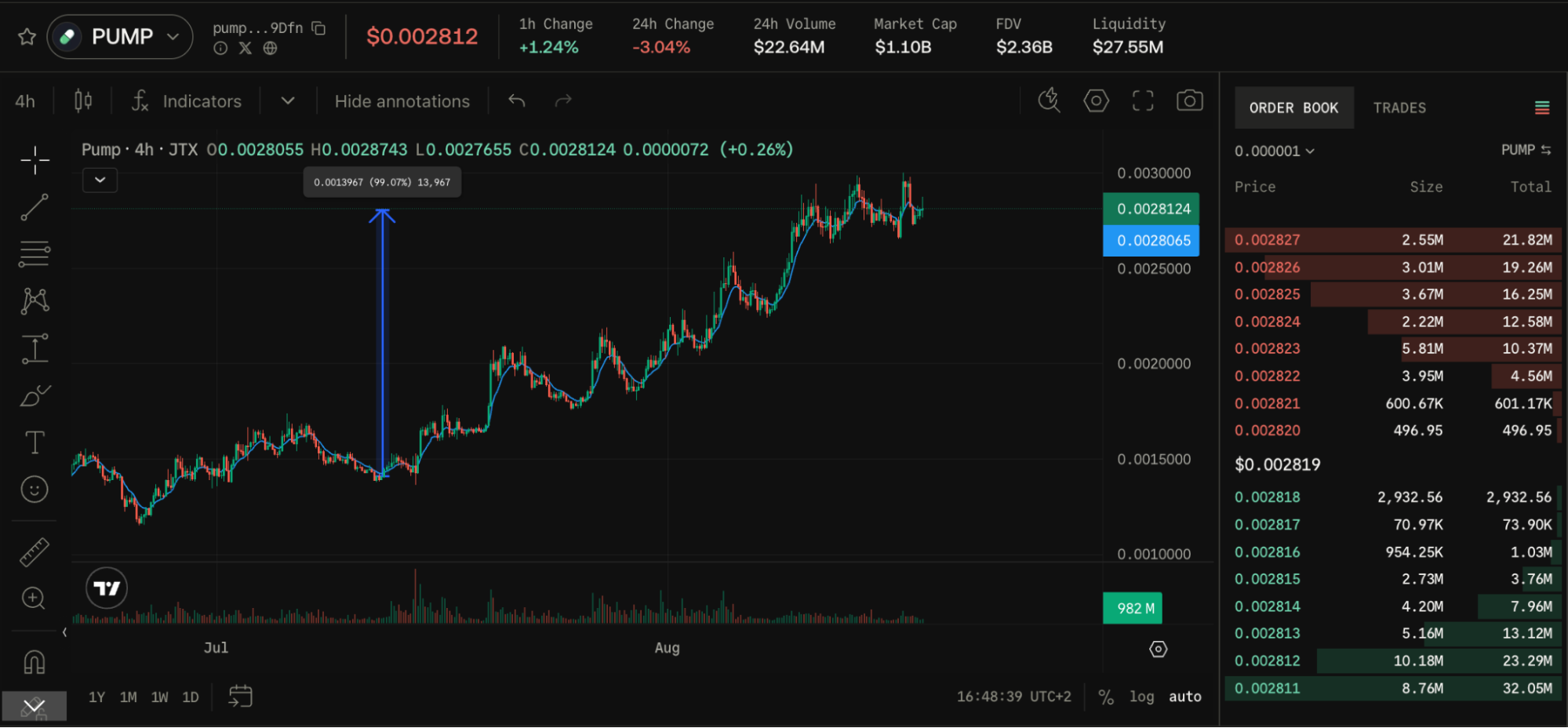
After pump.fun continued to use protocol revenue to buy back $PUMP, this position has turned profitable after approximately 9 months of being underwater. According to data from Blockworks Research, the recent strengthening of the token price has brought this buyback plan back into positive territory.
Protocol revenue recovers recently
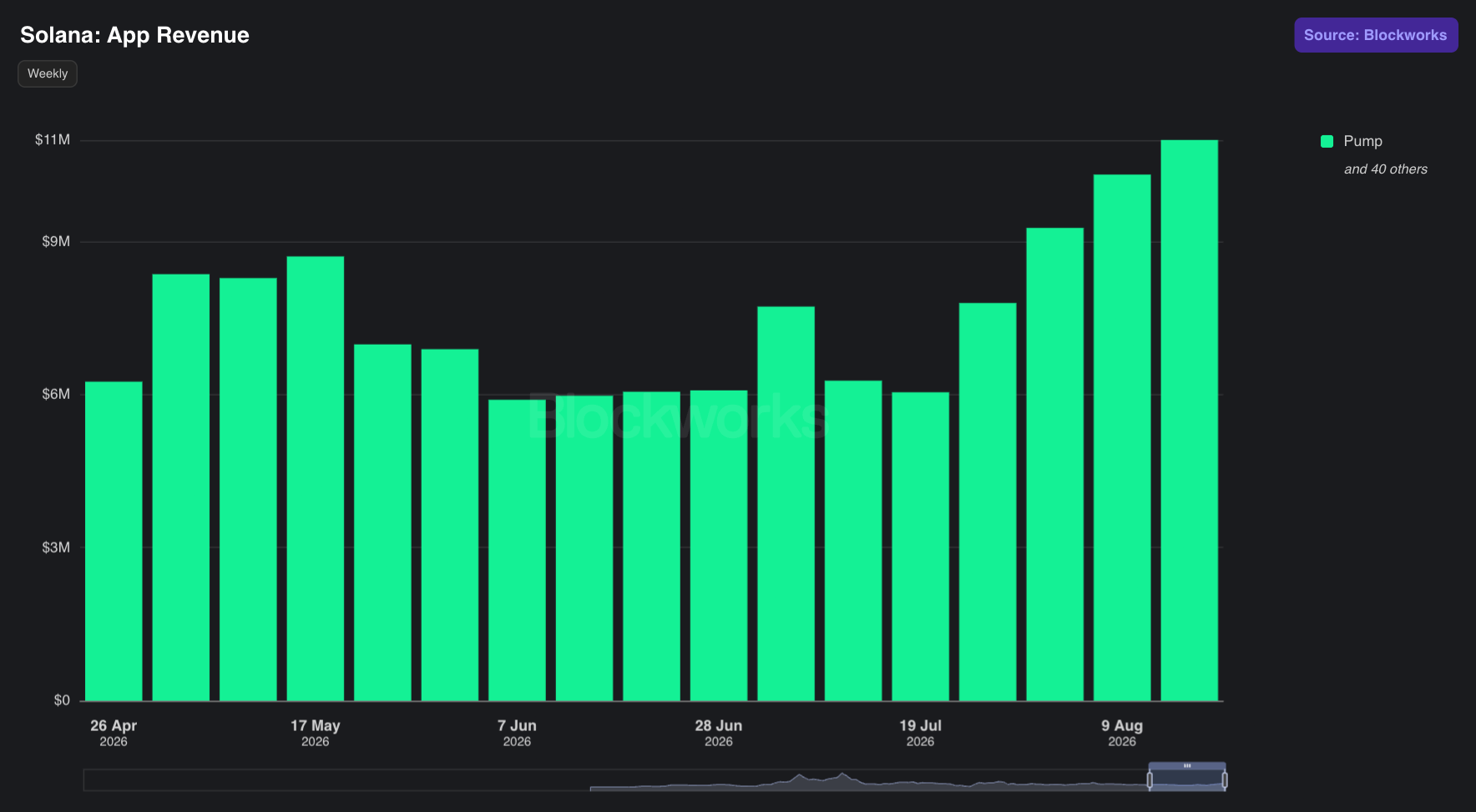
This shift has occurred in tandem with renewed trading activity on the Solana network. The report notes that pump.fun’s revenue has increased significantly in recent weeks, with weekly revenue rising from just above $6 million in early July to $11 million last week.
In April, pump.fun reduced the proportion of protocol revenue used for $PUMP buybacks from 100% to 50%. Even so, with growing revenue and a token price rebound, the performance of the buyback plan has improved on paper.
- Weekly revenue in early July: just above $6 million
- Weekly revenue last week: around $11 million
- Increase since July 12: about 99%
Market sentiment shifts
The report suggests that, in addition to increased buyback efforts and rising market attention, early investors have not engaged in concentrated selling after their tokens were unlocked, which has changed external perceptions of $PUMP. An asset previously avoided by some traders has become one of the stronger-performing tokens on the Solana network in recent weeks.
The article also mentions that, although tokens bought through the buyback mechanism are technically burned, the price performance of $PUMP has reignited market debates over whether buybacks are truly effective. Some projects choose to use protocol revenue to repurchase tokens from the open market, sending a signal of aligned incentives to holders.
Renewed attention on the buyback model
There has always been controversy surrounding token buybacks. Opponents believe that this approach may simply inject project revenue into the market, providing exit liquidity for other investors, and may not sustainably create value.
However, as the $PUMP buyback position turns profitable, supporters’ voices are growing again. Bitwise Chief Investment Officer Matt Hougan believes buybacks are a strong form of value capture. Some market participants compare $PUMP with $HYPE, arguing that whether buybacks succeed depends on the project’s revenue generation capability and the market’s confidence in the model itself.
The report also notes that Hyperliquid's Assistance Fund uses protocol revenue to purchase $HYPE. The fund currently holds 46 million $HYPE tokens, with a reported market value of about $2.76 billion and an average purchase cost of $26.56 per token, resulting in a paper profit of roughly $1.5 billion.
In comparison, although the pump.fun buyback plan has just recovered from being underwater, there is still a significant gap with Hyperliquid in terms of buyback size and paper profits.
Disclaimer: The content of this article solely reflects the author's opinion and does not represent the platform in any capacity. This article is not intended to serve as a reference for making investment decisions.
You may also like
FRP Holdings Director John D. Baker II reports purchase of USD 201,009 in common shares
Conduent files Form 3 for EVP, GC and Secretary Anna Rose Novoseletsky
EQB publishes abridged supplementary financial information package ahead of Q3 2026 results
Parlem Telecom renews Banco Sabadell credit line at EUR 1 million
Crypto prices
More


