
Germany faces severe natural gas shortages, UBS warns gas prices may surge this winter, posing upside risks to inflation

Germany's natural gas inventories are at their lowest seasonal levels in recent years. UBS has warned that if the Northern Hemisphere experiences severe cold this winter, Europe's largest economy may face a dual pressure of surging natural gas prices and supply shortages.
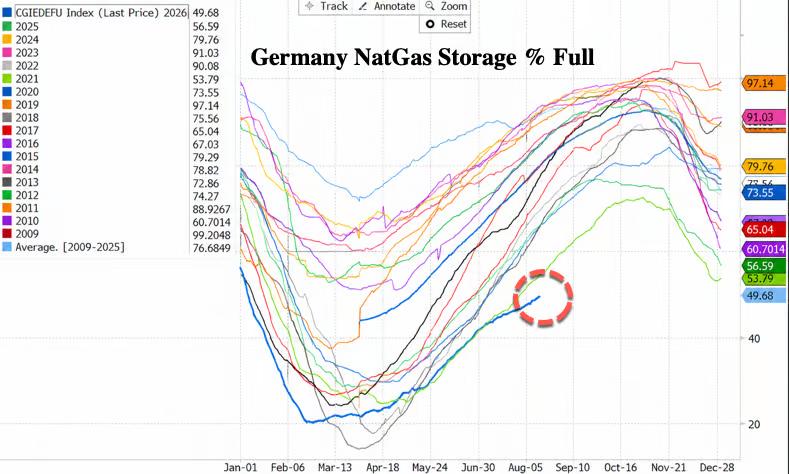
According to a report published Monday by UBS London-based macro strategist Simon Penn, Germany's natural gas reserves are currently only filled to 48%, far below 65% a year ago and 75% during the 2022 energy crisis, marking the lowest seasonal level in 17 years.
UBS economist Felix Huefner expects Germany's storage rate to reach just 65% by November, which is not only significantly below the government's target of 80% but also well short of the European Union's requirement of 90%. The inventory gap is reigniting market concerns about winter energy supply and may further drive up inflation in the eurozone and drag down Germany's economic growth.
Low inventories, replenishment faces multiple constraints
UBS pointed out that if Germany accelerates efforts to meet its storage targets, it could itself drive up natural gas demand and prices; replenishing inventories through Trading Hub Europe (THE) could further increase fiscal pressure. Additionally, large-scale purchases by Germany may crowd out supply for other European countries, intensifying regional energy competition.
There are also bottlenecks on the supply side. Germany's regasification facilities have limited capacity, and even if enough liquefied natural gas (LNG) is purchased from international markets, it may not be converted into storable pipeline gas in time. This means that simply increasing LNG procurement cannot completely eliminate the risk of actual gas shortages at the end of winter.
Meanwhile, low water levels in the Rhine River are further restricting the transport of energy and industrial goods in Germany. UBS said that at the key Kaub location, the Rhine currently has navigable water depths of only about 10 centimeters, compared to 400 centimeters in February this year and 200 centimeters a year ago. This has reduced cargo barge loads to just 10% to 20% of normal levels, significantly impacting supply capacity.
Gas prices rising, inflation and growth under pressure
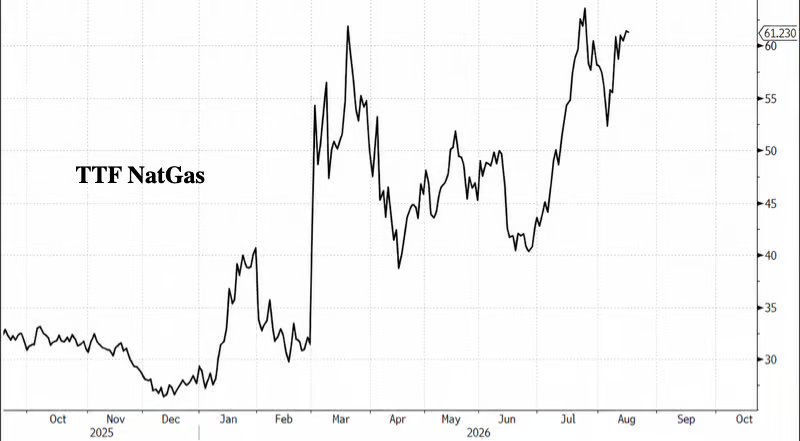
Natural gas supply risks could also quickly transmit to the macroeconomy. The European Central Bank estimates that every 10% increase in wholesale gas prices raises overall inflation in the eurozone by about 0.6 percentage points. For Germany, rising energy costs combined with transport bottlenecks on the Rhine could further drag down an already pressured economy.
UBS believes that weather this winter will be the key variable for European energy markets. If the Northern Hemisphere faces severe cold, Europe could see a "cold and expensive" winter; conversely, if the El Niño phenomenon brings relatively mild weather, supply and demand pressures may be eased. In other words, whether Germany can get through the winter smoothly depends not only on the speed of inventory replenishment but also on the weather trends in the coming months.
Disclaimer: The content of this article solely reflects the author's opinion and does not represent the platform in any capacity. This article is not intended to serve as a reference for making investment decisions.
You may also like
David Bailey’s Nakamoto and KindlyMD raise bitcoin treasury target to $763 million with new PIPE funding
Wyoming Stable Token Commission targets Aug. 20 for WYST stablecoin mainnet launch
South Korea's KakaoPay shares soar 200% in past month amid stablecoin moves
Crypto prices
More


