
When will the U.S. Treasury bond crash come to an end?

Morning FX
Recently, U.S. economic data have continued to weaken: July retail sales fell 0.6% month-on-month, significantly below market expectations of a 0.1% increase, alongside softening nonfarm payrolls and inflation data, with multiple economic indicators showing continued cooling. The market has lowered expectations for a Federal Reserve rate hike, and the probability of a rate hike in September has dropped to around 30%.
The yield curve is becoming increasingly steep: Short-term Treasury yields are falling, but the 10-year Treasury yield broke above 4.7% and the 30-year Treasury yield reached a twenty-year high of 5.3%.
With the economy weakening and expectations for rate hikes cooling, but long-end Treasury yields remaining high, what exactly is being traded in the U.S. Treasury market?
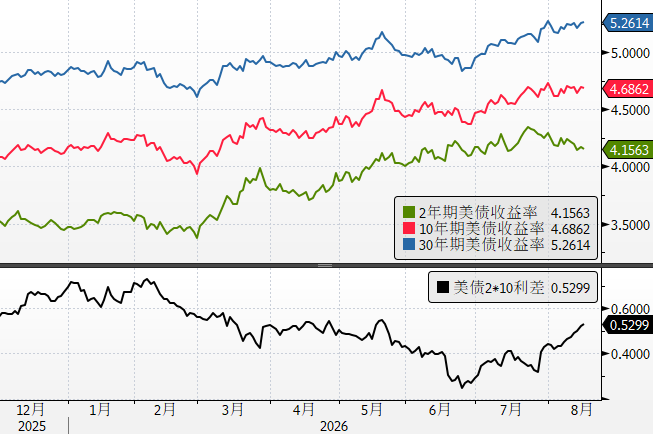
1. Why long-term Treasury yields remain elevated: Supply pressures continuously drive up the term premium
1. Fiscal issuance and deficit concerns: In July, the U.S. fiscal deficit reached a record $432 billion, pushing total U.S. government debt close to $40 trillion. Last week, the Congressional Budget Office (CBO) raised its fiscal 2026 deficit forecast from $1.9 trillion (in February) to $2.1 trillion, mainly due to a Supreme Court decision that caused tariff revenue to fall well short of prior estimates. The mounting U.S. debt burden has made buyers of Treasurys more price-sensitive, pushing up the term premium. According to U.S. Treasury data published Monday, foreign holdings of U.S. Treasurys declined in June, with Japan and China posting the largest reductions.
2. Surging bond issuance demand from the AI industrial chain: Companies like Amazon, Alphabet, Nvidia, AMD, and others have issued large amounts of long-duration USD bonds to finance data centers and AI infrastructure capex. By early August 2026, leading U.S. cloud and AI tech giants had issued more than $220 billion worth of USD bonds this year. Recently, Nvidia also reached a $500 billion financing agreement, further intensifying market concerns over the supply of long-duration assets. Bond investors are becoming increasingly cautious about the potential market impact of these contingent liabilities materializing in the future.
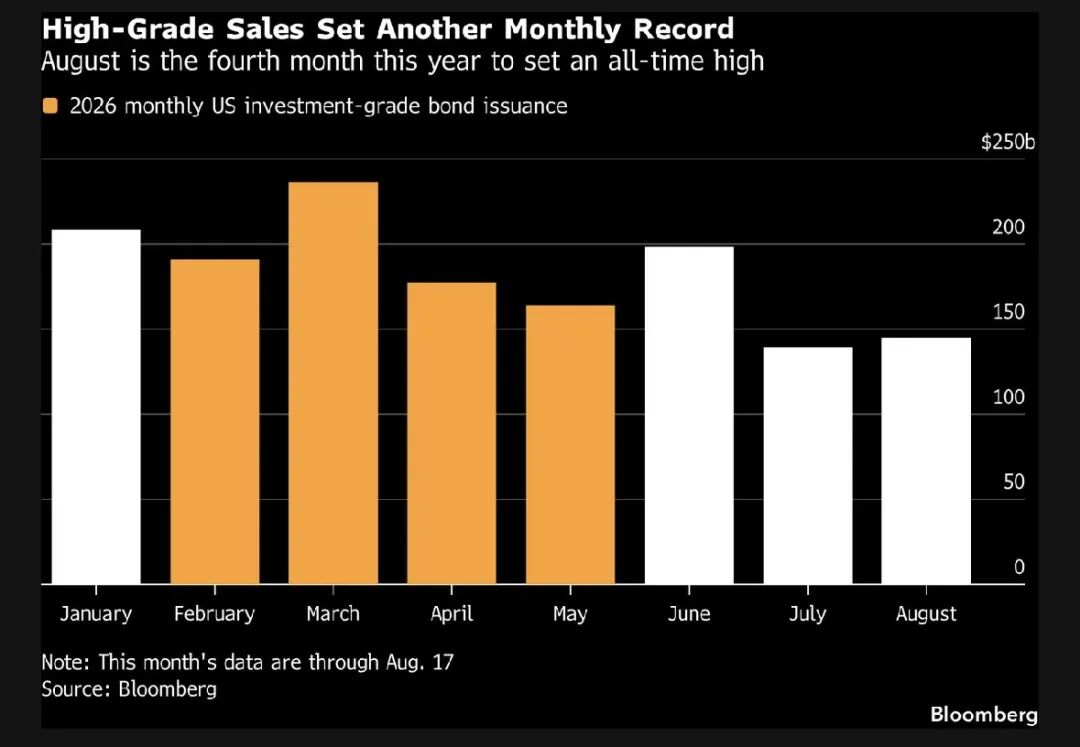
2. Key milestones ahead: U.S. Midterm Elections in November
Looking ahead, the U.S. midterm elections on November 3, 2026 will be a core variable that could shape U.S. fiscal policy, and in turn, influence the longer end of the Treasury curve.
The market generally expects Republicans are likely to retain control of the Senate, but the House remains uncertain: Democrats would need to gain only 3 net seats to secure a majority in the House.
Based on current market pricing, a split government is the most likely scenario. If that occurs, upward pressure on long-end yields could ease, and the U.S. yield curve may flatten.
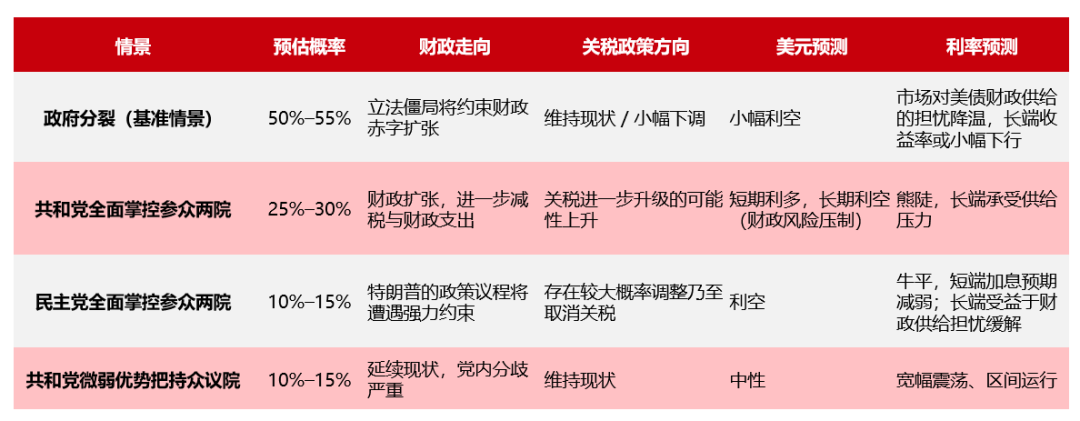
3. Summary
1. In the short term, pressures from fiscal supply and AI company financing have kept long-term Treasury yields elevated.
2. If the midterm elections result in a divided Congress, it will likely lead to eased fiscal expectations at the margin, and the risk-reward ratio for going long on the long-end of the curve is starting to look more favorable.
Disclaimer: The content of this article solely reflects the author's opinion and does not represent the platform in any capacity. This article is not intended to serve as a reference for making investment decisions.
You may also like
Benz Mining holds special shareholder meeting in Perth
BHP publishes transcript of FY26 full-year results speech
BHP publishes FY2026 annual report
New York gold prices rose on the 17th

Crypto prices
More


