
a16z researches crypto payment cards: stablecoin card spending grows rapidly

Author | a16z crypto
Translator | TechFlow
Summary: Stablecoins are no longer just digital numbers on-chain—they can now be used to buy coffee with a swipe. Monthly transaction volume for crypto payment cards has exceeded $750 million, growing 2.5 times in one year. Behind nearly 9 million transactions, USDC and USDT account for 84% of the share, making Visa the biggest winner. These cards enable even the unbanked to spend dollars. Stablecoins are infiltrating the payment system in the most traditional way.
The scale of card spending using stablecoins is growing rapidly.
Crypto payment cards have evolved from a novelty to a business with monthly transaction volumes exceeding $750 million. These cards allow people to pay with crypto at any location that accepts traditional card networks. The key mechanism is that crypto (mostly stablecoins) is instantly converted into local currency during payment, so for merchants, the transaction is indistinguishable from a regular card payment.
Crypto cardholders do not need traditional bank accounts. Depending on the project, users either deposit stablecoins with the card issuer or self-custody directly on-chain. Crypto cards have expanded the opportunity to use dollar accounts globally and offer stablecoin holders a convenient way to transact.
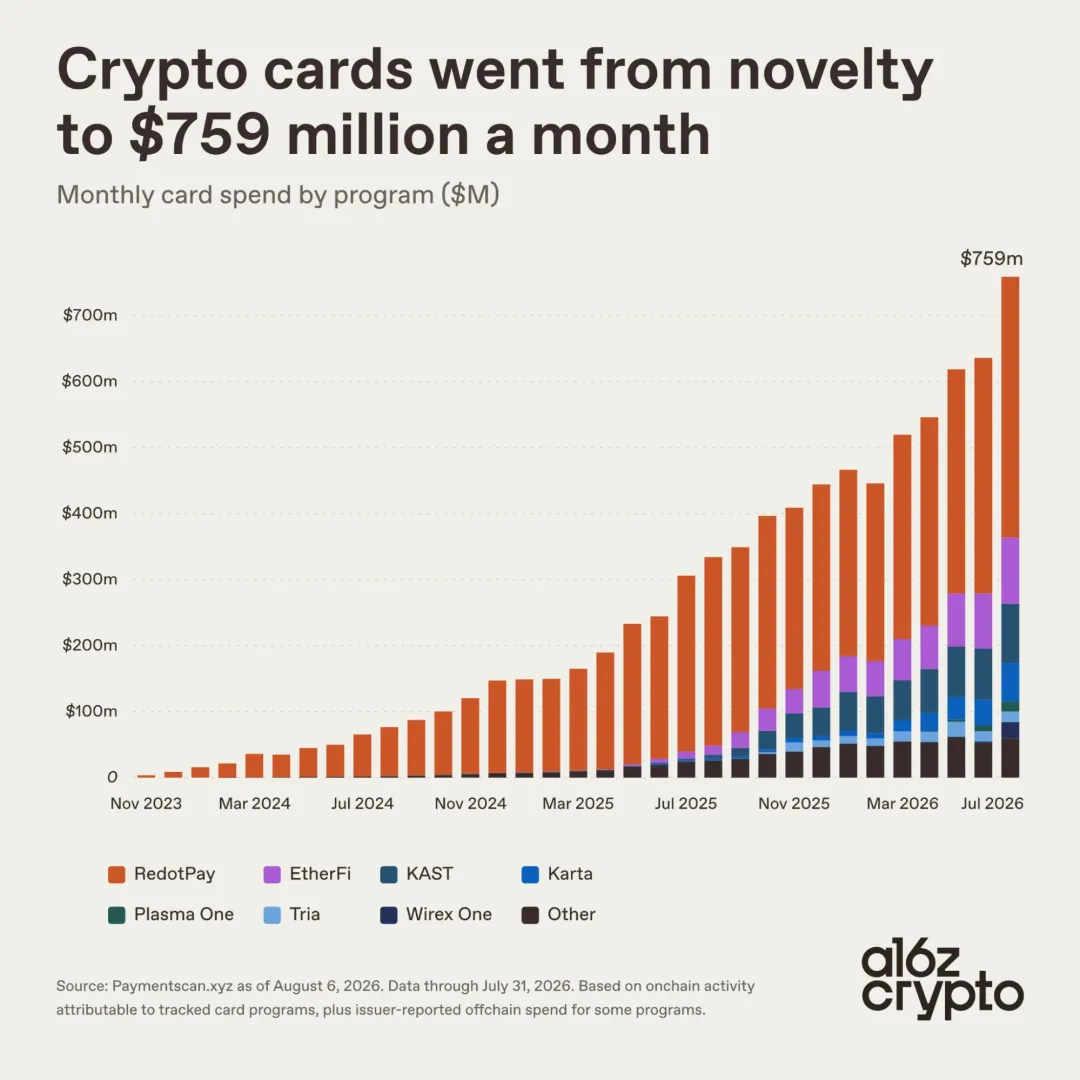
$759 million in card spending in July alone, up 2.5x in a year
Crypto payment cards reached a monthly transaction volume of $759 million in July, up about 2.5 times from $306 million a year earlier, and below $1 million when tracking began in October 2023. These figures represent on-chain activity for card projects tracked by Paymentscan. (For the largest project, RedotPay, spending data is self-reported by the issuer, not observed on-chain.)
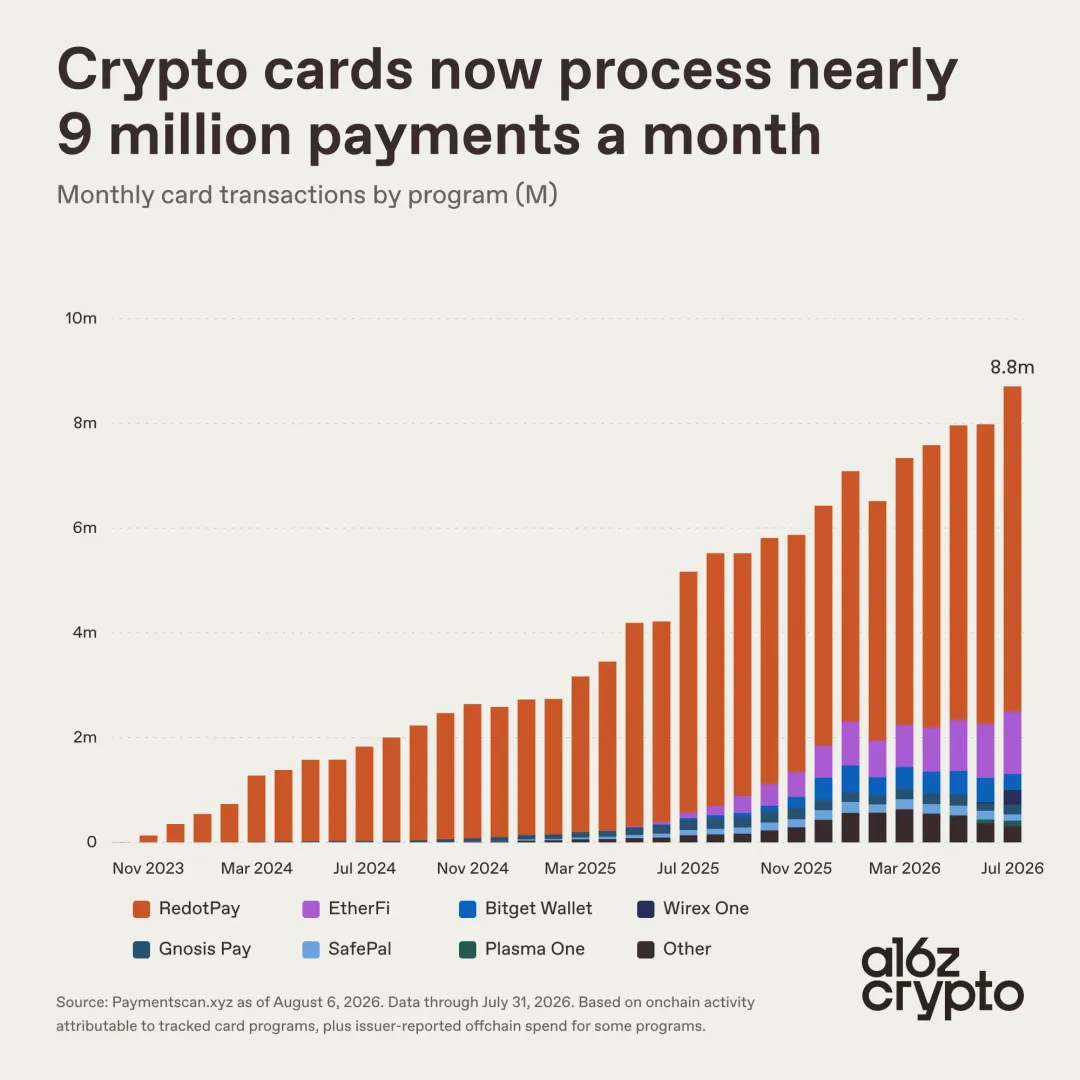
The number of purchases made with crypto payment cards has shown a similar growth trend to total transaction volume. In July, the number of purchases with crypto payment cards was nearly 9 million, up from around 5.2 million a year earlier.
This means the average transaction size is about $86.
Optimism, Solana, and Base each capture a third
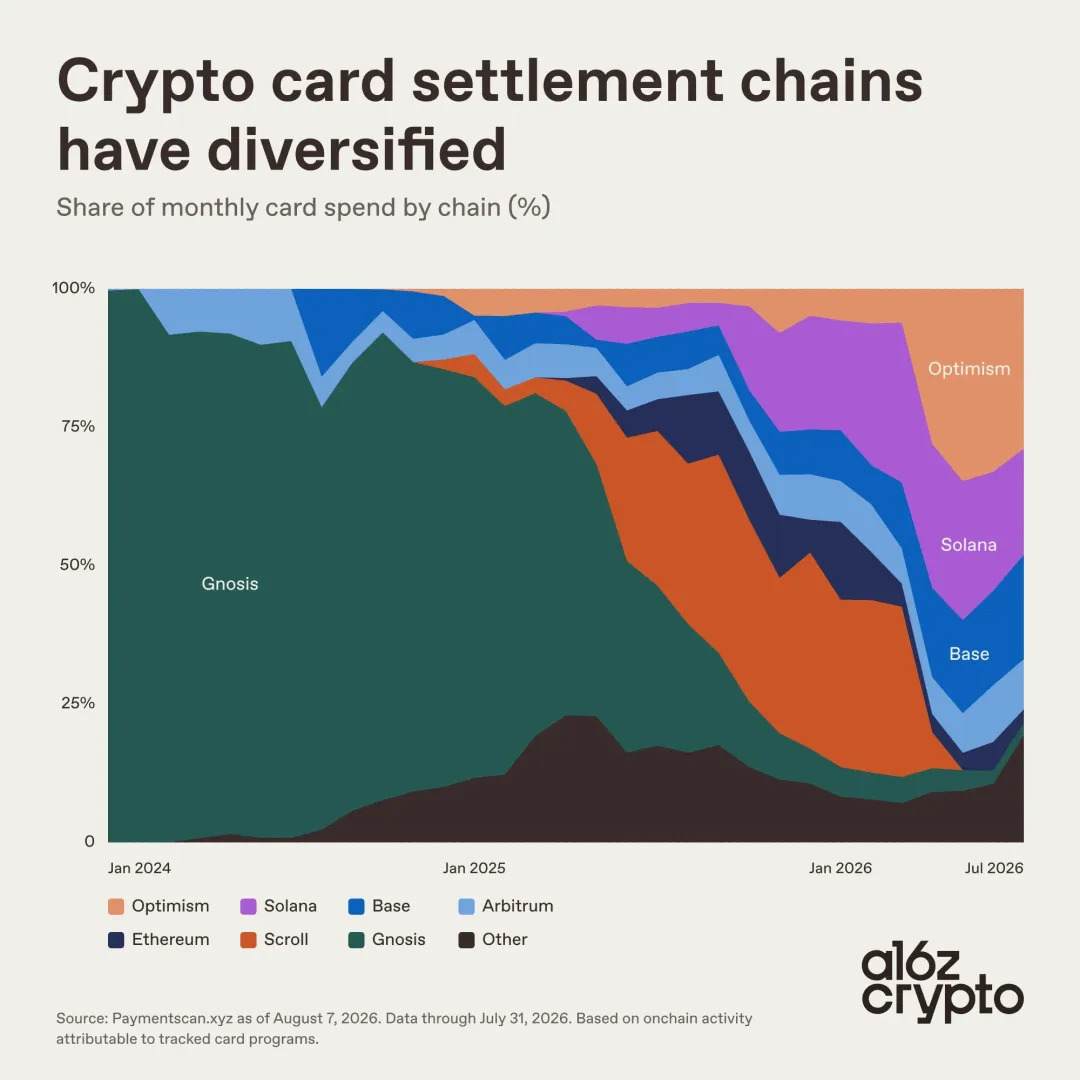
At the start of 2024, crypto card spending was concentrated on a single chain: Gnosis, home to Gnosis Pay, the first Visa card directly connected to self-custody wallets. With the launch of new card projects, the number of settlement chains has increased.
According to Paymentscan data, as of July, Optimism handled about 29% of crypto card spending, Solana about 19%, and Base around 19%. Gnosis has dropped to about 2%.
Dollar stablecoins dominate, USDC+USDT account for 84%
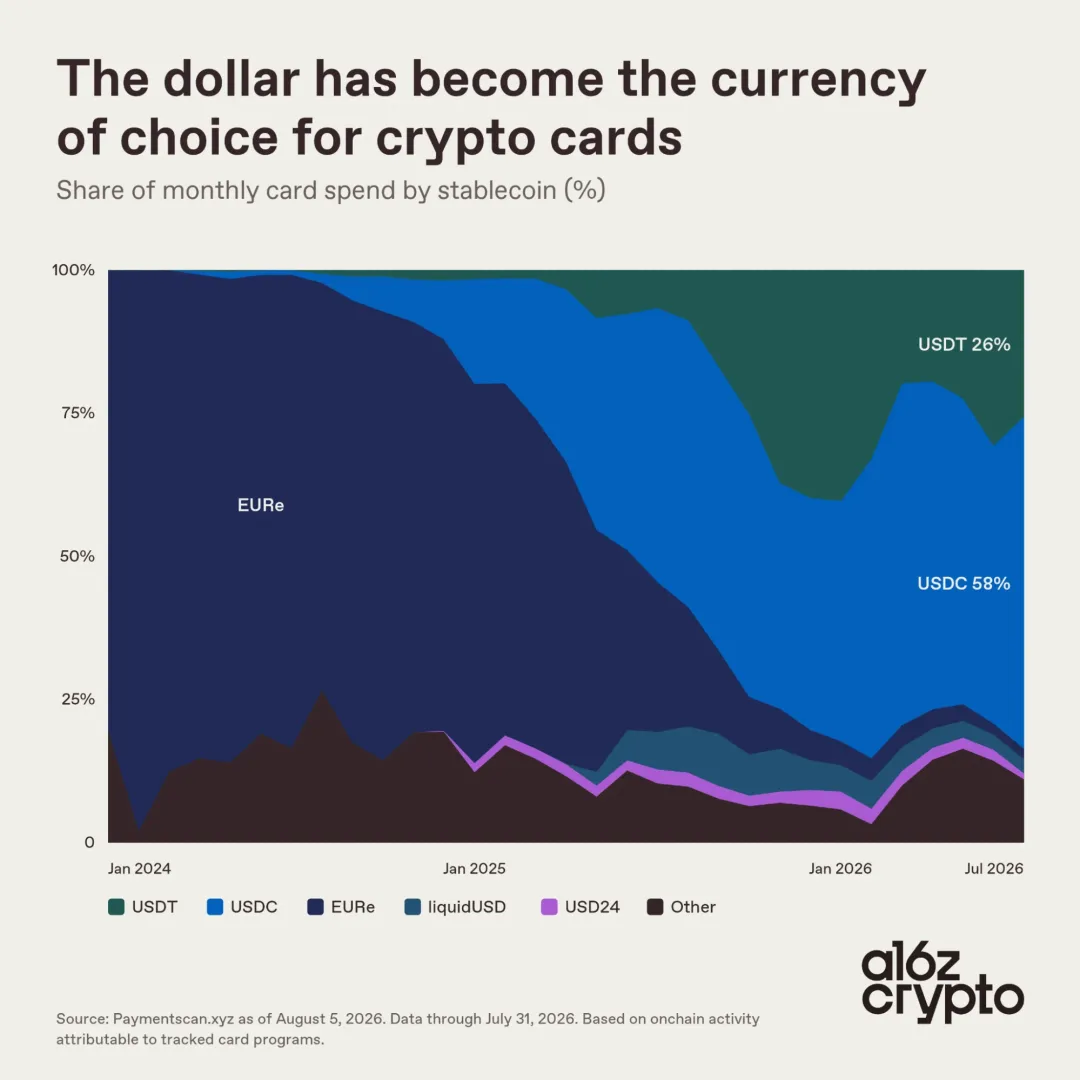
Euro-backed stablecoins once dominated spending: at the beginning of 2024, about 88% of crypto card transactions were settled in EURe, most of them on Gnosis. By July, EURe's share had dropped to about 2%.
Dollar-backed stablecoins have taken the lead. USDC processes about 58% of card spending, USDT about 26%, both rising from around 48% and 7% a year ago. Crypto payment card spending is now conducted almost entirely in digital dollars.
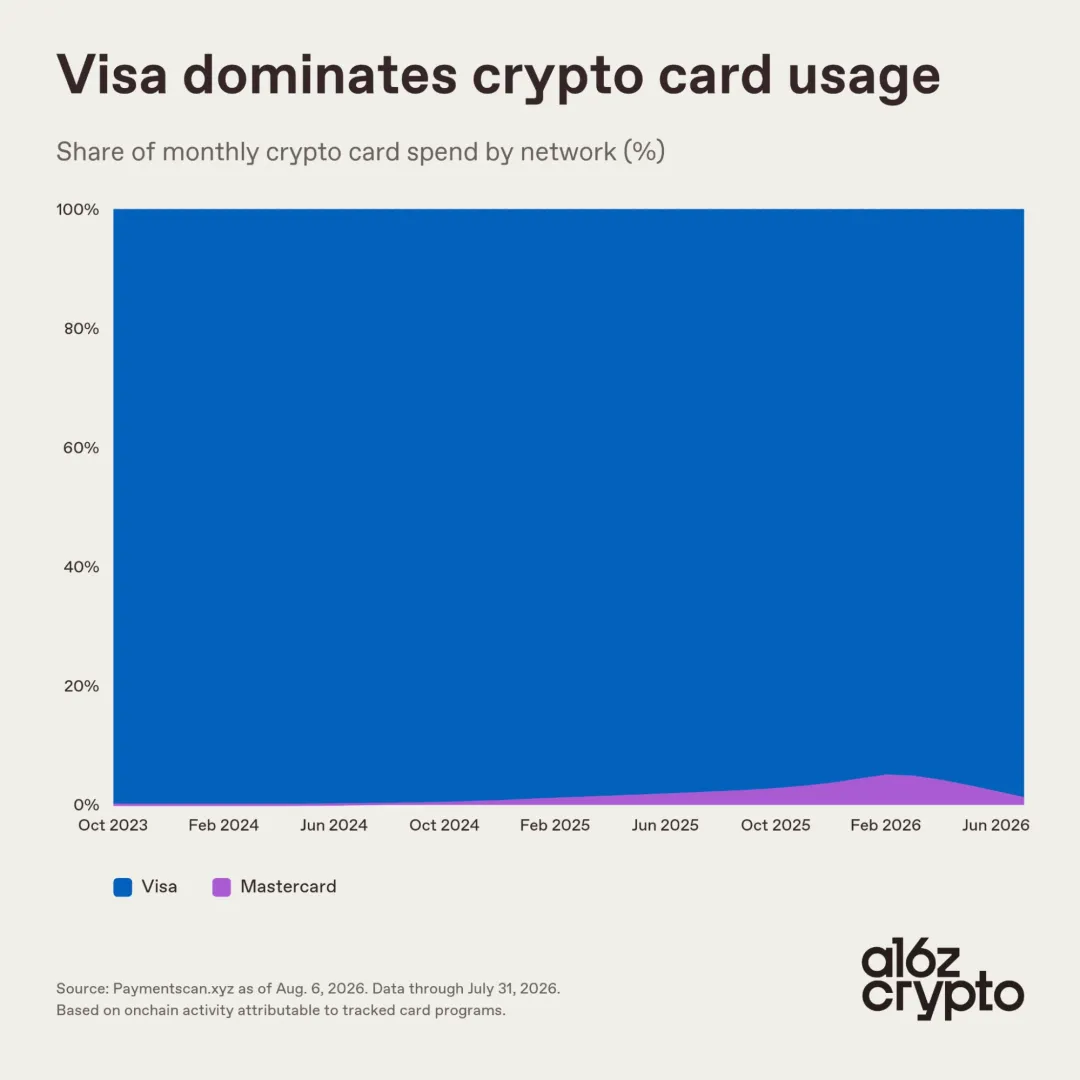
Visa takes virtually the entire market
Compared to the tens of trillions of dollars processed each month by traditional card networks, crypto payment cards are still a small market.
But as stablecoins make greater inroads into the global financial system, including riding the rails of major existing card networks, for the projects tracked, this happens almost entirely via Visa.
Crypto payment cards are part of the broader crypto acceleration after GENIUS, which we have been tracking here. This includes the rapid adoption of stablecoins and tokenized assets.
Disclaimer: The content of this article solely reflects the author's opinion and does not represent the platform in any capacity. This article is not intended to serve as a reference for making investment decisions.
You may also like
New York Federal Reserve Survey: Service Sector Price Increases Hit Fastest Pace Since 2022, Business Activity Index Drops to Lowest Since March
A survey released by the New York Fed on Friday shows that in October, sales prices for service sector firms increased at the fastest pace since 2022, with input costs remaining robust and supply conditions continuing to deteriorate. Businesses’ pessimism about the commercial outlook has significantly intensified, with the overall business activity index falling by 12 points from the previous month to minus 20.7, marking the weakest reading since March.

Raoul Pal Holds Bitcoin, Solana and Ethereum, but Calls One Wildly Undervalued
Ethos Technologies President Wang Lingke Reports Sale of $4.54 Million in Common Shares
Exclusive report - Boeing memorandum says sales chief McMullen will retire
Crypto prices
More


