1. Panel Structure Qualitative Analysis (ETH 4-hour timeframe)
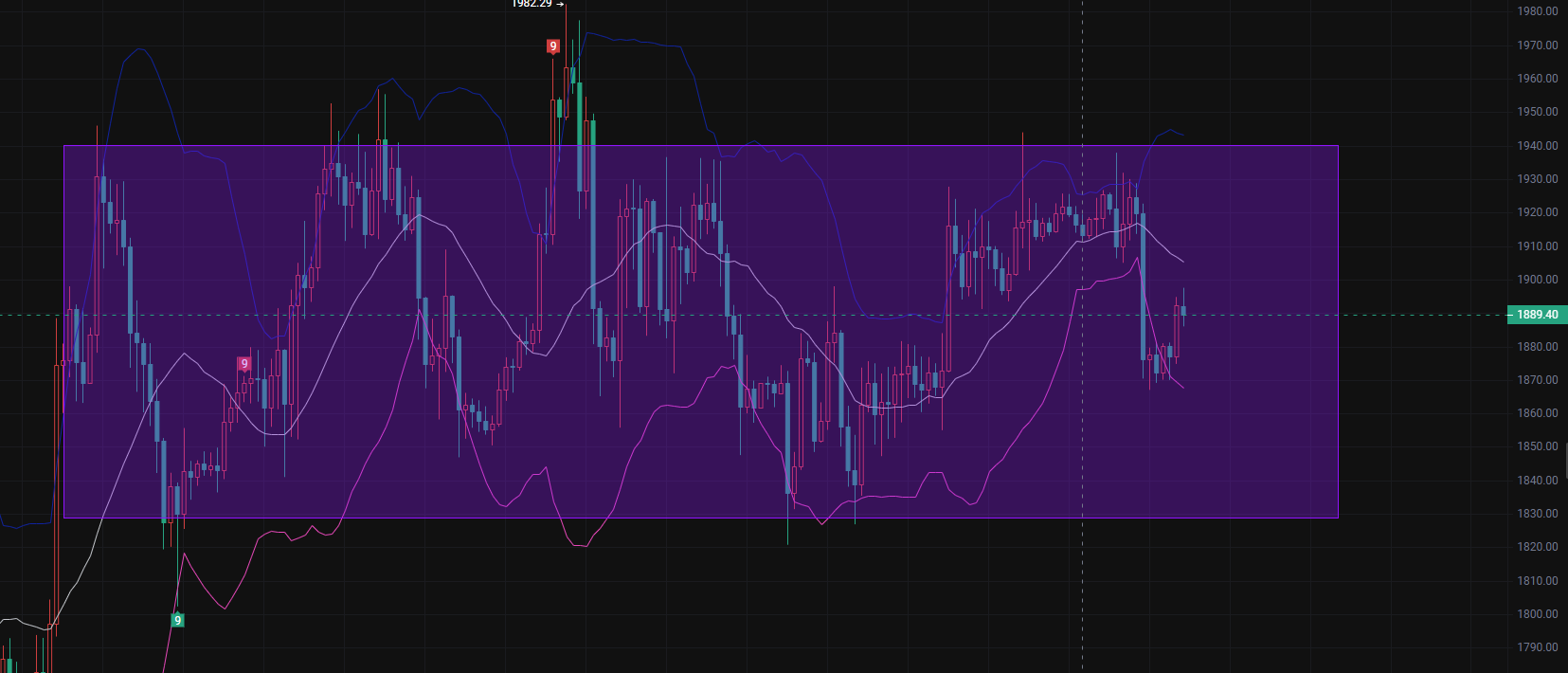
Looking at the Bollinger Bands and range structure, this round is moving exactly in line with the previously outlined large range rhythm. The short positions set up at the high-pressure area of 1910-1940 have played out as expected, with the price pulling back and currently operating within the mid-section range of 1860-1880.
The upper Bollinger Band is providing strong resistance—multiple upward attempts have been rejected, and bullish momentum is weakening. The middle Bollinger Band is acting as the short-term dividing line between bulls and bears, and the price is currently fluctuating below this middle band, indicating a continuation pattern after a high pullback rather than a unilateral trend.
Key downside support is at 1830-1840, which is the bottom of the Bollinger Band combined with the range bottom. On the upside, resistance is at 1900-1920, where the previous consolidation platform and the upper Bollinger Band coincide.
2. Two Possible Short-Term Scenarios
1. Downside Test: The current mid-range consolidation could accumulate enough energy for a second leg downward, with priority support at the 1830-1840 range bottom. This is a crucial defense zone for the bulls—breaking down this level opens up deeper downside space.
2. Rebound Correction: In the short term, there may also be rebound attempts. For rebounds, focus first on the 1900 level as resistance. If this zone is reached, the bias remains bearish, as this is simply rebound resistance within a larger consolidation.
3. Trading Logic
At this stage, ETH is in the middle of the range, marked by volatile price action and more “wick” movements—this is a high-risk, high-reward zone where both bulls and bears may get short-term opportunities but with low error tolerance.
Prudent approach: Avoid frequent trades in the middle of the range and patiently wait for price to touch the boundaries.
• On the upside, only consider high short entries near the 1900-1920 resistance zone;
• On the downside, if price pulls back to the 1830-1840 support base and shows stabilization signals, then consider long entries.
4. Core Summary
The overall structure remains a range-bound consolidation. There is no unilateral break; do not pre-emptively bet on a breakout. Wait for confirming signals at key support/resistance before acting. Prefer taking high risk-reward opportunities at the range edges, reduce ineffective trades inside the range, and manage both position size and trading frequency—for survival in a ranging market, that’s essential.