
More balance sheet reduction, fewer rate hikes: How is Waller reshaping market expectations for interest rate increases?

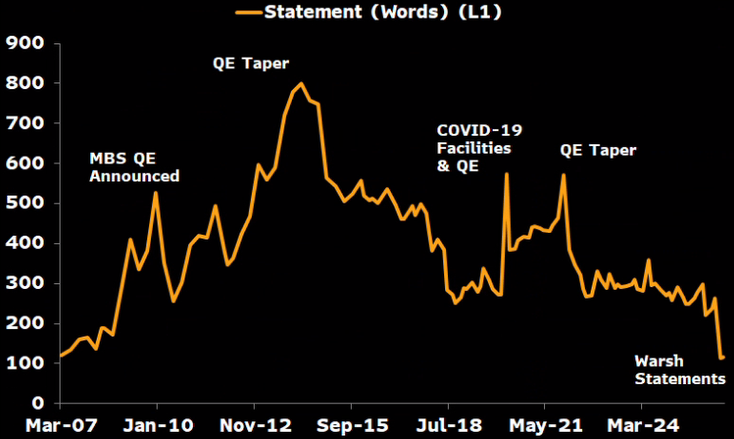
Since Walsh took office as Chairman of the Federal Reserve, he has adhered to a "do more, say less" philosophy regarding the Fed’s external communication framework, reducing policy intervention in the markets. After his first appearance at the June FOMC meeting, the Fed's policy statement dropped drastically from about 400 words under Powell to fewer than 150 words, removing all dovish language about "additional adjustments" and risk balance; he also refused to submit interest rate forecasts and openly questioned the dot plot.
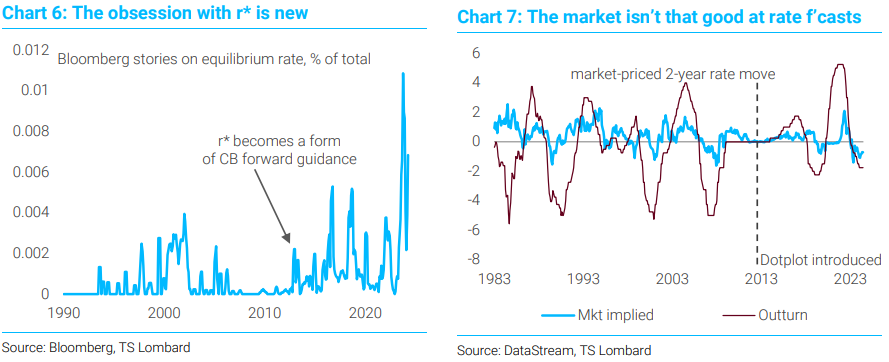
In terms of communication, Walsh categorically refused to provide forward guidance, not only withholding indications on interest rate trends, but even avoiding explanations of the Fed’s reaction function to different economic situations. He further proposed to reduce the annual eight FOMC meetings to six rate decision meetings plus two economic discussion meetings.
Previously, he also established five major working groups at the institutional level, focusing on communication, balance sheet, data, AI, and inflation framework, with most of this work expected to be completed by the end of the year. In this reform, Walsh aims to reposition the role of the balance sheet in monetary policy, attempting to shrink the balance sheet in an orderly manner while maintaining ample reserves, making balance sheet reduction a key tool for tightening financial conditions, rather than simply relying on policy rate adjustments.
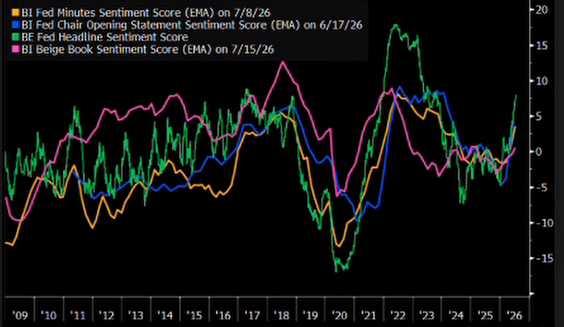
More Balance Sheet Reduction, Less Rate Hiking
Unlike Powell, who focused on managing market expectations, Walsh stresses restoring the market’s price discovery function. He advocates for reduced communication to allow market rates to reflect the real economic fundamentals, while using balance sheet reduction to increase the term premium, letting capital markets shoulder more tightening of financial conditions—rather than relying on frequent rate hikes to suppress demand.
This framework will transmit through two channels to financial conditions. First, reduced Fed communication means markets will price assets based on changes in inflation, employment, and fiscal funding supply and demand. This will further widen the range of long-term interest rate fluctuations, and the term premium will once again become a key variable in financial conditions pricing. Second, if the Fed continues to shrink its balance sheet, the market will need to absorb more long-term Treasury supply, further supporting persistently high financing costs for the long term.
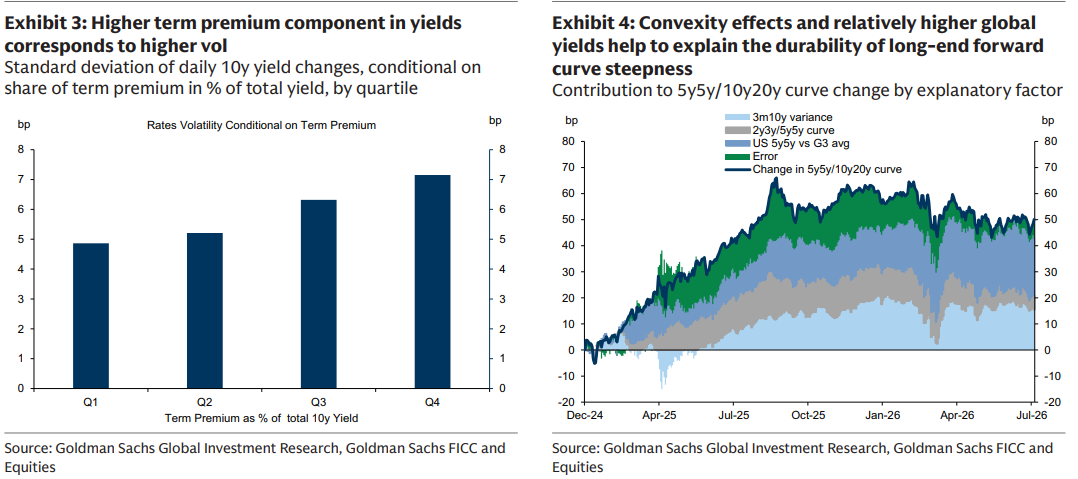
The effects of both channels will overlap, making the long-term financing environment remain tight, while the likelihood of repeated shocks to short-term funding costs is visibly reduced. This is the core feature that distinguishes the Walsh framework from traditional rate hiking cycles: achieving continuous demand constraint by letting the market shoulder more of the tightening role, without frequent adjustments to policy rates.
Disclaimer: The content of this article solely reflects the author's opinion and does not represent the platform in any capacity. This article is not intended to serve as a reference for making investment decisions.
You may also like
Nvidia quietly reduces OpenAI data center guarantee from 250 billions to below 120 billions
Nvidia and OpenAI are close to signing a data center financing agreement in Ohio. However, Nvidia's financial guarantee has been reduced from $250 billion to less than $120 billion, covering only about 5 GW of computing power for the project's first phase. This adjustment is a direct response to investor concerns about Nvidia's risk exposure—after the previous $250 billion guarantee plan was revealed, Nvidia's stock price fell 5% in a single day. The agreement could be signed as early as this weekend.

Ivy League’s space gamble: Harvard reveals $2.2 billions SpaceX position, its largest single stock holding
Harvard University Investment Management Company disclosed that it holds $2.2 billion worth of SpaceX shares, making it the largest single stock position in its $4.3 billion US equity portfolio. This holding originated from Harvard’s early investment in SpaceX through venture capital funds, and the position has significantly appreciated after SpaceX’s public listing in June this year. The University of California also disclosed a roughly $1 billion position in SpaceX during the same period. Over the past decade, endowment funds from several universities have made substantial bets on private tech assets.
Crypto prices
More


