
AI stocks plunge triggers margin calls, Goldman Sachs and JPMorgan Chase demand collateral from hedge funds

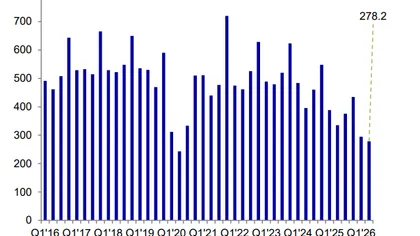
Behind the margin calls is the aftermath of hedge funds significantly increasing leverage in the first five months of this year. Goldman Sachs pointed out in a recent client report that the cumulative increase in total hedge fund leverage during the first five months of this year is the largest single cumulative rise the bank has recorded since it began tracking this data in 2016. Analysts believe this indicates that the wave of sell-offs has spread to the levels of credit and risk management.
The sharp decline in artificial intelligence stocks is triggering a chain reaction on Wall Street. Major banks such as Goldman Sachs and JPMorgan Chase have recently issued margin calls to hedge funds with highly concentrated positions, requiring them to post additional collateral to maintain existing leverage levels. Analysts believe this marks the spread of the AI sector sell-off from the market level to the realm of credit and risk management.
The Nasdaq 100 index at one point during trading on Tuesday fell 10% from its all-time high in early June, briefly entering technical correction territory. SanDisk and Intel have dropped 53% and 39% from their peaks, respectively, while the Philadelphia Semiconductor Index has lost over a quarter of its market capitalization since the end of June. This sell-off, lasting roughly two weeks, disrupted the AI-heavy portfolios previously built by many hedge funds. Long-short and multi-strategy funds fell 1.3% and 1.7% respectively during Tuesday's afternoon session.

On July 29, according to the Financial Times, the wave of margin calls is the aftermath of hedge funds significantly increasing leverage during the first five months of the year. Goldman Sachs stated in a recent client report that the cumulative increase in total leverage among hedge funds in the first five months was the largest single-period increase since the bank began tracking such data in 2016. This means that many funds had already greatly amplified their positions through borrowing prior to this sell-off, and once the market reverses, losses are multiplied.
Margin Call Mechanism: Automatically Triggered by Market Volatility
According to reports, sources revealed that both Goldman Sachs and JPMorgan Chase have asked some clients to provide additional collateral. A person close to one of the banks stated:
"This is the level of risk management operation the market currently requires, and it's quite a basic procedure."
The source added that many margin calls are automatically triggered by market volatility, a mechanism that is usually written into the agreements between funds and banks. When banks provide financing to hedge funds, they build in protection mechanisms to ensure they do not bear losses if the market moves lower.
Prime brokers provide leverage to hedge funds by using stock portfolios as collateral, helping them amplify returns. However, once market movements go against a fund's positions, leverage also amplifies the losses. The bank's risk committees continuously assess the positions held by hedge fund clients and decide whether to adjust or limit the leverage provided to them accordingly.
The report points out that the deeper reason behind this wave of margin calls is that market concentration has risen to historic highs this year. According to Capital Group data, the top ten components of the S&P 500 now account for about 40% of the total index market value, exceeding the level seen during the dot-com bubble of the early 2000s.
In another mid-year report, Goldman Sachs disclosed that as of June 30, about 16% of its prime brokerage business book's exposure was directly in AI storage chip-related stocks. This figure highlights that, as the concentration in the AI sector increases, the risk correlation between banks and hedge fund clients has grown ever closer.
Disclaimer: The content of this article solely reflects the author's opinion and does not represent the platform in any capacity. This article is not intended to serve as a reference for making investment decisions.
You may also like
Wall Street Bulls Gain Confidence: S&P 500 Earnings Growth Reaches 30-Year High
S&P 500 second quarter earnings grew 31% year-on-year, marking the strongest growth since Bloomberg Intelligence began tracking data in 1992 after excluding recession recovery periods, far exceeding the expected 23%. AI-driven profit margins jumped from 14% to nearly 16%, and valuations reset from 26 times down to below 22 times. Earnings expansion has now spread to small and mid-cap stocks, as well as to European and Asia-Pacific markets.
NEAR Eyes $2.40 as Bullish MACD Divergence Signals End of Correction

Deutsche Bank: Central bank gold purchases and ETF inflows put gold in an "explosive" rally phase
Deutsche Bank believes that the fifth "explosive" upward phase in gold, which began in 2024, is still ongoing. Central bank gold demand, measured in actual US dollars, has reached a record high, with about half of the demand not reported to the IMF. Global ETF inflows have turned positive again, with Asian buying being particularly notable. The bank has set a year-end target range for gold at $4,700–$5,100 per ounce, with the core driver being the continued expansion of U.S. government debt. Current futures positions remain low, and the upside potential has not yet been fully priced in.
Crypto prices
More


