
Super Central Bank Week: Will the U.S. Dollar Face a Turning Point?

Morning FX
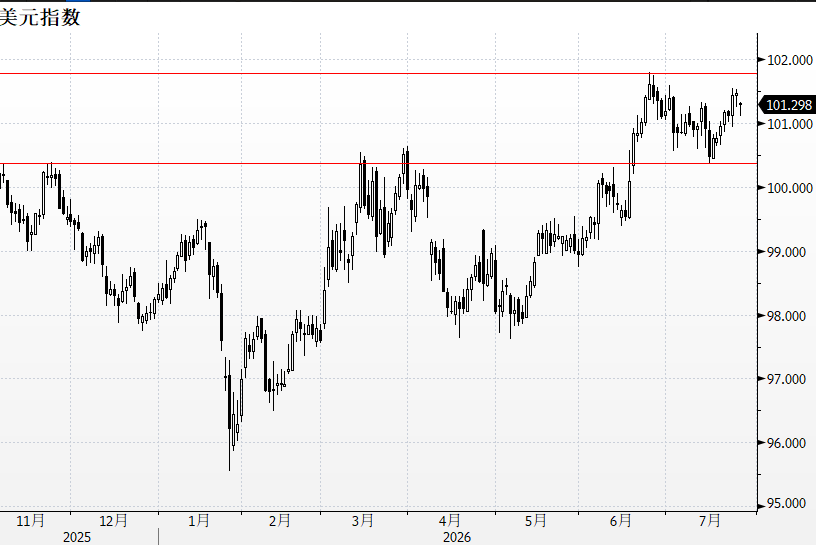
This week will be a significant one, with rate decisions from the US, UK, and Japanese central banks, combined with the start of a heavy tech earnings season. The low-volatility trend in the forex market may be disrupted. The US Dollar Index is also at a crossroads, and some potential bearish factors include: cooling US-Iran tensions, a high likelihood that the September FOMC will maintain rates, and signs of improving European economic data.
1. US-Iran tensions ease, oil prices retreat
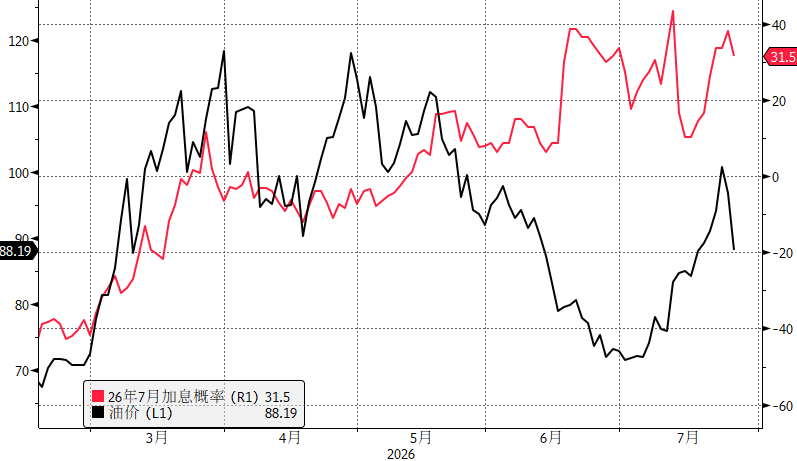
Over the weekend, the US announced a halt to airstrikes against Iran, rapidly boosting market expectations for a return to negotiations between the US and Iran and significantly lowering the risk of large-scale conflict escalation in the Middle East. Sources indicate that the main reason for this TCAO is that America’s current usable ammunition reserves are running low, making it difficult to support prolonged, large-scale Middle East military operations.Brent crude dropped below $90/barrel on Monday.
2. High probability of FOMC holding rates this month, current rate hike odds are overstated
June’s nonfarm payroll gains slowed and inflation cooled, reducing the urgency for rate hikes. However, due to rising oil prices and initial jobless claims dropping to historical lows, last week markets briefly priced in a 40% chance of a July rate hike, before falling back to around 30% as oil fell over the weekend. Currently, the most likely outcome is for rates to remain unchanged, which would likely trigger a correction in both US dollar rates and the Dollar Index.
3. European economic data recovering
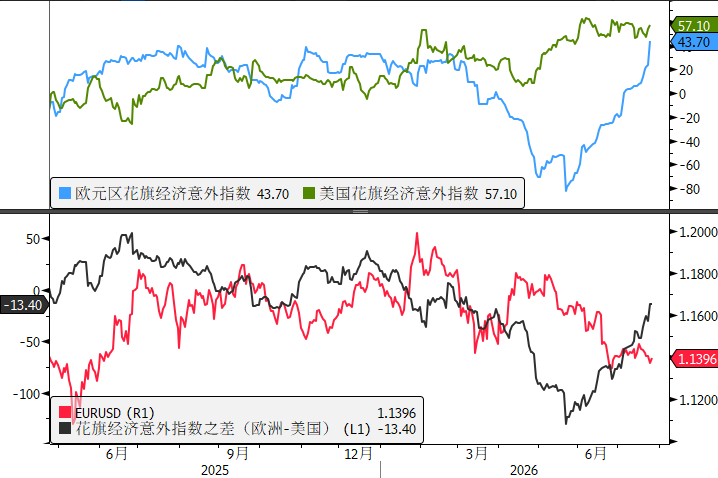
Eurozone July flash PMI readings beat expectations across the board: manufacturing PMI climbed to 52.0, a three-month high; services PMI rose to 51.6, a five-month high. In contrast, July’s US manufacturing PMI unexpectedly fell to 53.8, the lowest since March and below market expectations; services PMI was boosted by the World Cup, rising to 53.6. The Citi Economic Surprise Index difference between Europe and the US has increased, supporting the euro.
In summary, current views are:
1. The current main trading themes: oil prices + AI narrative
1) On oil prices, volatility from renewed conflict is expected, but as midterm elections approach, Trump’s time window is closing quickly, making another TCAO increasingly likely. So if conflict resumes and oil surges again, it presents a fade opportunity.
2) In AI capital expenditure, after Alphabet’s free cash flow turned negative last week and the stock plunged, markets are no longer tolerating unchecked CapEx expansion from cloud tech giants. This week, Microsoft, Meta, Amazon, and Apple will all report earnings. If tech giants underperform, US equities could drop sharply, which may affect dollar liquidity and increase the risk of the Fed turning dovish.
2. In terms of trading strategies, given the high probability that the FOMC keeps rates unchanged, the current risk-reward favors shorting USD and receiving on the short end of dollar rates. However, as overall market volatility remains low, tactical and range trading is still needed: DXY is expected to trade in the 100–102 band, EURUSD at 1.1350–1.15, and USDJPY waiting for a hawkish BOJ move or an intervention dip to buy.
Disclaimer: The content of this article solely reflects the author's opinion and does not represent the platform in any capacity. This article is not intended to serve as a reference for making investment decisions.
You may also like
SoFi Is Dividing Wall Street. This Is the Bull Case for the Fintech Stock. -- Barrons.com
Is SanDisk really more profitable than DRAM? Is it really that popular?

Tutorial crypto recovers 27% – Why TUT’s rally still faces a KEY test
Ethereum UTXO Proposal Could Cut Permanent State Usage by 99.8%
Crypto prices
More


