
Whale Turns Around: NPS Records First Net Purchase of KOSPI This Year—Has the Korean Stock Market “National Team” Started Supporting the Market?

From July 1 to 24, National Pension Service (NPS), the largest institutional investor in Korea's capital market, along with other related pension funds, accumulated a net purchase of stocks worth 68.4 billion KRW (approximately $46.8 million) on the KOSPI main board. This marks the first monthly net purchase by NPS this year.
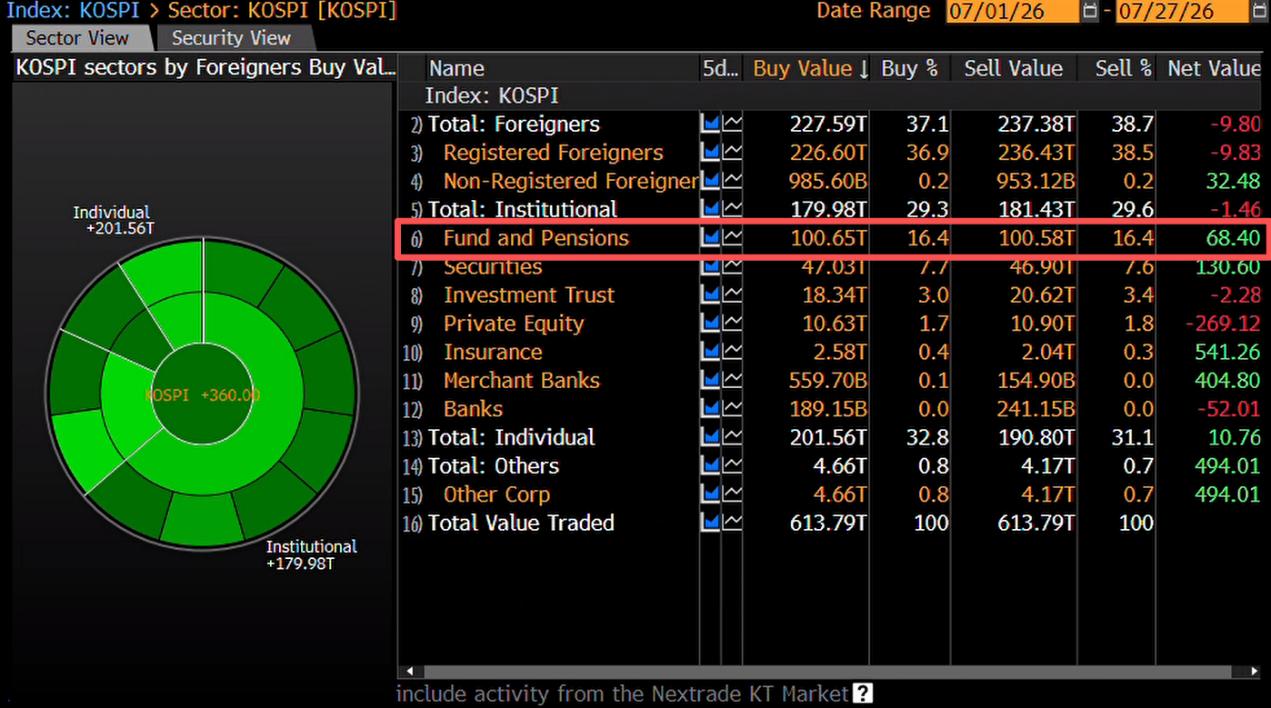
Previously, NPS had been a net seller of stocks for six consecutive months, with the trend expanding month by month, resulting in a net sale of 8.73 trillion KRW in the first half of the year. In May and June, as the Korean stock market soared, NPS took an opposite stance and sold on a large scale, with net sell days accounting for more than half of the trading days in each month. Net sales reached 2.16 trillion KRW and 2.34 trillion KRW in those two months, respectively.
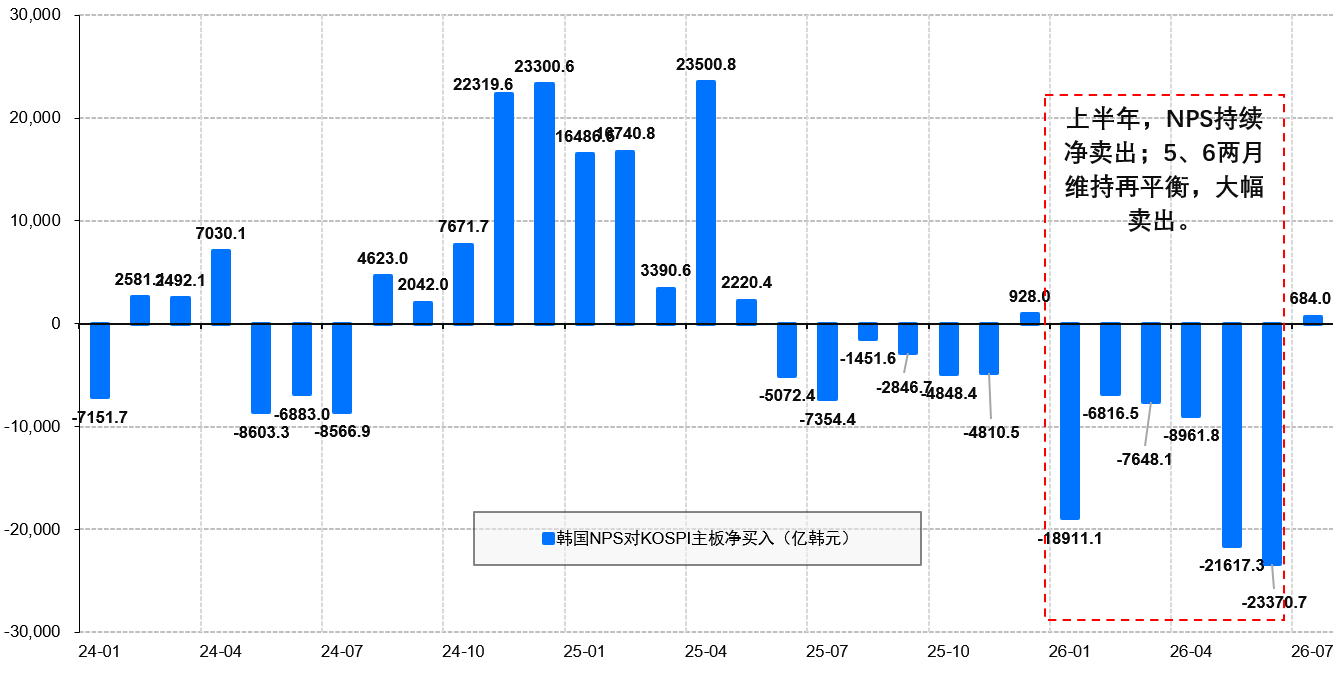
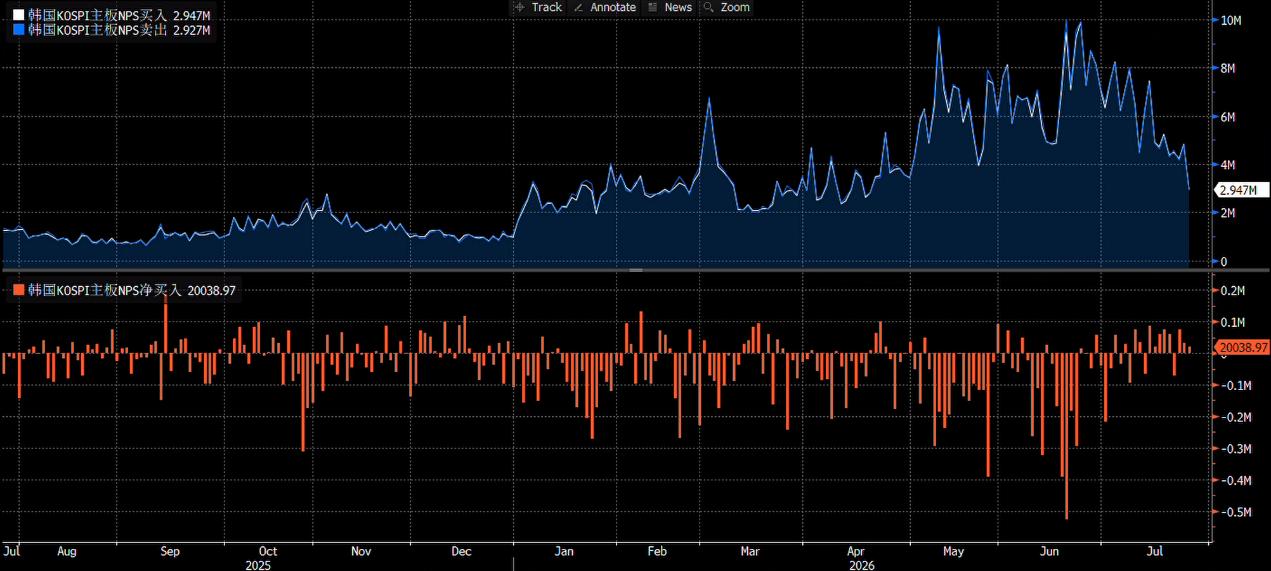
Looking at the trading activities in July, NPS recorded net purchases on 11 out of the first 17 trading days, with only 6 days of net selling, clearly showing a buying tendency. At the individual stock level, NPS operations this month displayed a strong sector preference. On the buying side, purchases were highly concentrated in semiconductors and traditional energy sectors. Among them, AI memory leader SK Hynix was the top pick, with a cumulative net purchase reaching 425.8 billion KRW, maintaining the top position for two consecutive months. It was followed by SK Innovation (224.7 billion KRW) and S-Oil (174.4 billion KRW). On the selling side, there was a structural outflow of funds, with SK Square suffering the largest net sale of 575.7 billion KRW. Meanwhile, Samsung-affiliated stocks experienced significant reductions, including Samsung Electro-Mechanics (313.6 billion KRW), Samsung Life Insurance (123.8 billion KRW), and Samsung Electronics (111.5 billion KRW).
Breaking the Expectation of Massive Sell-Offs: Institutional Backstop Effect Emerges
NPS’s net buying actions in July may play a significant stabilizing role in the highly volatile Korean market. Firstly, this operation directly alleviates concerns about massive selling pressure.
In January this year, NPS announced the suspension of domestic stock rebalancing, and in May, raised its 2026 year-end domestic stock allocation target ratio from 14.9% to 20.8%. As the above-mentioned temporary exemption policy officially ended in late June, NPS resumed its regular rebalancing mechanism starting in July. The market had previously worried that with the expiration of NPS's temporary rebalancing exemption, there could be up to 74 trillion KRW in selling pressure. This expectation continued to suppress market sentiment from late June to early July.
Disclaimer: The content of this article solely reflects the author's opinion and does not represent the platform in any capacity. This article is not intended to serve as a reference for making investment decisions.
You may also like
Morgan Stanley: Is the market about to start a catch-up rally?

IPO of "the first AI hardware stock" has been shelved
U.S. stock Q3 earnings season kicks off next week: S&P 500 earnings per share expected to grow by 27%, with Nvidia and Micron contributing one-third.
Goldman Sachs expects S&P 500 earnings per share in Q3 to grow 27% year-on-year, with Micron contributing 19%, Nvidia contributing 15%, and the top ten companies together accounting for 68% of incremental earnings. Meanwhile, the median S&P 500 company’s earnings growth is only 9%, significantly lower than the 14% in Q2, signaling that profits and performance in the market are increasingly concentrated among a few AI and energy leaders.
Japanese Yen softens as BoJ rate hike expectations recede, FOMC Minutes loom
Crypto prices
More


