
Rethinking the US Dollar Exchange Rate Framework

Morning FX
Recently, Deutsche Bank Research published an excellent report, The dollar in the long term: Geopolitics vs. technology. This report reveals the two major long-term drivers of the US dollar exchange rate: technology and fiscal policy.
Among these, technology is the upward driver for the dollar (manifested as equity capital inflows), while fiscal policy is the downward driver (seen as debt capital outflows). The relevant data clearly reveals the trajectory of this pair of drivers over the past 20 years:
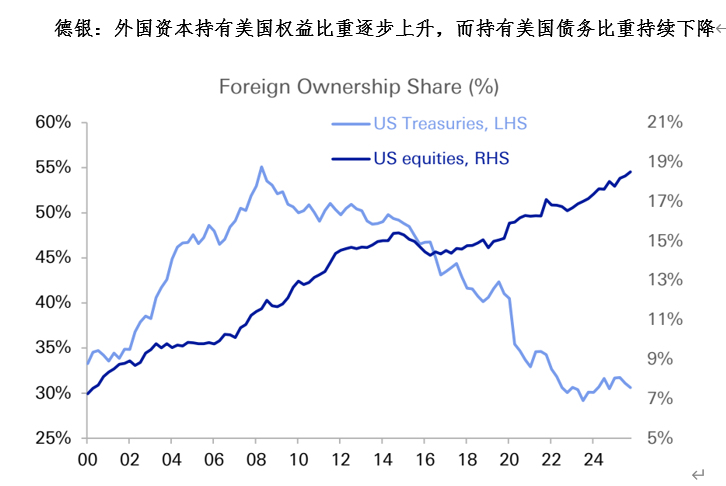
The "equity capital flow vs. debt capital flow" dynamic directly influences the logic behind the pricing of the US dollar exchange rate. Why has the dollar been relatively strong this year? Very intuitively, under the AI theme, there has been a massive cross-border inflow into US equities, the scale of which has already surpassed US Treasuries.
Looking back at last year, when the trade war was in focus, cross-border funds (especially Asian funds) flowed out of US Treasuries, and the "de-dollarization" theme emerged. Overall, the dynamics between US equity and bond capital flows are essentially a reflection of technology and fiscal drivers; these forces are dynamic and ever-changing.
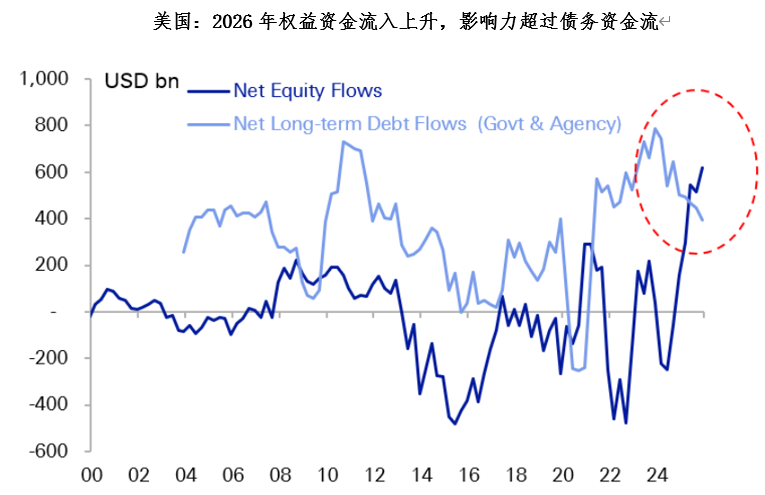
Furthermore, using a "technology + fiscal" analytical perspective helps us form expectations for the US dollar. What about the outlook for the dollar in the second half of the year? Here are some thoughts:
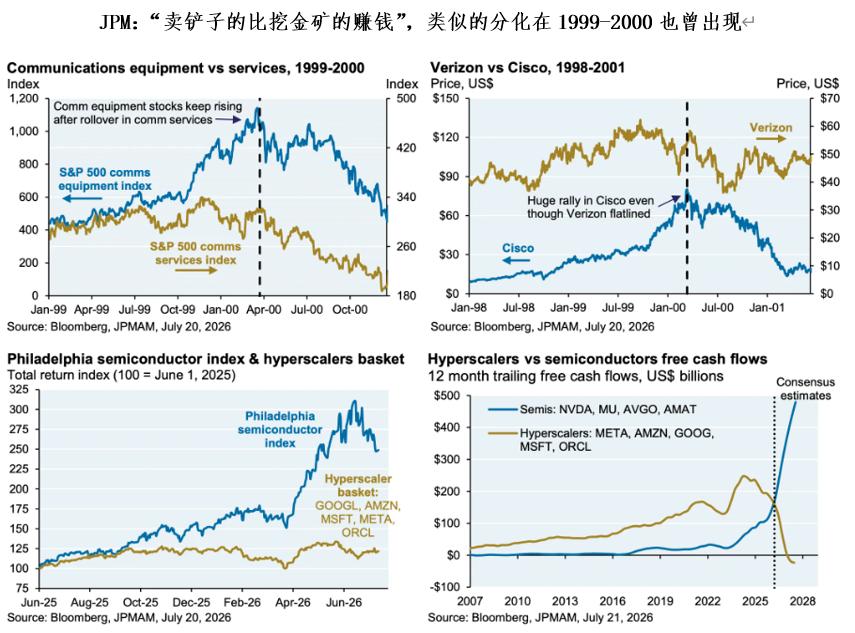
1. The boost from technology to the dollar exchange rate may be marginally weakening. A recent set of charts from JPMorgan illustrates this well—US stocks are increasingly diverging, with semiconductor shares (NVDA, MU, etc.) continuing to rise, while the stock prices of cloud service providers (META, AMZN) are experiencing fluctuations and pullbacks. Last week, Google's earnings showed that free cash flow turned negative for the quarter, and the divergence in free cash flow between these two types of stocks is becoming more apparent.
Simply put, those selling shovels are making more money than those digging for gold. This phenomenon also happened in 1999-2000 (see JPMorgan's analysis). This is a reminder that the boosting effect of AI and technology on the dollar may be marginally weakening.
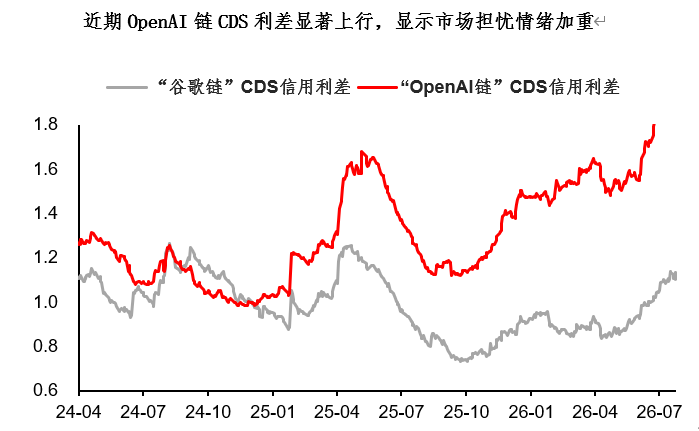
2. With high US Treasury yields persisting, fiscal concerns could re-emerge. Although the market isn't currently focused on the sustainability of US Treasuries, as yields across the curve climb back to pre-cut highs, concerns about US fiscal policy could resurface.
An associated trading theme here is the recent 301 tariffs. If the Trump administration uses the 301 investigation as a pretext to impose higher tariffs on Europe and Canada, on the surface, this seems bullish for the dollar and bearish for non-USD currencies. But should Europe deploy the "sell US Treasuries" ultimate countermeasure (or if the market starts to expect this action), the dollar is sure to come under much greater pressure.
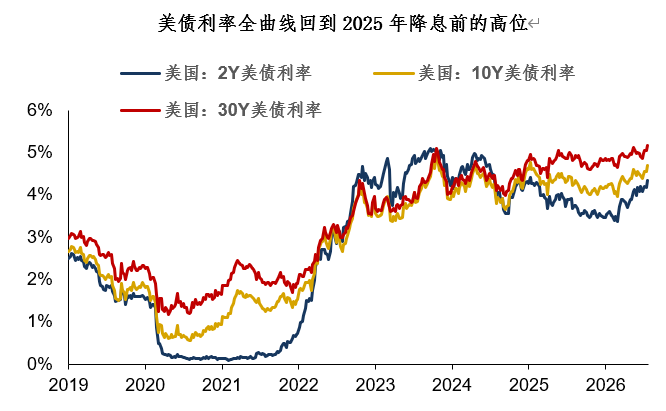
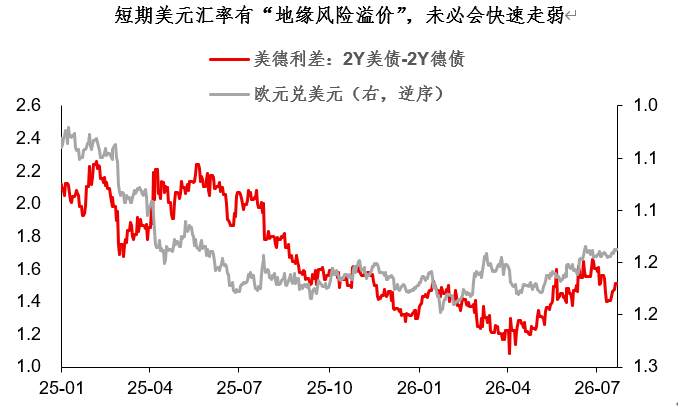
In the short term, the dollar carries a geopolitical risk premium (such as the US-Iran conflict), and is not likely to weaken rapidly. But as the marginal effects of "technology + fiscal" forces evolve, it seems likely that the dollar index's high for the year may have already been seen in the middle of the year. In the second half, we could look for rebound opportunities in the euro, and in addition, precious metals—which have been suppressed for half a year—may see a “pleasant surprise” in the coming months.
To sum up today's discussion:
1. The two long-term drivers of the dollar exchange rate are technology and fiscal policy. Technology is the upward driver, while fiscal policy is the downward driver. These two forces are dynamic, and their interplay helps us understand the logic behind the dollar’s exchange rate in recent years.
2. Using the "technology + fiscal" analytical framework can guide our outlook on the dollar exchange rate: First, the boost from technology may be marginally weakening—“selling shovels is more profitable than digging for gold”; second, as high treasury yields persist, fiscal concerns about US debt may return.
3. In the short term, the dollar carries a geopolitical risk premium, so a sharp drop isn’t likely. But as the marginal effects of the "technology + fiscal" forces evolve, the annual high for the dollar index may already be behind us. In H2, look for euro rebound opportunities. Furthermore, precious metals, which have been under pressure for half a year, may deliver a “surprise on the upside” in the second half.
Disclaimer: The content of this article solely reflects the author's opinion and does not represent the platform in any capacity. This article is not intended to serve as a reference for making investment decisions.
You may also like
How Wall Street’s $800 billion AI bubble could trigger crypto’s next big reset
Ross Gerber says Saylor’s Strategy has undermined his faith in Bitcoin, sells most holdings
Altcoin Season Faces Key Breakout Test
Temple goes live on Token Terminal, becoming Canton Network’s top revenue app
Crypto prices
More


