
Bitcoin mining difficulty experienced double-digit adjustments twice in 2026.

According to Odaily, Bitcoin automatically adjusts its mining difficulty every 2,016 blocks to maintain an average block time of around 10 minutes. If the set of blocks is mined faster than planned, the difficulty increases in the next cycle; if it is slower, the difficulty decreases.
In February 2026, Winter Storm Fern led major mining companies in key mining regions such as Texas, USA, to shut down their equipment, causing Bitcoin hash rate to drop from a previous peak of nearly 1.13 ZH/s to around 663 EH/s. On February 7, Bitcoin mining difficulty was reduced by 11.16%. Afterwards, miners gradually returned online, pushing the hash rate back up to nearly 1 ZH/s. On February 19, the network difficulty rose by 14.7% to 144.4 trillion, marking the largest percentage increase since 2021.
On June 13, Bitcoin mining difficulty decreased again by about 9.91%. At that time, Bitcoin price had fallen by approximately 15%, and some publicly listed mining companies shifted their mining machines and data center capacity towards AI and high-performance computing workloads. As of late July, early data from the next difficulty adjustment indicates a potential decrease of around 1.2%.
Disclaimer: The content of this article solely reflects the author's opinion and does not represent the platform in any capacity. This article is not intended to serve as a reference for making investment decisions.
You may also like
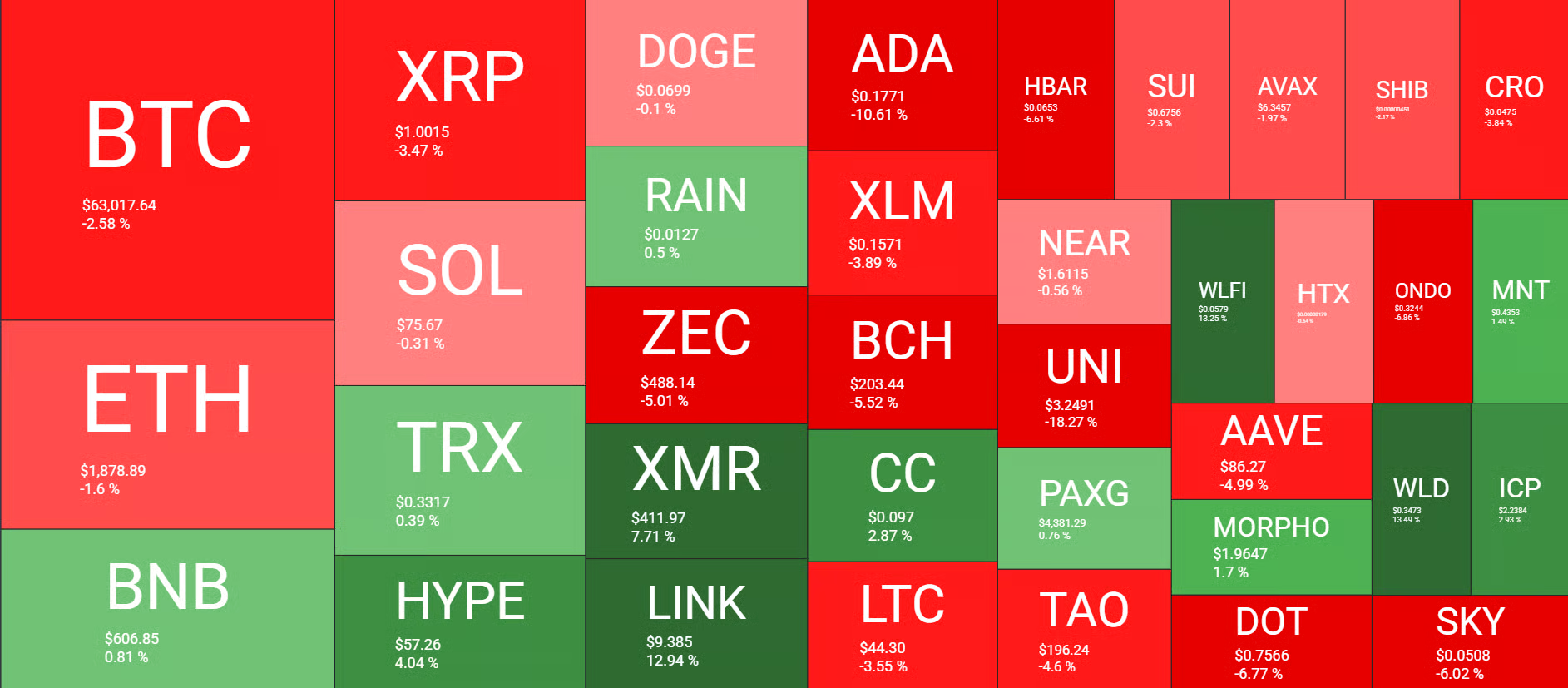
Biggest Weekly Alt Gainers and Losers Revealed as BTC Stalls at $63K: Weekend Watch
Grupo Casas Bahia releases Q2 2026 results presentation
Grupo Casas Bahia board signs off on Q2 2026 interim financial statements
Crypto prices
More


