
Gold and silver rebound, but analysts warn: the rally is hard to sustain, don’t celebrate too soon

After sustained selling pressure, precious metal prices have rebounded, but several institutions remain cautious about the sustainability of this recovery.
Commodities strategists Warren Patterson and Ewa Manthey from ING noted in a report released on Wednesday that the current upswing appears “more like dip-buying after recent weakness” rather than the result of a “substantial shift in the geopolitical or macroeconomic backdrop.” This means, they do not believe the core conditions that previously drove the big rally in gold and silver have been reestablished.
Both gold and silver currently remain significantly below the historic highs they set earlier this year. Previously, the rally spanned throughout 2025 and continued into early 2026; both peaked in late January, with international spot gold once climbing to $5,589.38 per ounce, and spot silver hitting $121.67 per ounce.
Rising interest rates and a strong U.S. dollar have eroded the appeal of precious metals; meanwhile, the Iranian war has pushed up oil prices, shifting market focus elsewhere. Patterson and Manthey said, “Although ongoing Middle East tensions still support precious metals, the market is weighing the balance between weakening U.S. economic data and the inflation risk brought by rising energy costs.”
The two analysts also believe that gold is likely to remain highly sensitive to changes in the energy market and expectations of U.S. monetary policy, while silver might relatively outperform. If industrial metals continue to rise and safe-haven demand remains, silver could continue to outperform gold.
They wrote: “Silver’s performance reflects not only its safe-haven attributes, but is also supported by improved sentiment in industrial metals—especially copper.” In other words, the price logic for silver is not solely derived from its precious metal characteristics but is also driven by a recovery in sentiment for industrial commodities.
However, Bank of America is more bearish on gold. In its July 16 report, the bank stated that after gold posted its worst single-quarter performance in 13 years through the end of June, there remains risk of further downside.
Bank of America wrote: “The death-cross signal, elevated net long positioning, and resemblance to major historical tops all increase the risk of a longer and deeper correction.” A “death cross” is a technical pattern formed when the short-term moving average (usually the 50-day MA) falls below the long-term moving average (usually the 200-day MA).
As for silver’s short-term outlook, UBS remains unoptimistic. This week, the bank lowered its attractive entry range for silver positions from around $55 per ounce previously to between $48 and $50 per ounce.
UBS strategist Dominic Schnider wrote in the July 20 report: “We believe the short-term headwinds facing silver may persist as escalating Middle East tensions, rising opportunity costs, and a strengthening dollar continue to dampen investor confidence. The unfavorable macro environment offers little incentive for investors to add long positions in silver. With investment demand fragmented, silver prices have yet to find a solid bottom.”
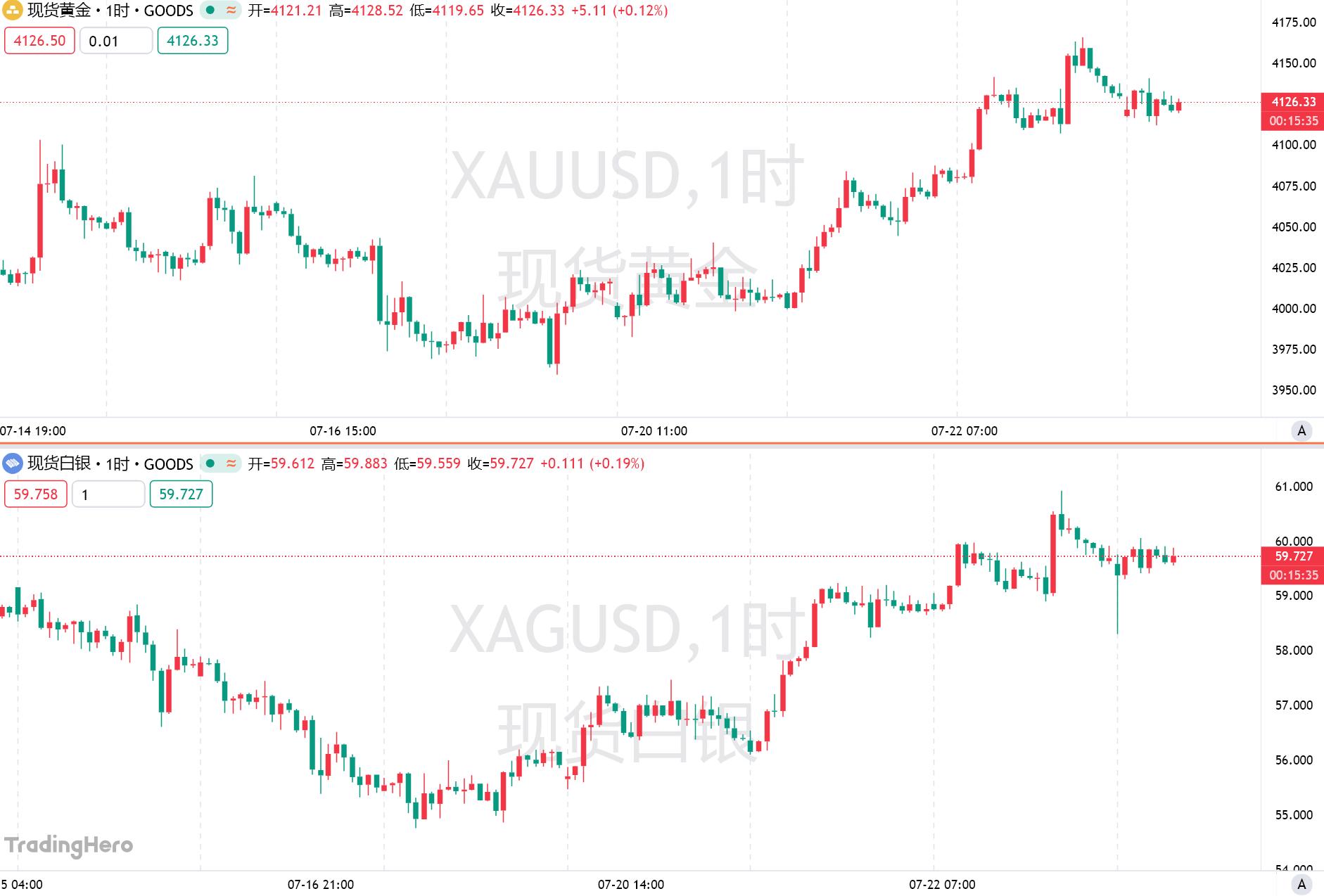
In contrast to the cautious stance of banks, Hycroft Mining Executive Chairwoman and CEO Diane Garrett maintained an optimistic long-term outlook for gold and silver in an interview with CNBC’s “Squawk Box Europe” on Tuesday. She defined the recent pullback as a “normal correction” and said “this is not the end of the bull run.”
Garrett stated: “The fundamentals for commodities remain extremely strong, especially for gold, which has now surpassed U.S. Treasury bonds as the largest asset class and is becoming the cornerstone of the financial system... These data points are very compelling.”
She gave similarly positive comments on silver. Garrett said: “The same goes for silver, because it is not only a monetary metal but an industrial one, underpinning the AI revolution and supercomputers—all of which rely on silver, and there is no substitute.”
Paul Wong, Managing Partner and Market Strategist at Sprott Inc., noted that gold is extremely oversold by all meaningful metrics, and is likely to form a cyclical bottom before September. He also pointed out that currency depreciation is the true driver propelling gold to new all-time highs.
In an interview with Kitco News, Paul stated that gold prices often find support near 90% of their 200-day moving average—currently, prices have fallen well below that level—but he believes there are other reasons to support a late-summer rebound.
Paul believes that if the sharp correction in gold is near its bottom, then gold’s seasonal weakness can actually be seen as a buying opportunity. “Gold usually bottoms in the summer, with the seasonal low typically in early August on average,” he said. “It may be later, as last year it was at the Jackson Hole meeting in late August, when the market realized the Fed would not hike rates in the face of inflation. Afterwards, gold rallied from $3,600 to about $4,500 before the sharp drop.”
Paul stated that the same dynamic is very likely to play out again this year. “Sometime in August, whether it’s the Jackson Hole meeting, an earlier event, an outbreak in the Middle East, or turmoil in the bond market,” he said. “There will always be some incident, some catalyst to suddenly reignite gold prices.”
Disclaimer: The content of this article solely reflects the author's opinion and does not represent the platform in any capacity. This article is not intended to serve as a reference for making investment decisions.
You may also like
Hackers exploited macOS Screen Sharing flaw to install Monero miners, Dutch cyber agency says
3 Altcoins With Major Catalysts and Risks to Watch in 2026
Pump.fun ranks third in 7-day revenue among all protocols, trailing only Tether and Circle
Walmart Inc. stock stalls at $116 resistance ahead of Aug. 20 earnings
Crypto prices
More


