
CNY: Structural Risks Behind Strong Exports

Morning FX
Last week, robust export data once again shocked the market—the June export growth rate reached 27%, with a trade surplus of USD 120 billion. However, a closer analysis reveals that exports are not as strong as they appear on the surface; there are certain structural concerns behind the impressive export figures.
Why is this the case? Let's first look at the breakdown of export volumes and prices. According to customs data, from January to May this year, the year-on-year growth rate of export product prices in China rose from -3.6% to 8.9%, while the year-on-year growth rate of export product quantities fell from 8.3% to 3.2%. In other words, the main driver of the continued outperformance of exports is price increases, rather than an increase in quantity.
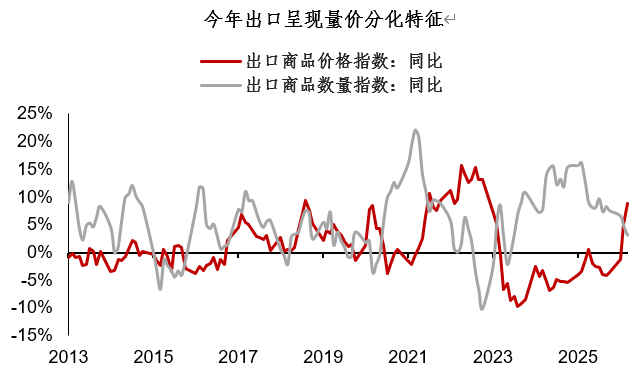
During industry discussions, a frequently encountered question is, "Will the appreciation of the RMB exchange rate hurt exports?" This is not an easy question to answer, but one clear fact is that export quantity growth (3.2%) is not as impressive as the headline data suggests.
Another phenomenon is that even among the sectors with rising export prices, this distribution is not even. A study of price data across 98 export industries tracked by customs shows that the majority (70%) of export industries saw year-on-year price declines, while a minority (30%) saw price increases. Although global PPI has risen this year and more industries have posted positive year-on-year export price changes, prices and gross margins in most export sectors remain under pressure, indicating a significant "70/30 split."
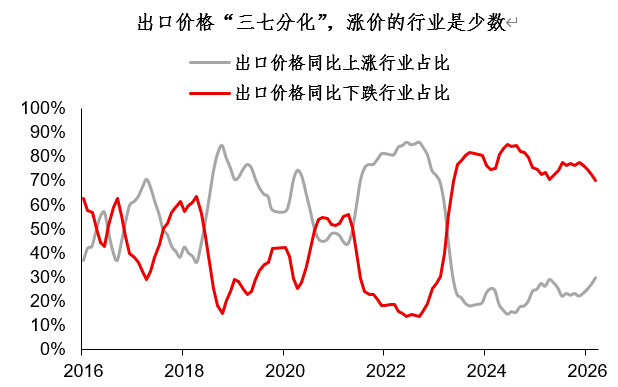
So, which industries are actually driving export prices higher? Typical examples include bulk commodity supply chains (copper, tin, chemical products, etc.), as well as the AI supply chain (integrated circuits, optical modules, etc.). Aside from these, export prices for textiles and apparel, luggage, steel, agricultural products, and others have generally fallen.
What does the differentiation in export volumes and prices, this so-called "70/30 split," mean for the foreign exchange market?
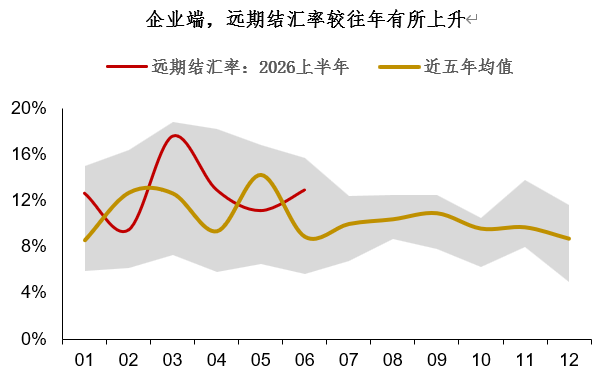
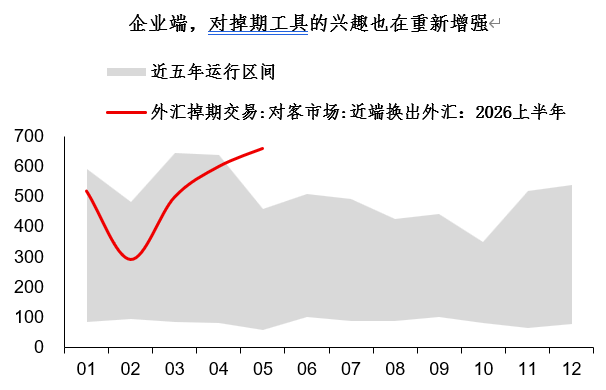
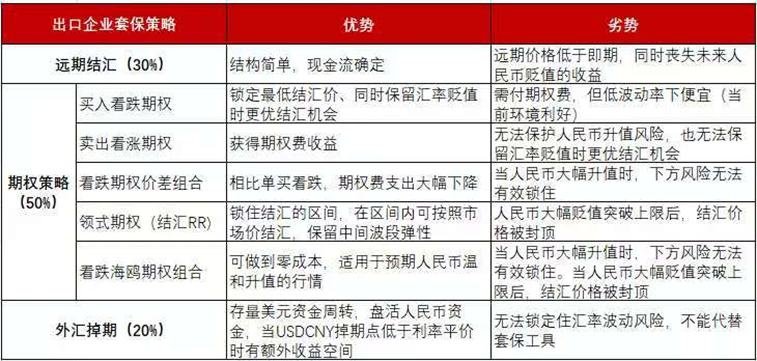
In my view, the export chain is not experiencing broad-based prosperity, but rather structural recovery, which means that the settlement flow is likely to be more episodic and volatile. According to the latest FX settlement data, corporate behavior is showing an obvious adaptive pattern—the forward settlement rate is higher than last year and interest in swap instruments is making a comeback...All these signals suggest that, under the current foreign exchange market environment, a portfolio of risk-hedging instruments (rather than relying on a single tool) might be a better solution for hedging.
To summarize today's discussion:
1. Exports are not as strong as they appear on the surface—there are some structural concerns behind the headline numbers. The main driver for exports beating expectations is rising prices, not a higher quantity, and there is an obvious "70/30 split" in export prices—most industries' prices and gross margins remain under pressure.
2. The export chain is not experiencing widespread prosperity, but a structural recovery, which means the settlement flow is likely to be episodic and volatile. From FX data, corporate behavior is displaying clear adaptability—forward settlement rates have risen over last year, and interest in swap tools is on the rise again;
3. All these signs indicate that, in the current FX environment, a portfolio of hedging tools (rather than a single instrument) might be the better choice for risk mitigation. Finally, a call to previous articles from our team for reference: "Hedging strategies for import and export enterprises: For exporters."
Disclaimer: The content of this article solely reflects the author's opinion and does not represent the platform in any capacity. This article is not intended to serve as a reference for making investment decisions.
You may also like
EU’s 14-platform ban headlines this week’s crypto market events
XCH Price Surge to $1.58 Signals Whale Accumulation—Can It Break $1.60?
How aggressive is the valuation of Anthropic's IPO? Wall Street bets revenue will soar to $200 billion by 2028
Anthropic is preparing for an IPO, with Wall Street using its projected 2028 revenue (approximately $200 billion) as the key pricing anchor, rather than its current performance. The company’s annualized revenue is growing rapidly, but massive AI investments mean profitability is still distant. The market is referencing the valuation of other high-growth companies like Palantir and SpaceX, betting that Anthropic will eventually achieve scale effects and turn profits. However, whether this high-valuation logic can be sustained remains to be tested by the market.
MUFG to Test On-Chain Repo Transactions Using Japanese Government Bonds
Crypto prices
More


