
Canadian Wildfires Rage as Trump Threatens to Include Pollution Costs in Tariffs

The haze caused by wildfires in Canada continues to spread to multiple cities in the United States, prompting Trump to threaten to include pollution costs in tariffs.
On July 17, U.S. President Trump posted on social media accusing Canada of poor forest management, claiming that Canadian wildfires have affected U.S. air quality. He said similar situations occur every year, causing “billions of dollars” in losses to the United States.
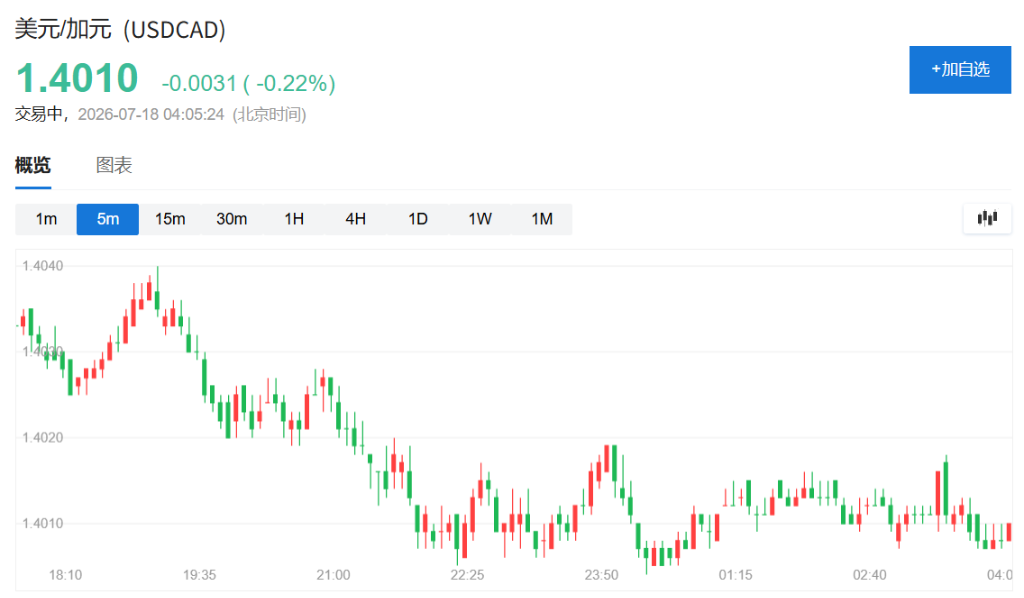
He stated that he would call the Canadian Prime Minister about this matter that day and threatened that the U.S. losses must be added to the tariffs paid by Canada. Following the news, the USD/CAD exchange rate fluctuated sideways, temporarily quoted at 1.4010;
The Canadian stock index's intraday decline once widened to 0.6%.
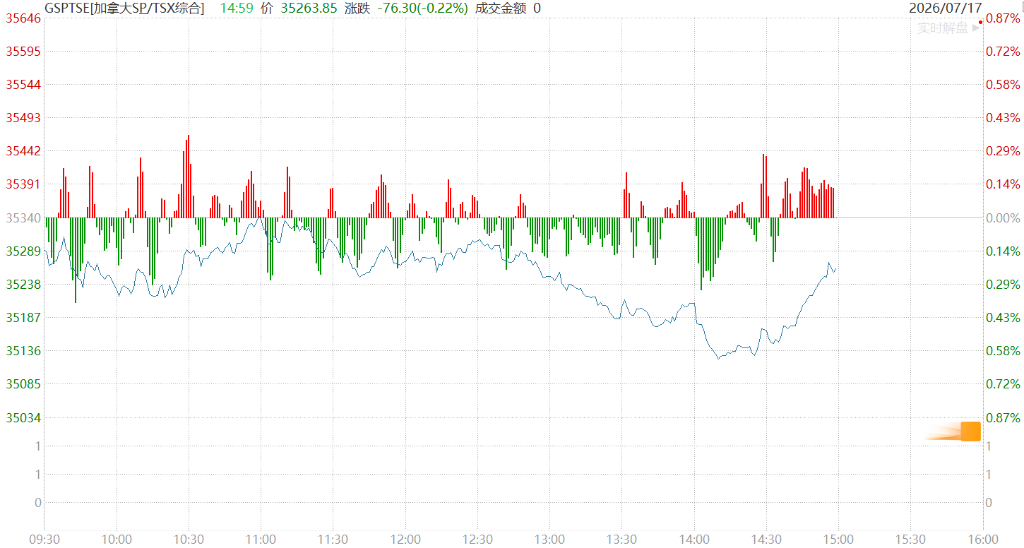
So far, the fluctuations in the Canadian dollar and the Canadian stock market remain moderate, but analysts expect the outcome of the call and subsequent policy statements to become the next key observation points.
Air Quality at Crisis Levels: Multiple U.S. Cities Rank Among the Worst in the World
According to the Canadian government's national wildfire briefing, as of Friday afternoon, there were about 900 fires still burning across Canada, 122 of which were classified as "out of control," meaning the fires are expected to continue spreading.
This week, a large plume of smoke from Canadian wildfires moved south, covering large areas of the Northeastern and Midwest United States, causing air quality index (AQI) levels in multiple cities to deteriorate rapidly.
On Thursday, the AQI in Toledo, Milwaukee, and Detroit all exceeded 500, far above the “hazardous” threshold of 300.
As of Friday afternoon, Detroit ranked at the top of the world's worst air quality cities, with Chicago and Washington, D.C. ranked fourth and fifth, and New York ranked fourteenth.
Dr. Jonathan M. Tan, Chief of General Anesthesia at the Children's Hospital of Philadelphia, said:
When AQI stays above 150 throughout the day, its harmful effects are roughly equivalent to smoking seven to nine cigarettes.
Local officials and medical experts advise residents to stay indoors as much as possible, avoid strenuous exercise, and wear N95 masks when going out.
According to forecasts from the U.S. National Weather Service, as northwest airflow continues to bring Canadian wildfire smoke into the Northeastern United States, air pollution problems will persist throughout the weekend.
The AQI in Toledo is expected to drop to the 100–200 range on Saturday (UTC+8), but this still falls within the “unhealthy” to “very unhealthy” levels, and the poor air quality in the above three cities may persist until next Monday.
Disclaimer: The content of this article solely reflects the author's opinion and does not represent the platform in any capacity. This article is not intended to serve as a reference for making investment decisions.
You may also like
MOVE Index drops to 2026 lows as Fed holds steady and inflation cools
CASHCAT pulls back 16% – $0.144 is still in play ONLY IF…
GoPlus Security crypto RSI hits 84.97 as broader market stays in Fear

Crypto prices
More


