
Forex Today: US Dollar retreats after soft inflation data, focus shifts to BoC rate decision

Here is what you need to know on Wednesday, July 15:
The US Dollar (USD) remains under bearish pressure in the European session on Wednesday after weakening against its major rivals on Tuesday. In the second half of the day, the US Bureau of Labor Statistics will publish the Producer Price Index (PPI) data for June and the Bank of Canada (BoC) will announce monetary policy decisions.
On Tuesday, the BLS reported that annual inflation in the US, as measured by the change in the Consumer Price Index, softened to 3.5% in June from 4.2% in May. On a monthly basis, the CPI declined by 0.4%, while the core CPI was unchanged. All these prints came in below analysts' estimate and triggered a USD selloff. Although Federal Reserve (Fed) Chairman Kevin Warsh refrained from commenting directly on the soft inflation report during his congressional testimony, the USD Index lost more than 0.3% on the day. In the early European session, the index stays in negative territory below 101.00.
Warsh underscores Fed resolve on inflation
Fed Chair Warsh’s testimony scored 7/10 on the FXS Speechtracker, in line with the 7/10 historical average, signaling a steady, firmly anti-inflation stance rather than a tonal shift. The key remark that “if we get policy right – and we will – the inflation surge of the last five years will be a thing of the past” reinforces confidence in the Fed’s ability to subdue price pressures, backed by explicit “no tolerance” language on persistent inflation. With solid economic activity, accelerating AI-related business investment, and a stable labor market offsetting a lagging housing sector, his overall tone was moderately hawkish.
The FXS Fed Sentiment Index was unchanged at 127.19, keeping the Fed firmly in hawkish territory relative to the neutral 100 benchmark.
In his second day of testimony, Warsh will appear before the Senate Committee on Banking, Housing and Urban Affairs.
In the meantime, there are no signs of a de-escalation in the Middle East. The US has imposed its naval blockade of Iranian ports and the US military launched attacks for a fourth consecutive night. In response, Iran’s Islamic Revolutionary Guard Corps said it attacked US military assets in Bahrain, Kuwait and Jordan. After rising to its highest level in a month above $80 per barrel on Tuesday, West Texas Intermediate (WTI) crude Oil trades sideways at around $79 on Wednesday.
The data from China showed earlier in the day that the Gross Domestic Product (GDP) expanded at an annual rate of 4.3% in the second quarter. This print followed the 5% growth recorded in the first quarter and came in below the market expectation of 4.5%. AUD/USD struggles to build on Tuesday's strong gains and trades in a narrow channel below 0.6700 in the European morning on Wednesday.
EUR/USD stays in a consolidation phase above 1.1400 after rising about 0.4% on Tuesday. Eurostat will publish Industrial Production data for May later in the session.
The BoC is forecast to keep the policy rate unchanged at 2.2% following the July meeting. After falling about 0.7% on Tuesday, USD/CAD stabilizes at around 1.4050 in the European morning on Wednesday.
USD/JPY registered marginal losses on Tuesday despite the broad-based USD weakness. The pair fluctuates in a tight band above 162.00 early Wednesday.
GBP/USD holds steady at around 1.3400 after closing in positive territory on Tuesday.
Gold (XAU/USD) staged a rebound and erased a portion of its weekly losses on Tuesday. With tensions in the Middle East remaining high midweek, the precious metal stays on the backfoot and declines toward $4,000.
Disclaimer: The content of this article solely reflects the author's opinion and does not represent the platform in any capacity. This article is not intended to serve as a reference for making investment decisions.
You may also like
Nvidia (NVDA.US) plans to invest $3 billion to enter SB Energy: from selling chips to securing the OpenAI "electricity-park-computing power" chain
Analysts point out that Nvidia may be able to intervene early in a critical aspect of GPU order fulfillment by investing in the developer of OpenAI’s data centers.

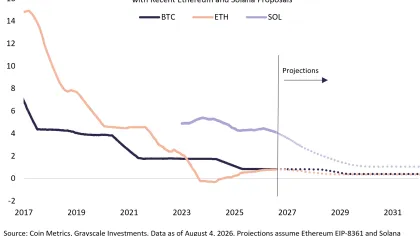
Ethereum and Solana may become scarcer – THESE Grayscale projections say…
‘Bitcoin doesn’t need MSCI’ – Strategy fires back as MSTR deletion odds hit 73%
Five factors are combining to intensify, JPMorgan: Global food crisis may erupt next year
JPMorgan has warned that driven by the combined effects of war, weather, storage, water resources, and waste, a global food crisis may erupt in the first half of 2027. The global food inflation rate is expected to rise from 2.8% in the first half of 2026 to 5% in the first half of 2027. The overlap of a super El Niño and energy shocks will push the Food CPI up by an additional 1.5 percentage points, with emerging markets such as India, Indonesia, and Brazil being the most affected.
Crypto prices
More


