
The "AI sell-off" continues to spread across US stocks! Chip stocks fell across the board, optical communication concept stocks generally declined, SanDisk plummeted over 12%, SK hynix fell over 9%, and crude oil surged nearly 10%.

On July 13th Eastern Time, the US stock market weakened across the board under the dual pressures of geopolitical shock and rate hike expectations, with technology growth sectors experiencing concentrated selling. Triggered by the sudden escalation of the US-Iran conflict and an almost 10% daily surge in international oil prices, market concerns about inflation quickly returned, sharply boosting the Federal Reserve's rate hike expectations. The Nasdaq Composite fell 1.55%, with the semiconductor, memory, and optical communication sectors leading the market decline, becoming the hardest-hit area in this round of adjustment. This is yet another systemic pullback for the technology sector since the start of the AI rally, casting uncertainty over the upcoming earnings season and key inflation data.
“AI Sell-off” Continues to Spread, Chip Stocks Tumble, Optical Communication Stocks Plunge Across the Board
At the close, the Dow Jones Industrial Average fell 138.37 points, or 0.26%, to 52,498.64 points; the S&P 500 Index dropped 60.05 points, or 0.79%, to 7,515.34 points; and the Nasdaq Composite Index slipped 408.43 points, or 1.55%, to 25,873.18 points. The sector split was pronounced, with the S&P 500 Information Technology sector plunging 2.07% to lead all industries lower, and the Telecom sector falling 0.98%. The Energy sector, however, bucked the trend, surging 3.16%, making it the only sector to post significant gains.
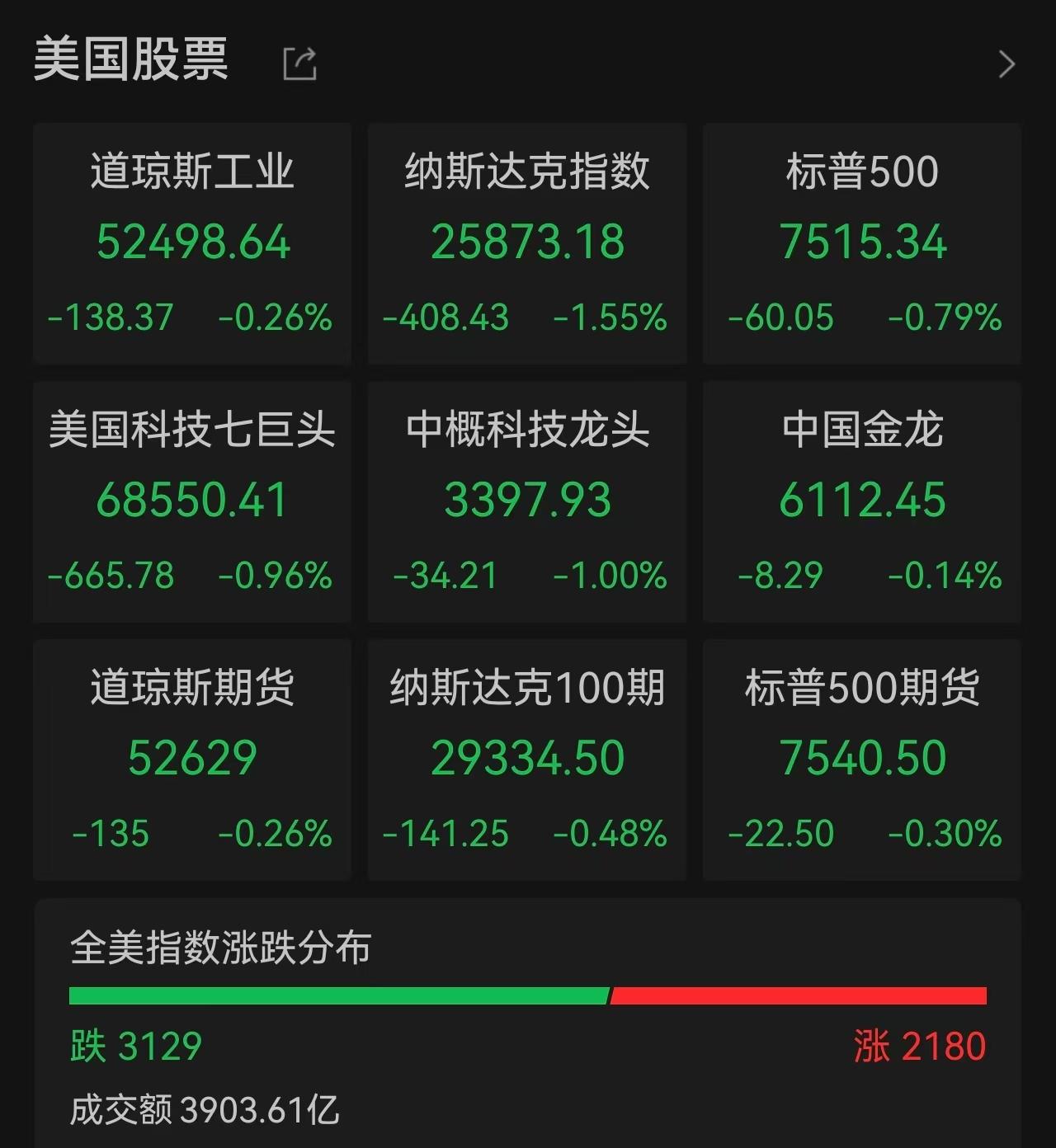
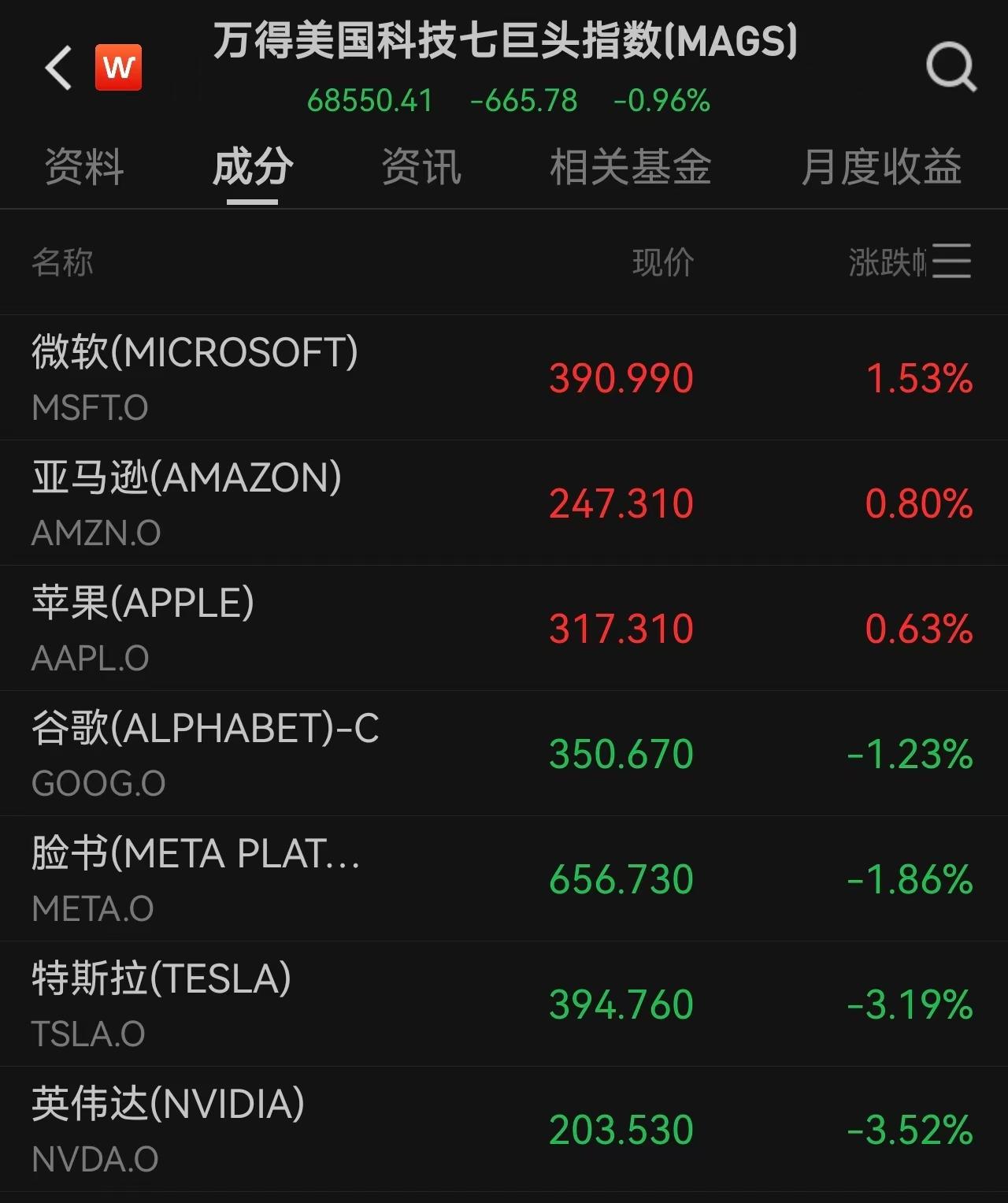
Tech giants showed divergent performances: Microsoft rose 1.53%, Amazon gained 0.80%, and Apple was up 0.63%; Tesla dropped 3.19%, Nvidia declined 3.52%, and both Meta and Google fell by more than 1%, with the Wind U.S. Technology Seven Giants Index collectively down 0.96%.
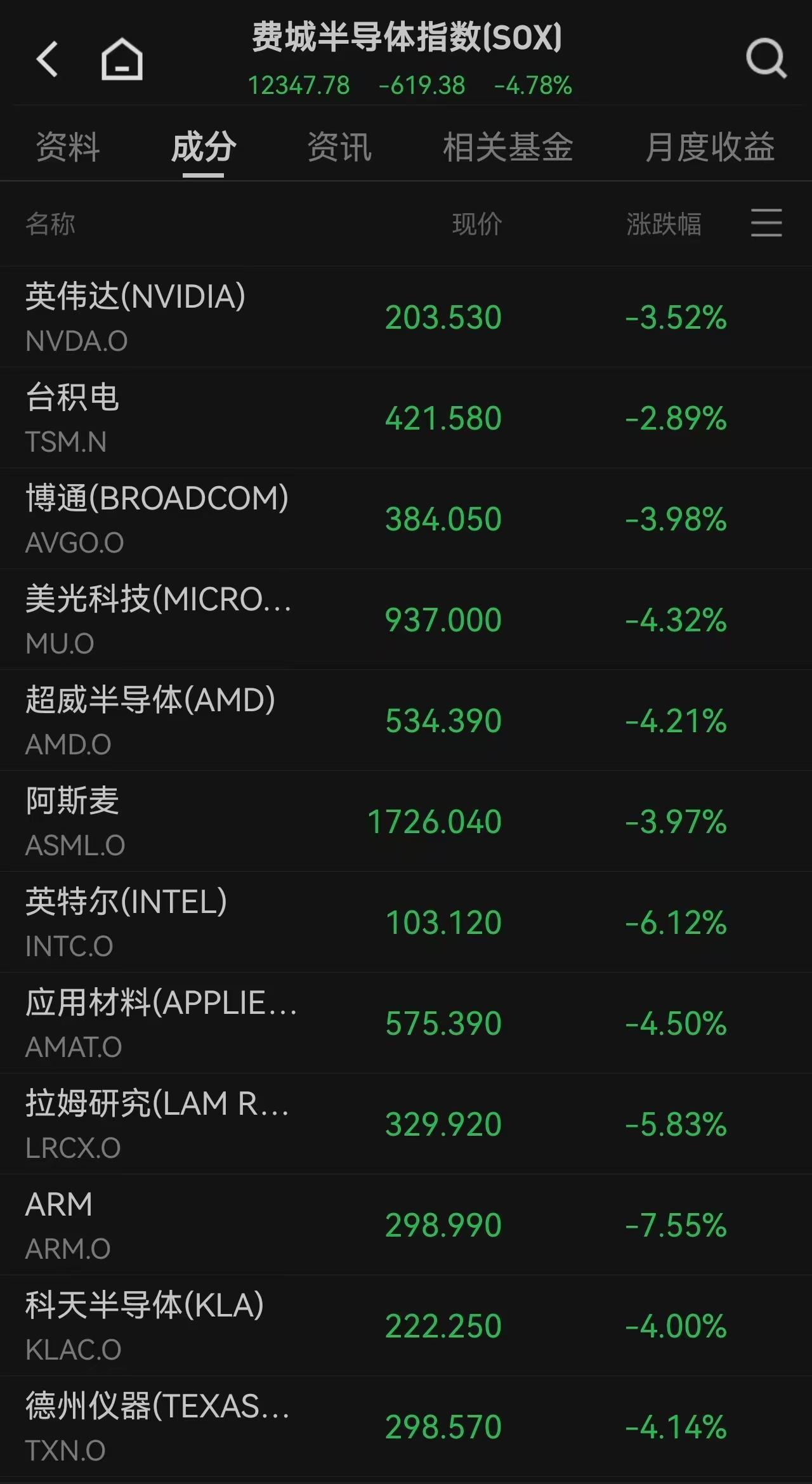
The previously strong semiconductor sector became the core target of the sell-off, with the Philadelphia Semiconductor Index plunging 4.78% in a single day. Arm fell over 7%, Intel more than 6%, Lam Research and ON Semiconductor over 5%, while Micron Technology, AMD, Applied Materials, and Texas Instruments lost more than 4%. Broadcom and ASML ADR both retreated over 3%.
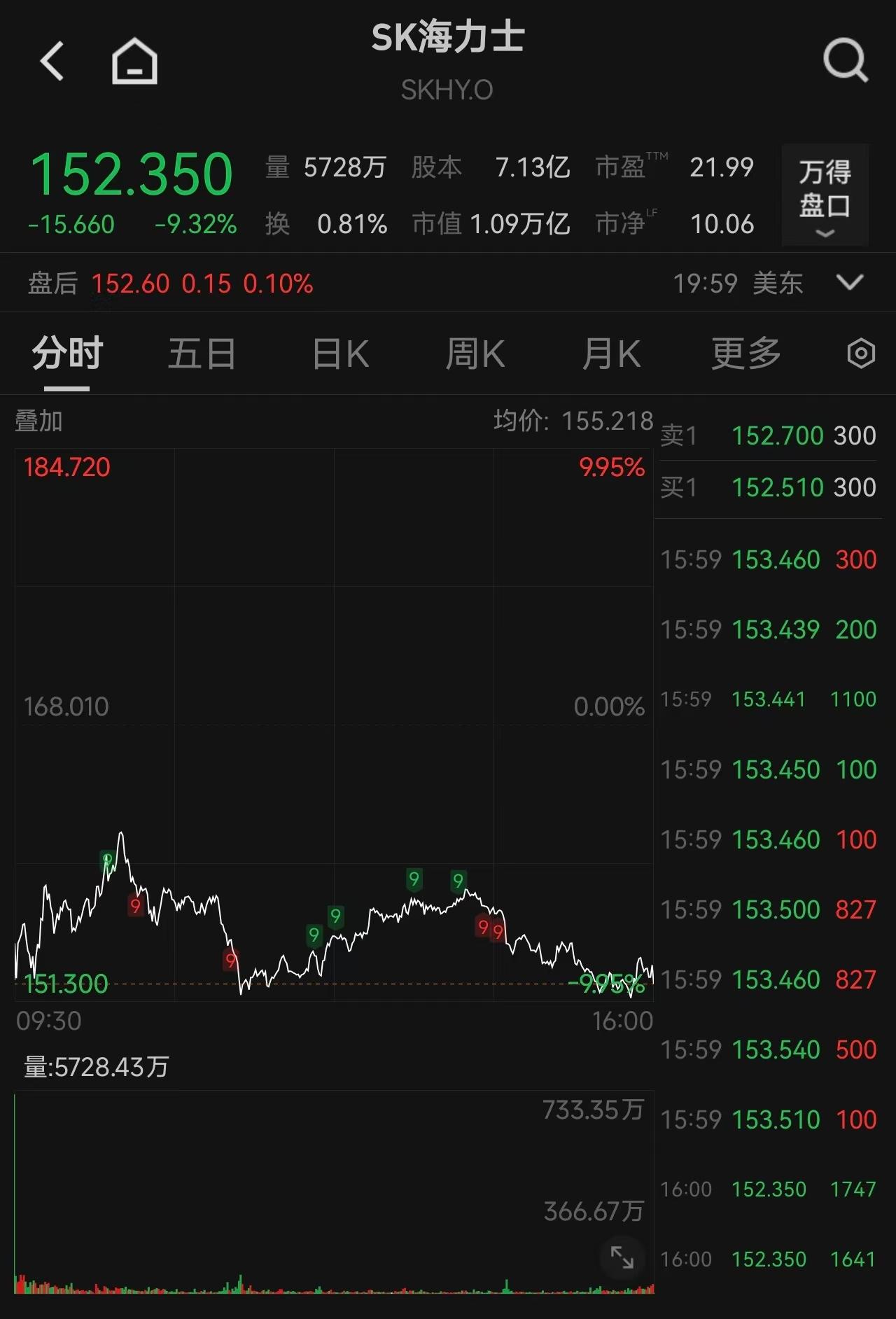
The memory sector suffered even sharper declines, with Western Digital (Sandisk) plummeting 12.60%. South Korean memory chip giant SK Hynix ADR, after surging 12% on its first day listing on Nasdaq last Friday, tumbled 9.32% the following day. Seagate Technology dropped over 5%, and Western Digital lost more than 4%. The optical communication sector also slumped, with Astera Labs diving over 12%, Credo Technology down more than 8%, and Marvell Technology falling over 7%.
Chinese concept stocks remained relatively resilient, with the Nasdaq Golden Dragon China Index edging down just 0.14%. Individual stocks diverged: NIO rose over 3%, JD.com gained more than 2%, NetEase and KE Holdings both advanced over 2%. Baidu slid more than 3%, Hesai Technology dropped over 6%, and Kingsoft Cloud and Zai Lab both lost over 4%.
International Oil Prices Surge Over 9%
Commodity markets saw even more volatile swings. The New York Mercantile Exchange August delivery crude oil futures closed up 9.42% at $78.14 per barrel, while September delivery London Brent crude futures gained 9.59% to close at $83.30 a barrel, the largest one-day gain since 2020. Precious metals came under pressure: COMEX gold futures fell 2.61% to $3,997.00 per ounce, with spot gold dipping below the $4,000 mark; COMEX silver futures slid 3.64% to $57.63 per ounce.
The core variable driving this market upheaval was the rapidly escalating Middle East geopolitical situation. On July 13th local time, US President Trump officially informed Congress that hostilities with Iran had resumed and announced the reimposition of a maritime blockade on Iranian ports. The US military began its third consecutive night of airstrikes on Iran, and starting at 20:00 GMT on July 14th, will enforce a full blockade of Iran’s entire coastline and ports, allowing only humanitarian supplies to pass after inspection. Trump also announced a 20% fee on all goods passing through the Strait of Hormuz. Iran responded forcefully, declaring that US actions posed a serious threat to navigation safety and the international trade order in the Strait, and vowed harsh measures against any interference with commercial shipping.
The Strait of Hormuz handles roughly one-third of the world's seaborne crude oil transportation. The escalation immediately raised concerns over supply contraction, fueling the oil price spike. ING warned in a research report: “The greatest current risk is the conflict escalating to early wartime intensity, with neighboring Middle Eastern countries and their energy infrastructure becoming targets. The growing tension has already caused a sharp drop in shipping through the Strait, and the market is again worried about tightening crude oil supplies in the third quarter.”
Market Rate Hike Expectations Rise Rapidly
The reason why the oil price surge triggered a deep correction in the tech sector lies in the clear transmission chain of "oil prices - inflation - rate hikes - growth stock valuations." Energy prices are a core inflation component, and an almost 10% daily surge in oil prices shattered market expectations for steady inflation retreat. Fed Governor Christopher Waller stated on Monday: “If this week’s core inflation comes in hot again, then the FOMC will have to consider tightening monetary policy in the near term.” He emphasized that by any measure, inflation is up this year, monetary policy is now at a "crossroads," and upward pressures from tariffs, energy prices, and AI infrastructure persist.
Market rate hike expectations quickly surged. According to the CME FedWatch Tool, the probability of a 25 basis point rate hike this year jumped from 26% a week ago to 41%; LSEG data shows that the market has priced in at least one 25 basis point hike before year-end. US Treasury yields rose in tandem: the 2-year yield moved up 6.1 basis points to 4.27%, and the 10-year yield climbed 4.5 basis points to 4.61%. For high-valuation technology growth stocks, rising rates mean their discounted future earnings shrink significantly; and as the AI rally's leading sector, semiconductors have accumulated substantial profits, making them the first choice for funds seeking safe-haven profits.
Thomas Martin, senior portfolio manager at GLOBALT, commented: “US stocks hit all-time highs at the end of May, mainly driven by the semiconductor sector. When an asset rises this much in such a short period, the market naturally questions: How long can this rally really last?” He added that while it might be a different story if valuations were still cheap, the market’s margin of safety has clearly narrowed, with many unknowns remaining.
There are also market divergences on this. Soochow Securities believes that in the short term, the core factor dominating market sentiment is industrial trend disturbance, not macro conditions. New Fed Chairman Walsh is actually dovish, and macro uncertainties have been largely priced in, making Fed policy path more predictable and unlikely to be a new marginal disruption in the short term. The Bank of Korea also pointed out in its report that the global semiconductor market is still in short supply, and the AI-driven supercycle is expected to continue for some time, dispelling concerns of a chip market peak.
Multiple Key Events Approaching as Market Enters a Window of Game-play
This week will be a key window determining the direction of this adjustment. On monetary policy, Fed Chairman Kevin Walsh will attend his first Congressional semi-annual hearing as Chairman on Tuesday and Wednesday, and the market will closely watch his comments on the inflation impact of the US-Iran conflict and monetary policy path. On the economic data front, the US Department of Labor will release June CPI and PPI data, directly validating the impact of oil price increases on inflation transmission. The Commerce Department will announce June retail sales data, reflecting the resilience of household spending, which accounts for 70% of the economy, against the backdrop of rising gasoline prices. On earnings, the five major banks—Bank of America, Citigroup, Goldman Sachs, JPMorgan Chase, and Wells Fargo—will report quarterly results on Tuesday, officially kicking off the Q2 earnings season. LSEG statistics show that market consensus expects S&P 500 constituent Q2 overall profits to grow 23.70% year-on-year, a sharp upward revision from 19.20% in early April.
Overall, the US stock market is currently engaged in a game between fundamental resilience and geopolitical risks/rate hike expectations. The evolution of US-Iran tensions remains the biggest uncertainty; if the conflict further escalates and pushes oil prices higher, inflation and rate hike pressure will continue to suppress growth stock valuations. If the situation eases and oil prices fall, risk appetite could recover quickly. For investors, this week’s inflation data and earnings signals will be the core basis for judging the future market direction.
Disclaimer: The content of this article solely reflects the author's opinion and does not represent the platform in any capacity. This article is not intended to serve as a reference for making investment decisions.
You may also like
PBOC sets USD/CNY reference rate at 6.7990 vs. 6.7972 previous
Euro posts modest gains above 1.1350 as traders await US CPI inflation release
Bitcoin mining activity rises in Ethiopia as country becomes unlikely crypto powerhouse
Jito price recovers – Assessing if JTO can flip $0.67 into support
Crypto prices
More


