
The U.S. stock market is in an "extremely fragile" state as earnings season begins

At the index level, US equity market volatility appears calm on the surface, but internal pressures are mounting. Under the triple constraints of geopolitical tensions, monetary policy expectations, and credit market signals, market fragility has climbed to its highest level in recent years—just as a high-expectation, high-risk earnings season is getting underway.
UBS’s derivatives strategy team’s “Turbu-lens” market vulnerability indicator currently reads 0.9 (range from -1 to 1), the highest since mid-September 2025. Historically, such readings often signal a sharp, temporary spike in VIX. The UBS derivatives strategy team led by Maxwell Grinacoff warns that this indicator points to “extreme market vulnerability,” right as earnings season kicks off. At the same time, the team notes that if systematic strategies fully leverage up, the indicator could “legitimately reach +1.”
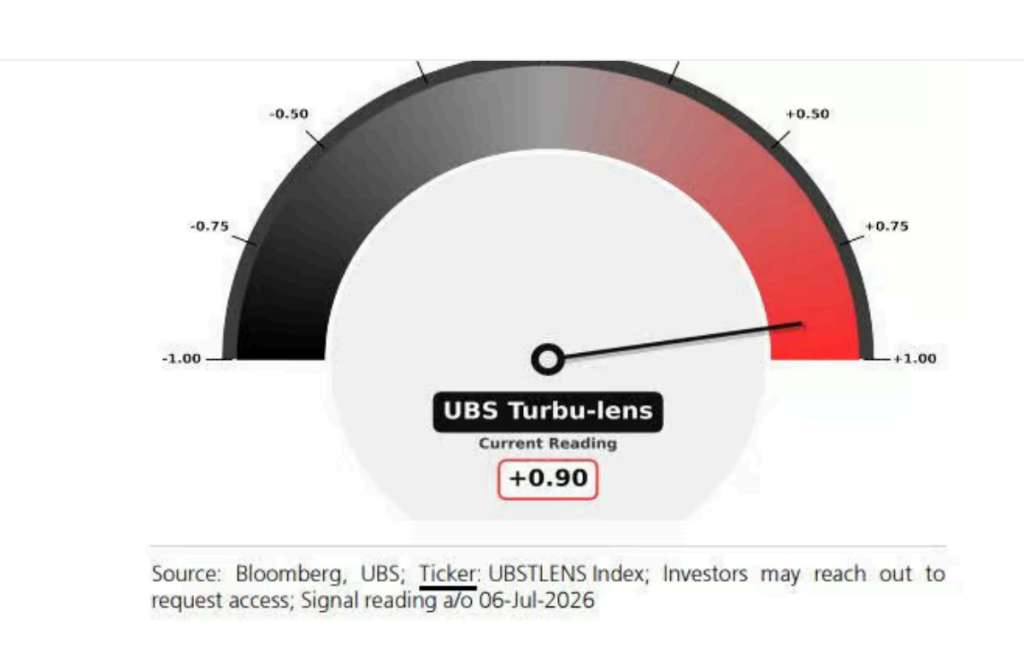
Currently, high levels of market expectation are further amplifying risk. Analysts are forecasting as much as 24% growth in Q2 earnings for S&P 500 components, and 12% for the STOXX Europe 600. Unlike previous earnings seasons, analysts have continued to raise forecasts right up to the reporting period, with such strong confidence implying even greater downside if results disappoint the market.
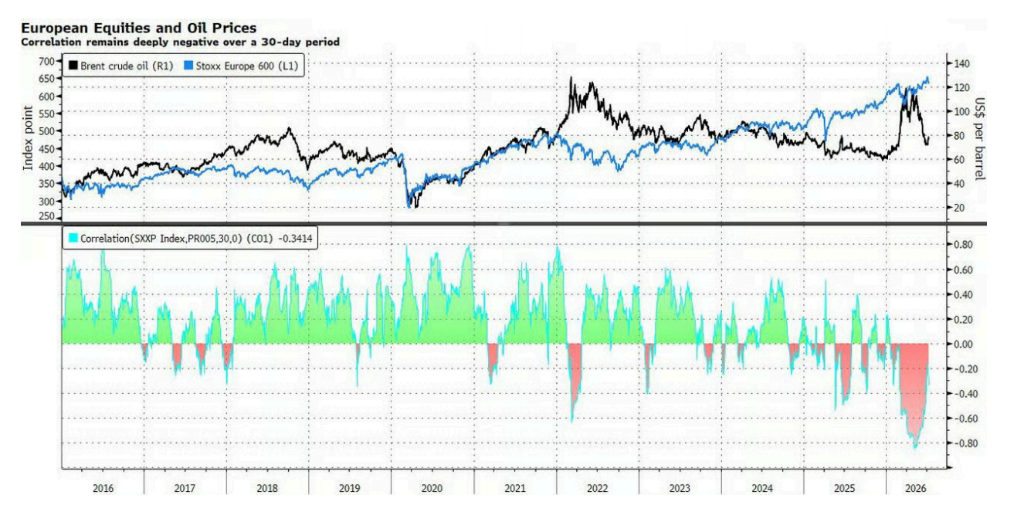
Under VIX’s Calm, Single-Stock Volatility Has Tripled
While VIX remains low, this calm is misleading. The Barclays strategy team led by Anshul Gupta notes that VIX’s recent decline coincided with a seasonal period when volatility normally narrows—a "short-lived sweet spot" unlikely to persist. The start of earnings season may lift the VIX again.
More noteworthy is the extreme internal divergence masked by index volatility’s lethargy—single-stock volatility is now over three times higher than index volatility. Grinacoff notes that this gap is likely to narrow during the summer, as either a repricing of monetary policy or geopolitical disturbances could spark a sharp surge in index-level volatility.
As for hedging strategies, since diversified trading and sector rotation are likely to continue throughout earnings season, index-level hedges may have limited efficacy. Grinacoff suggests, “Tactically, single-stock options may offer better opportunities.”
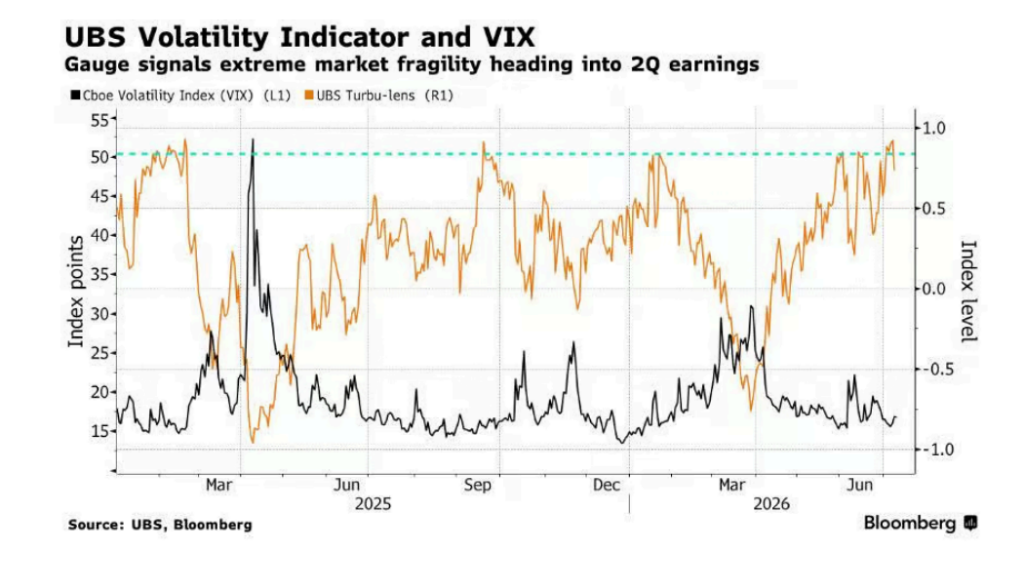
Oil and Bond Markets Send a Double Warning
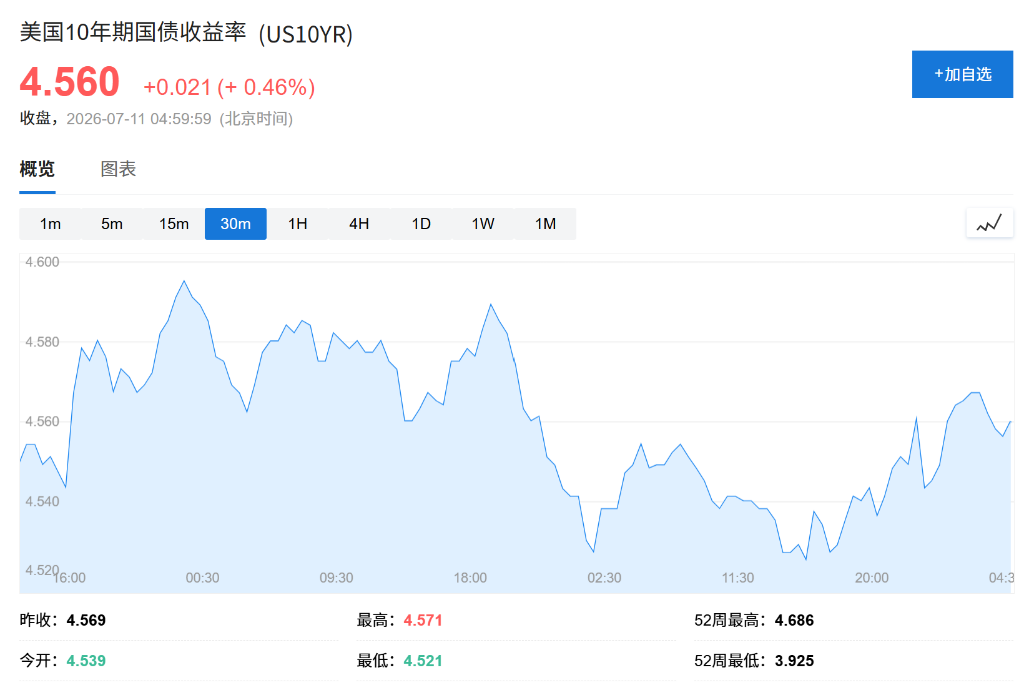
Oil price swings driven by geopolitics are maintaining ongoing pressure on global equities. Brent crude has risen to just below $80 per barrel, a move that could keep inflation expectations high and encourage the Federal Reserve to remain on hold. Although rate hike expectations changed little after the FOMC minutes were released, the 10-year US Treasury yield has quietly climbed close to 4.6%. Rising bond market volatility is sending a negative signal to global stock markets—or at the very least, capping further upside potential.
The Citi strategy team (including Alice Zheng) notes that there is a positioning bias in the market’s response to rising oil prices, with Europe particularly vulnerable—due to its high dependence on imported energy and relatively low exposure to AI-beneficiary assets. “If oil continues to rally, the correction in European equities could be quite pronounced. After all, the market had already heavily priced in the expectation of conflict ending,” the strategists write.
The Credit Market Has Not Endorsed the Stock Market Rally
The performance of the credit market is sounding an alarm for current equity market momentum. Compared to equity indexes’ recent record highs, credit default swap (CDS) spreads have narrowed only modestly, meaning the credit market is not providing a full-throated endorsement of the stock market rally. As equities have recently pulled back, the two have moved back into alignment, but analysts believe that for equities to mount a stronger rally, more definite tightening signals from the credit market are needed.
Faced with these risks, UBS recommends investors use pair-wise correlations trades to capture volatility opportunities at the single-stock level. By sector, UBS believes technology, energy, and financials offer the best opportunities for pair trading in the US market, while in Europe, energy, technology, and consumer discretionary sectors are recommended.
Disclaimer: The content of this article solely reflects the author's opinion and does not represent the platform in any capacity. This article is not intended to serve as a reference for making investment decisions.
You may also like
XRP whale transactions surge 280% in 24 hours
From "AI Disruption" to "AI Catalysis", the Logic Behind Cybersecurity Stocks Has Changed
The market initially worried that AI would weaken the moat of cybersecurity companies, but now AI agents have given rise to more complex and faster attacks, actually expanding the attack surface for enterprises and forcing security capabilities to upgrade in sync with AI deployment. As a result, cybersecurity has transformed from a defensive expenditure into essential infrastructure for large-scale AI implementation. Its demand logic, sector valuation, and ETF performance have all seen significant boosts, and the market is now repricing its growth prospects.
After a Strong Rally in European Stock Markets, JPMorgan Strategists Advise a Shift to "Selective Positioning": Financial and Industrial Sectors Become Top Picks
After the surge in European stock markets, JPMorgan strategists have begun to focus more on selective investments.

Pepe Crypto RSI Sinks to 35.75 as Daily Bearish Bias Holds
Crypto prices
More


