
Arcus goes live after year-long development with dYdX team

A new decentralized exchange born from a collaboration between dYdX Labs and Robinhood Crypto is officially open for business. Arcus, which offers perpetual futures and tokenized equities, went live after roughly a year of development, marking one of the more ambitious attempts to merge traditional finance assets with DeFi infrastructure.
The platform currently supports live spot trading across 95 Stock Tokens and 35 Real World Asset perpetuals. Access to perpetual contracts remains on a waitlist for now.
What Arcus actually is
The platform runs on Robinhood Chain, an EVM-compatible Layer-2 solution that enables 24/7 trading. Robinhood brings a retail user base exceeding 25 million people, and Arcus is positioning itself to tap directly into that audience.
Eddie Zhang serves as CEO of Arcus. Zhang previously worked at Meta and co-founded Pocket Protector, a social trading app that dYdX acquired in July 2025. That acquisition was explicitly part of building toward the Arcus launch, bringing product development talent and social trading expertise into the fold.
Antonio Juliano, the founder of dYdX, has called Arcus the best advancement for the dYdX ecosystem.
Why dYdX needed a new approach
dYdX Chain, the protocol’s v4 iteration, achieved full decentralization of an order book-based perpetuals exchange. The problem was that being fully decentralized didn’t automatically translate into being fast or easy to use. Platforms like Hyperliquid and others gained significant traction by prioritizing speed and user experience, and dYdX’s share of on-chain perpetuals volume shrank.
Token economics and community incentives
Arcus hasn’t launched a token yet, but any future Arcus token will reserve allocations specifically for dYdX community members, granting them priority access and trading capabilities on the platform.
What this means for investors
Perpetual contracts are still waitlisted, meaning the core product isn’t fully live yet. How quickly the team opens up perpetuals access, and how the platform performs under real trading load, will determine whether Arcus becomes a genuine competitor.
The social trading elements inherited from the Pocket Protector acquisition could also prove to be a differentiator. Pocket Protector had over 50,000 users prior to acquisition. Bringing copy trading and social mechanics to a decentralized environment, where trades settle on-chain and users maintain custody, would be a new offering in the market.
Traders and investors should watch three things closely: the timeline for opening perpetuals access beyond the waitlist, early volume numbers once perps go live, and any announcements around the Arcus token launch and its specific allocation mechanics for dYdX holders.
Disclaimer: The content of this article solely reflects the author's opinion and does not represent the platform in any capacity. This article is not intended to serve as a reference for making investment decisions.
You may also like
Nvidia (NVDA.US) plans to invest $3 billion to enter SB Energy: from selling chips to securing the OpenAI "electricity-park-computing power" chain
Analysts point out that Nvidia may be able to intervene early in a critical aspect of GPU order fulfillment by investing in the developer of OpenAI’s data centers.

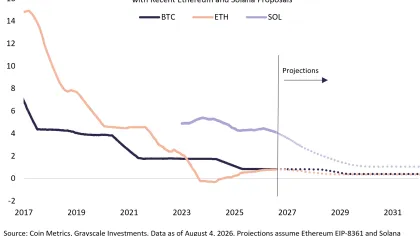
Ethereum and Solana may become scarcer – THESE Grayscale projections say…
‘Bitcoin doesn’t need MSCI’ – Strategy fires back as MSTR deletion odds hit 73%

Five factors are combining to intensify, JPMorgan: Global food crisis may erupt next year
JPMorgan has warned that driven by the combined effects of war, weather, storage, water resources, and waste, a global food crisis may erupt in the first half of 2027. The global food inflation rate is expected to rise from 2.8% in the first half of 2026 to 5% in the first half of 2027. The overlap of a super El Niño and energy shocks will push the Food CPI up by an additional 1.5 percentage points, with emerging markets such as India, Indonesia, and Brazil being the most affected.
Crypto prices
More


