
Goldman Sachs: Divergence Emerges in AI Trading as Market Scrutinizes Capital Returns

BlockBeats News, June 25, Goldman Sachs strategists believe that Wall Street's AI trading is entering a more complex phase: the market still believes in the AI investment cycle, but no longer puts all AI companies into the same valuation framework.
Over the past year, the most favored investments among investors have been the direct beneficiaries in the AI infrastructure chain. Nvidia, TSMC, and some semiconductor equipment and server suppliers have benefited from continued capital expenditure increases by major cloud computing companies. As long as Amazon, Alphabet, Meta, and Microsoft continue to purchase chips, servers, and data center capacity, the revenue outlook for hardware companies will remain supported.
However, the hyperscalers themselves, who shoulder these expenses, have not seen equally strong stock performance. The market is rewarding "the side that collects money," but remains cautious about "the side that spends money." Investors are increasingly concerned about whether these hundreds of billions of dollars in AI investments can ultimately be converted into profits, free cash flow, and shareholder returns.
This is what Goldman Sachs refers to as AI trading being like a "stretched rubber band." On one end, orders and profit expectations for hardware suppliers are continuously being elevated; on the other, large tech platforms are under increasing capital expenditure pressure. As long as AI demand keeps growing, this dynamic can continue. But if the market starts to doubt the investment return rate, or if cloud giants signal a peak in AI spending growth, related stocks may be repriced.
Goldman Sachs is not bearish on AI, but believes that AI trading has moved from thematic investing to a stage of verifying returns. The market no longer just asks "who is involved in AI," but is now concerned with "who can actually make money from AI."
For Nvidia, TSMC, and the AI device chain, the biggest risk is not vanishing demand, but that demand growth may no longer continually exceed expectations. For Amazon, Alphabet, Meta, and Microsoft, the short-term pressure comes from excessive capital expenditure; however, if AI costs decrease, or AI products bring in clear revenues, they might instead become the next beneficiaries.
The bigger variable is the AI cost curve. If China, Japan, or other regions can develop and run high-performance models at lower costs, the current high capital expenditure path of major U.S. tech companies might be challenged. The market has previously assumed that leading AI always requires more chips and larger data centers, but improvements in model efficiency and the development of alternative chips could undermine this logic.
Therefore, the main AI narrative hasn’t ended, but the buying logic is becoming more refined. The next phase is not merely about whether there is AI demand, but about who can turn AI investment into real cash flow.
Disclaimer: The content of this article solely reflects the author's opinion and does not represent the platform in any capacity. This article is not intended to serve as a reference for making investment decisions.
You may also like
Foreign Investors Record Net Selling of Korean Stocks for Fifth Consecutive Month
Southern 2x Long SK Hynix ETF Drops Over 11%
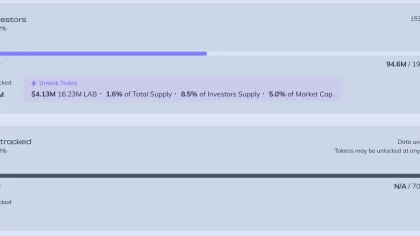
Data: LAB will unlock 16.23 million tokens on July 14, accounting for approximately 1.6% of the total supply.
Southern Double Leveraged Micron ETF Plunges 18%
Crypto prices
More


