
Swiss Bitcoin Reserve Effort Withdrawn After Resistance From Central Bank

By:Newsbtc
Bitget offers one-stop trading for cryptocurrencies, stocks, and gold. Trade now!
A welcome pack worth 6200 USDT for new users! Sign up now!
Campaign founder Yves Bennaim isn’t giving up. Even after his group failed to gather enough signatures to force a Swiss national referendum on Bitcoin reserves, Bennaim said another push could follow.
The Swiss direct democracy system requires campaigns to hit a signature threshold within 18 months — his team didn’t make it.
A Bold Proposal That Didn’t Get Off The Ground
The initiative would have required the Swiss National Bank to hold Bitcoin alongside gold and foreign currencies. Supporters argued that adding Bitcoin to the SNB’s reserves would reduce dependence on the US dollar and the euro.
var rnd = window.rnd || Math.floor(Math.random()*10e6); var pid607465 = window.pid607465 || rnd; var plc607465 = window.plc607465 || 0; var abkw = window.abkw || ''; var absrc = 'https://servedbyadbutler.com/adserve/;ID=172179;size=0x0;setID=607465;type=js;sw='+screen.width+';sh='+screen.height+';spr='+window.devicePixelRatio+';kw='+abkw+';pid='+pid607465+';place='+(plc607465++)+';rnd='+rnd+';click=CLICK_MACRO_PLACEHOLDER'; document.write('
');
if (!window.AdButler){(function(){var s = document.createElement("script"); s.async = true; s.type = "text/javascript";s.src = "https://servedbyadbutler.com/app.js";var n = document.getElementsByTagName("script")[0]; n.parentNode.insertBefore(s, n);}());}
var AdButler = AdButler || {}; AdButler.ads = AdButler.ads || []; var abkw = window.abkw || ""; var plc366606 = window.plc366606 || 0; (function(){ var divs = document.querySelectorAll(".plc366606:not([id])"); var div = divs[divs.length-1]; div.id = "placement_366606_"+plc366606; AdButler.ads.push({handler: function(opt){ AdButler.register(172179, 366606, [728,90], "placement_366606_"+opt.place, opt); }, opt: { place: plc366606++, keywords: abkw, domain: "servedbyadbutler.com", click:"CLICK_MACRO_PLACEHOLDER" }}); })();
Bennaim drew a parallel to Switzerland’s long-standing tradition of neutrality, framing Bitcoin as an independent alternative to the dominant global currencies.
He also pushed back against claims that Bitcoin lacks liquidity, pointing to the billions of dollars moving through international crypto exchanges every day.
LATEST: 🇨🇭 Swiss crypto advocates are abandoning their bid to force the Swiss National Bank to hold Bitcoin, falling short of the 100,000 signatures needed for a constitutional referendum.
— CoinMarketCap (@CoinMarketCap) May 8, 2026
But the SNB wasn’t persuaded. The bank has remained cautious, and European Central Bank policymakers have made their position clear — reserve assets must be liquid, secure, and stable.
var rnd = window.rnd || Math.floor(Math.random()*10e6); var pid607472 = window.pid607472 || rnd; var plc607472 = window.plc607472 || 0; var abkw = window.abkw || ''; var absrc = 'https://servedbyadbutler.com/adserve/;ID=172179;size=0x0;setID=607472;type=js;sw='+screen.width+';sh='+screen.height+';spr='+window.devicePixelRatio+';kw='+abkw+';pid='+pid607472+';place='+(plc607472++)+';rnd='+rnd+';click=CLICK_MACRO_PLACEHOLDER'; document.write('
');
if (!window.AdButler){(function(){var s = document.createElement("script"); s.async = true; s.type = "text/javascript";s.src = "https://servedbyadbutler.com/app.js";var n = document.getElementsByTagName("script")[0]; n.parentNode.insertBefore(s, n);}());}
var AdButler = AdButler || {}; AdButler.ads = AdButler.ads || []; var abkw = window.abkw || ""; var plc452518 = window.plc452518 || 0; (function(){ var divs = document.querySelectorAll(".plc452518:not([id])"); var div = divs[divs.length-1]; div.id = "placement_452518_"+plc452518; AdButler.ads.push({handler: function(opt){ AdButler.register(172179, 452518, [728,90], "placement_452518_"+opt.place, opt); }, opt: { place: plc452518++, keywords: abkw, domain: "servedbyadbutler.com", click:"CLICK_MACRO_PLACEHOLDER" }}); })();
Bitcoin’s price record hasn’t helped its case. The cryptocurrency has dropped roughly 7% so far this year, following a record $126k ATH in October 2025.
Europe Still Divided On Crypto In Central Bank Reserves
Based on reports from Reuters, the failed Swiss campaign reflects a wider disagreement across Europe. Policymakers have not reached any consensus on whether digital assets belong in central bank reserve strategies.
BTCUSD now trading at $80,362. Chart:
TradingView
That debate has sharpened as crypto has become harder to ignore in global finance. Some institutions have been testing blockchain-based systems. Others remain focused on concerns about price swings, safety, and the ability to sell large holdings quickly without moving markets.
var rnd = window.rnd || Math.floor(Math.random()*10e6); var pid607473 = window.pid607473 || rnd; var plc607473 = window.plc607473 || 0; var abkw = window.abkw || ''; var absrc = window.absrc || ''; document.write('
');
if (!window.AdButler){(function(){var s = document.createElement("script"); s.async = true; s.type = "text/javascript";s.src = 'https://servedbyadbutler.com/app.js';var n = document.getElementsByTagName("script")[0]; n.parentNode.insertBefore(s, n);}());}
var AdButler = AdButler || {}; AdButler.ads = AdButler.ads || []; var abkw = window.abkw || ''; var plc452519 = window.plc452519 || 0; (function(){ var divs = document.querySelectorAll(".plc452519:not([id])"); var div = divs[divs.length-1]; div.id = "placement_452519_"+plc452519; AdButler.ads.push({handler: function(opt){ AdButler.register(172179, 452519, [728,90], 'placement_452519_'+opt.place, opt); }, opt: { place: plc452519++, keywords: abkw, domain: 'servedbyadbutler.com', click:'CLICK_MACRO_PLACEHOLDER' }}); })();
Bennaim’s team framed the campaign as more than just a Bitcoin bid. They wanted Swiss officials to seriously assess the technologies reshaping the financial sector. A future initiative, they said, remains possible.
AMINA is now the first regulated bank to support custody and trading for Canton Coin.
For institutional, corporate, and professional investors, digital assets are increasingly about infrastructure, scale, and execution discipline, not experimentation.
— AMINA Bank (@AMINABankGlobal) May 6, 2026
Swiss Financial Firms Push Ahead With Blockchain
The campaign’s collapse hasn’t slowed the broader Swiss financial industry. AMINA Bank recently became the first institution registered with Swiss financial regulator FINMA to offer custody and trading services for Canton Coin.

XRP Market Now Controlled By Whales? Dominance Reaches 91% On Binance
Through the move, institutional clients gain access to the Canton Network, a platform built for tokenization, collateral management, and settlement.
Goldman Sachs, Visa, Citadel, and the Depository Trust & Clearing Corporation are among the organizations backing the network.
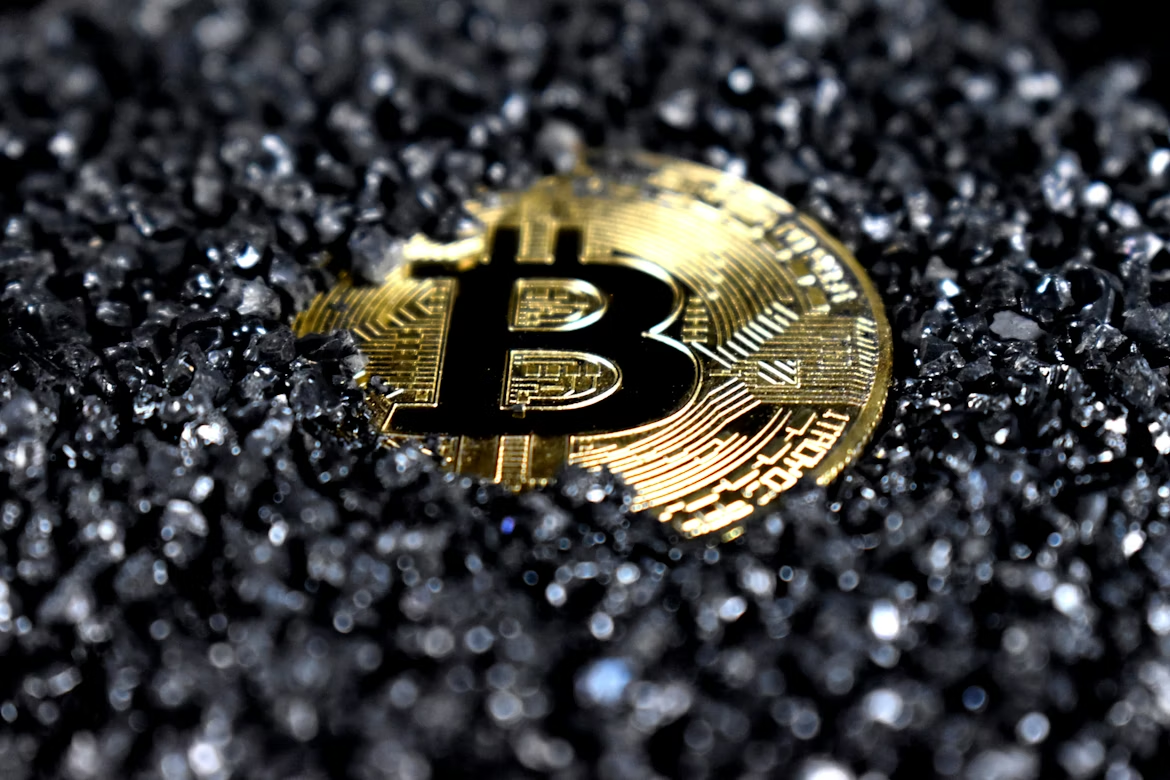
Featured image from Unsplash, chart from TradingView
0
0
Disclaimer: The content of this article solely reflects the author's opinion and does not represent the platform in any capacity. This article is not intended to serve as a reference for making investment decisions.
Understand the market, then trade.
Bitget offers one-stop trading for cryptocurrencies, stocks, and gold.
Trade now!
You may also like
How Ethereum Could Stay Secure Even If Today’s Online Locks Stop Working
Coinedition•2026/10/19 07:36

Cardano Price Prediction: Can ADA Defend $0.22 as Hoskinson Builds a New Programming Language?
CoinEdition•2026/10/19 07:30
 VIPAI Asset Sell-Off and Selective Rotation in Crypto
1. Technology stocks fell sharply as investor interest shifted toward energy and selected defensive assets. From October 10 to 16, the Nasdaq 100 declined 5.49% and the S&P 500 fell 1.95%, while the Dow gained 0.67% and WTI crude rose 10.41%. BTC, ETH, and SOL declined 1.27%, 2.65%, and 4.44%, respectively. This week's technology earnings will be an important test of whether revenue growth, margins, and cash flow can justify current valuations. Better-than-expected results could help stabilize markets in the near term. 2. Crypto continues to see pockets of strong activity, but a broad-based altcoin season has yet to materialize. CoinMarketCap's (CMC) Altcoin Season Index stood at 54 as of the October 18 UTC daily observation, below the altcoin-season threshold of 75, while BTC dominance rose to 60.08%. Our proxy leverage ratio fluctuated between 4.00 and 4.07 during the week, showing no sustained increase and suggesting limited appetite for additional leverage. Meanwhile, as major exchanges expand access to traditional financial assets, the recent sell-off in AI-related equities could attract short-term speculative capital away from crypto. Such capital rotation could make it more difficult for a new altcoin season to take hold. 3. Papertrade's loss-to-mine model has generated significant interest across the crypto community. The protocol combines high-leverage derivatives trading with zero slippage and a mechanism that rewards trading losses with PAPER tokens. Across the eight complete UTC days from October 10 to 17, cumulative reported revenue reached approximately $56.08 million, including $51.90 million distributed to token holders. With growing participation from key opinion leaders (KOLs), Papertrade has reportedly ranked among the top three platforms by profitability in the broader market recently. Assets to watch: BTC, ETH, SOL, ARB, OP, SKHYNIX, SKHY, META, TSLA, LRCX, and SPCX. Key research priorities this week: Cash flow performance in technology earnings; the relative discount and holding costs of the two SK Hynix contracts; and U.S. initial jobless claims and PMI data. Weekly market data cover the period through October 16, while research information was verified through October 18. Observation periods are specified separately for each chart.
Bitget•2026/10/19 06:51

Why Bernstein Thinks the AI Stock Sell-Off Could Help Small Caps
BeInCrypto•2026/10/19 05:30

Crypto prices
More
Bitcoin
BTC
$82,896.24
+1.20%

Ethereum
ETH
$2,438.73
+0.85%

Tether USDt
USDT
$0.9990
+0.03%

BNB
BNB
$726.18
+0.77%

XRP
XRP
$1.32
+1.40%

USDC
USDC
$1.0000
+0.01%

Solana
SOL
$105.78
+1.94%

TRON
TRX
$0.3307
-0.67%

Hyperliquid
HYPE
$80.07
+1.52%

Zcash
ZEC
$1,169.56
+3.41%
How to buy BTC
Bitget lists BTC – Buy or sell BTC quickly on Bitget!
Trade now
Become a trader now?A welcome pack worth 6200 USDT for new users!
Sign up now