
Minutes from the Federal Open Market Committee Meeting

Market Overview and Recent Developments
The manager began by summarizing significant market trends observed since the last meeting. At the start of this period, worries about how artificial intelligence might disrupt existing business models led to lower expectations for policy rates, a drop in interest rates, and downward pressure on stock markets. Later, the outbreak of conflict in the Middle East triggered a rapid surge in energy prices, heightened uncertainty about the broader economic outlook, and prompted substantial shifts in the pricing of various asset classes. According to responses from the Open Market Desk Survey of Market Expectations, participants shared their perspectives on the U.S. market environment.
Disclaimer: The content of this article solely reflects the author's opinion and does not represent the platform in any capacity. This article is not intended to serve as a reference for making investment decisions.
You may also like
The US market narrative undergoes a "dramatic reversal": shifting from "AI-driven deflation and controllable US debt" to "AI squeezing the bond market, and Bassen unable to control long-term interest rates"
Deutsche Bank points out that the market narrative regarding the U.S. economy has shifted from "AI drives down inflation" to "AI-related bond issuance pushes up U.S. Treasury yields," but pessimism may be overdone. The bank believes that the real risks underestimated by the market are security incidents in the AI ecosystem, failed IPOs, or underwhelming revenues, which could undermine the dollar and support the bond market. In addition, France's fiscal difficulties are putting new pressure on the euro.
Deutsche Bank: The "fifth wave of tech stock rally" in US stocks since late July has peaked, prepare for a "V-shaped reversal"
Deutsche Bank has downgraded its rating on US technology stocks from overweight to neutral, noting that the fifth round of tech stock rally since July 29 is approaching the upper boundary of the long-term trend channel. The current upside potential is only about 4 percentage points, while historical trends indicate downside risks could reach 16 percentage points. Funds are expected to rotate into other sectors, and the European market, with its lower tech exposure, is likely to benefit relatively. However, Deutsche Bank emphasized that the long-term outperformance trend of technology stocks remains unchanged.
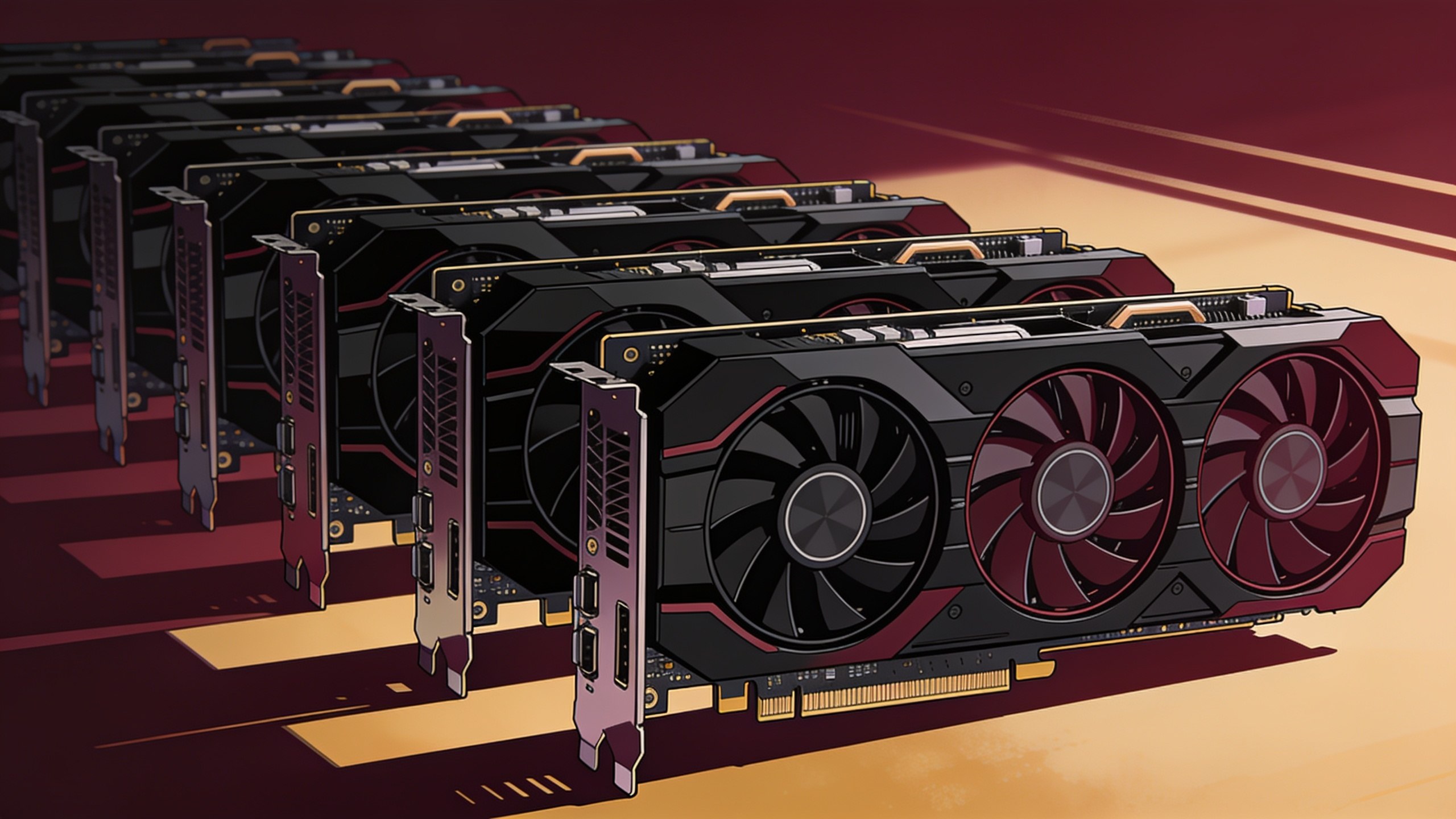
How expensive is AI computing power rental in the US? "Spot price" is twice that of long-term contracts, and four times the return threshold for cloud service providers.
The short-term spot leasing price for AI computing power reaches as high as $40 to $50 billion per gigawatt per year, while the price for long-term contracts is only $20 billion per year, and the breakeven threshold for supercomputing cloud operators is around $12 billion per year. However, according to Goldman Sachs, the fundamental reason why hyperscale cloud providers like Google rent computing power at such significant premiums is that their in-house capacity cannot keep up; once their own capacity catches up, the spot premium will disappear.
Crypto prices
More


