
Bitcoin Depot picks ex-MoneyGram boss as CEO as state actions mount

Bitcoin Depot has named the former CEO of payments giant MoneyGram as its new boss amid mounting regulatory pressure from US states over crypto ATM’s use in scams and money laundering.
The company said on Tuesday that Scott Buchanan had immediately stepped down as CEO, a role he served in for less than three months after starting on Jan. 1. It added in a regulatory filing that his resignation “was not due [to] a disagreement.”
Bitcoin Depot appointed Alex Holmes, who was already a board member, as CEO and chair. He has held various executive roles, including finance chief and CEO, over a 16-year period at MoneyGram, where he focused on regulatory compliance.
“As I step into the role, my priorities are operational stability, regulatory progress, and accelerating the Company’s evolution into a more diversified fintech platform,” Holmes said in a statement.
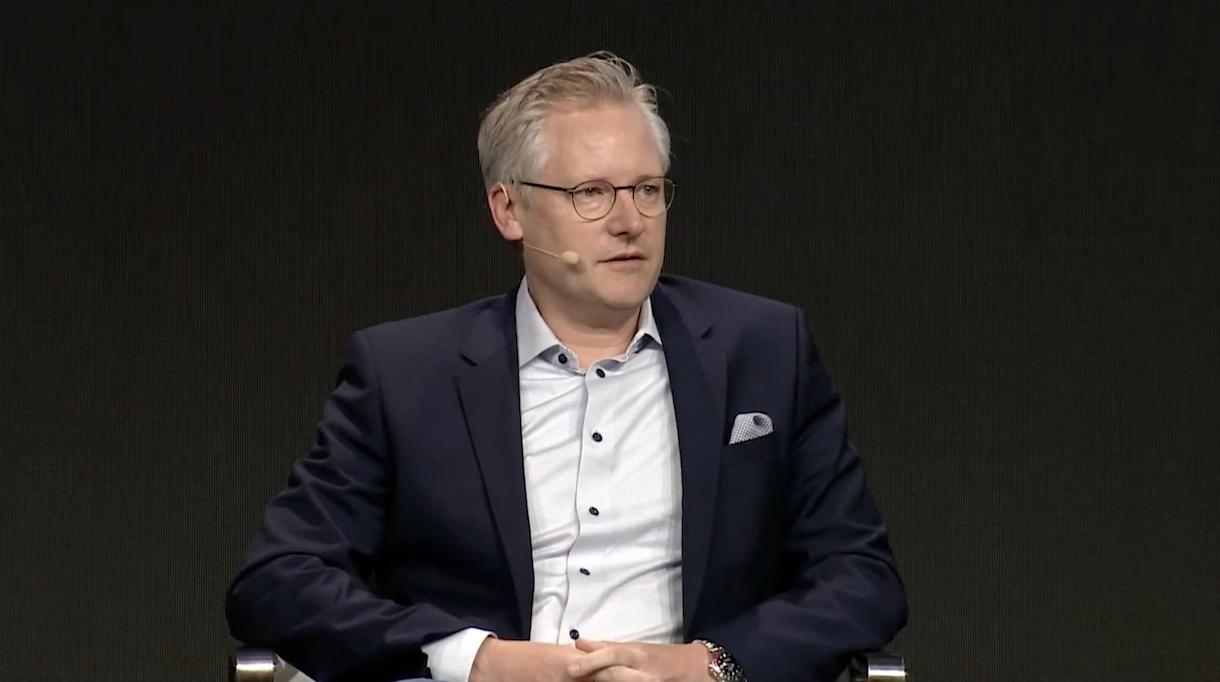 Alex Holmes speaking on stage at a fintech conference in 2022. Source:
The leadership shake-up comes as Bitcoin Depot has faced legal and regulatory challenges in multiple US states, as crypto ATM operators come under increased scrutiny over the kiosks’ use in scams and money laundering.
Bitcoin Depot said its founder and former CEO, Brandon Mintz, would also transition from executive chair to a non-executive member of the board and would work as an adviser to Holmes.
Multiple US states take action against Bitcoin Depot
Bitcoin Depot most recently faced state action in Connecticut, whose banking regulator suspended its state money transmission license and issued a temporary cease-and-desist order earlier this month.
The order alleged multiple violations of the state money transmission laws, including excessive fees and incomplete refunds to scam victims.
Bitcoin Depot has also faced action from at least four additional states since early 2025, with Massachusetts’ attorney general suing Bitcoin Depot in early February for allegedly overcharging consumers, knowingly facilitating scams and refusing to issue refunds.
The company paid $1.9 million to Maine's Consumer Credit Protection Bureau in January to compensate consumers for fraudulent transactions, and Missouri’s attorney general opened an investigation into Bitcoin Depot and four other crypto ATM operators in December over concerns of deceptive fees and use by bad actors.
Iowa also sued Bitcoin Depot and CoinFlip in February 2025 over alleged failures that allowed scammers to transfer millions of dollars through their kiosks.
Bitcoin Depot had lowered its 2026 outlook in its 2025 results released earlier this month, estimating its revenues would be down 30% to 40% due to a “dynamic regulatory environment.”
Shares in Bitcoin Depot (BTM) ended trading on Wednesday down 6.6% to $2.62, but saw a 4.7% bump after the bell to $2.74.
The stock is down 71% so far this year and has fallen more than 94% from its closing all-time high of $45.36 in mid-June.
Disclaimer: The content of this article solely reflects the author's opinion and does not represent the platform in any capacity. This article is not intended to serve as a reference for making investment decisions.
You may also like
The "Eye of the Storm" in the Global Economy: Debt Crisis in Developed Countries
The IMF warns that developed economies are becoming the "eye of the storm" for global debt risks. Countries such as the United States and France accumulated high levels of debt during periods of low interest rates, but now rising interest rates are pushing up repayment costs, and fiscal consolidation faces political resistance. BofA Securities points out that the United States is facing declining tax revenues, France has structural income decline issues, and the UK and Japan are also under pressure. The deteriorating debt sustainability of developed countries may impact global financial markets through shocks in interest rates and capital flows.

The US market narrative undergoes a "dramatic reversal": shifting from "AI-driven deflation and controllable US debt" to "AI squeezing the bond market, and Bassen unable to control long-term interest rates"
Deutsche Bank points out that the market narrative regarding the U.S. economy has shifted from "AI drives down inflation" to "AI-related bond issuance pushes up U.S. Treasury yields," but pessimism may be overdone. The bank believes that the real risks underestimated by the market are security incidents in the AI ecosystem, failed IPOs, or underwhelming revenues, which could undermine the dollar and support the bond market. In addition, France's fiscal difficulties are putting new pressure on the euro.

Crypto prices
More


