
Rising US treasury yields, war in Iran, rising inflation risk pressure Bitcoin price

Key takeaways:
Investors dumped gold and bonds for cash as war-driven oil spikes and inflation forced a defensive market stance.
Rising yields and a 20% rate hike chance signal a tight outlook, leaving Bitcoin vulnerable amid soaring US debt.
Bitcoin (BTC) retested the $67,500 support level on Monday, a move that coincided with gold prices suffering their sharpest correction in over 50 years. Fears of a prolonged war in Iran and the inflationary impact of oil prices holding above $85 pushed investors to cut risk.
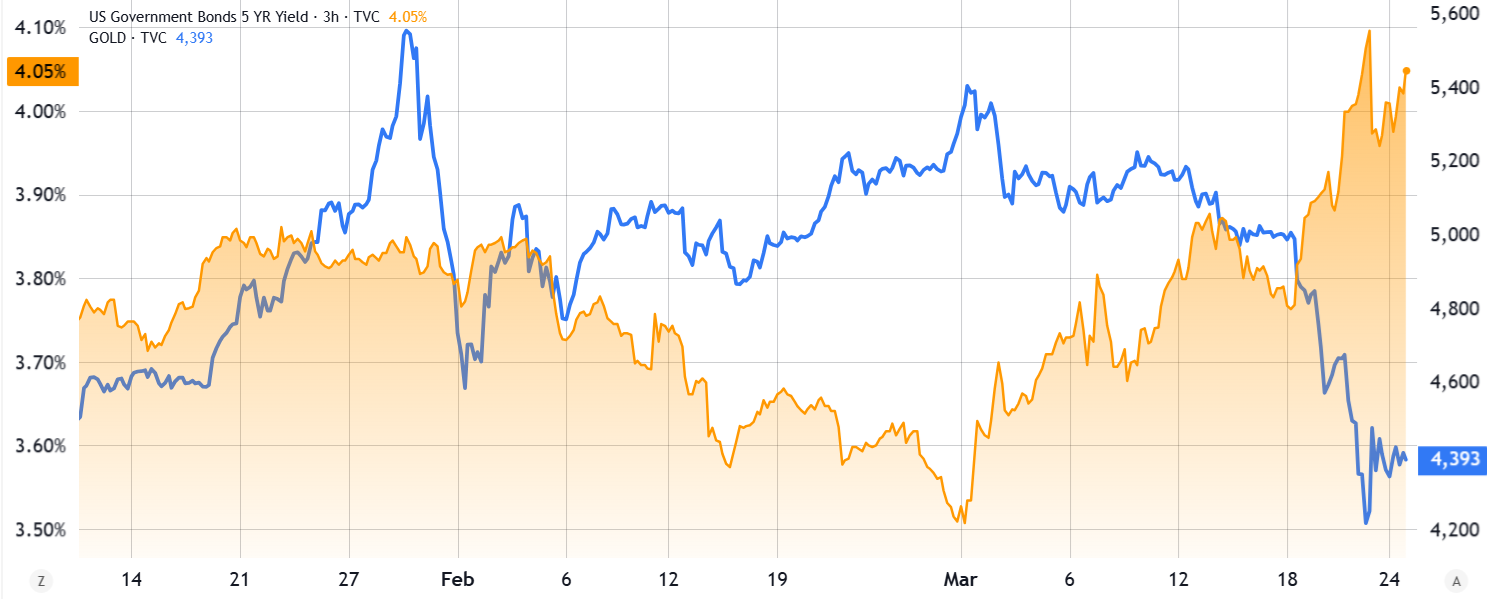 US 5-year Treasury yields (left) vs. Gold/USD (right). Source:
US Treasuries also faced a sell-off during this period, suggesting that traders aggressively built cash positions. Yields on the US 5-year Treasury jumped to 4.10%, marking a nine-month high as traders demanded better returns. With the S&P 500 hitting its lowest point in over six months on Monday, evidence suggested a broad rush to liquidity.
Cash is king amid economic uncertainty, while Bitcoin risks further downside
Investors appeared to be raising cash either to cover recent losses or to brace for further price drops across risk markets.
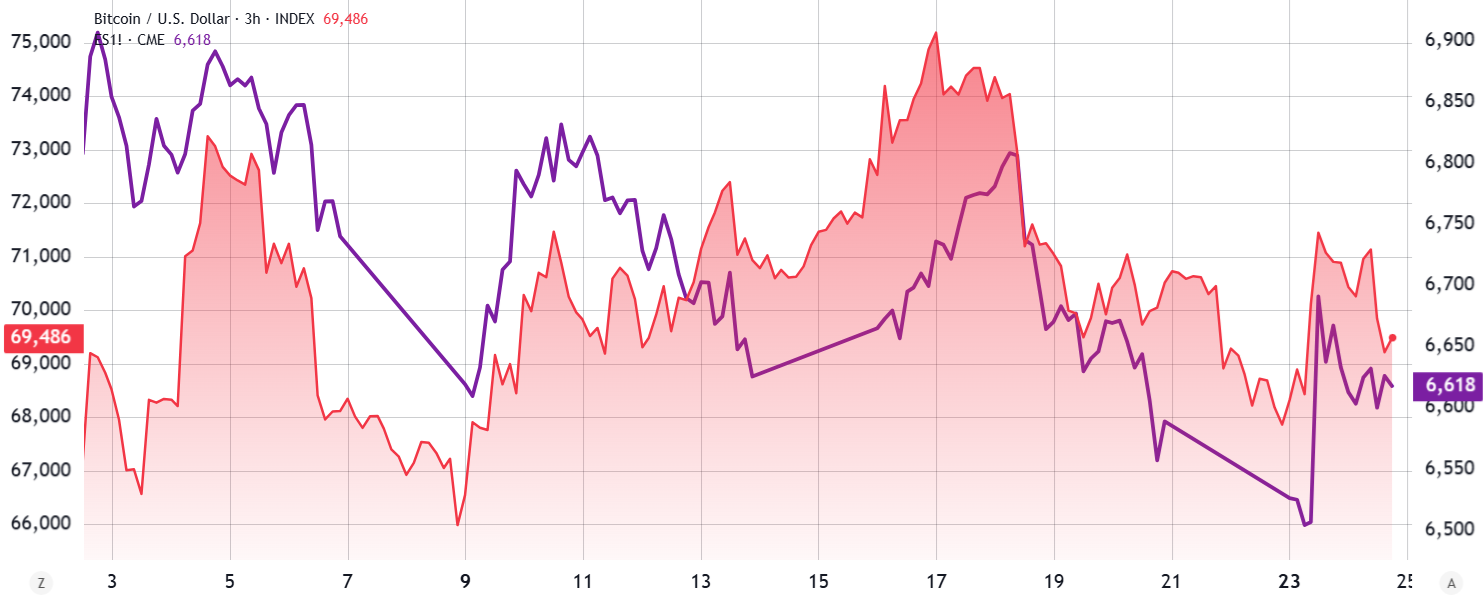 Bitcoin/USD (left) vs. S&P 500 futures (right). Source: TradingView
The ongoing war in Iran pushed oil prices past $90, creating inflationary pressure. The Wall Street Journal reported that the US planned to deploy roughly 3,000 troops to the Middle East to counter Iran’s influence over the Strait of Hormuz. Part of the decline in gold prices was likely linked to fading expectations for US monetary policy easing in the near term.
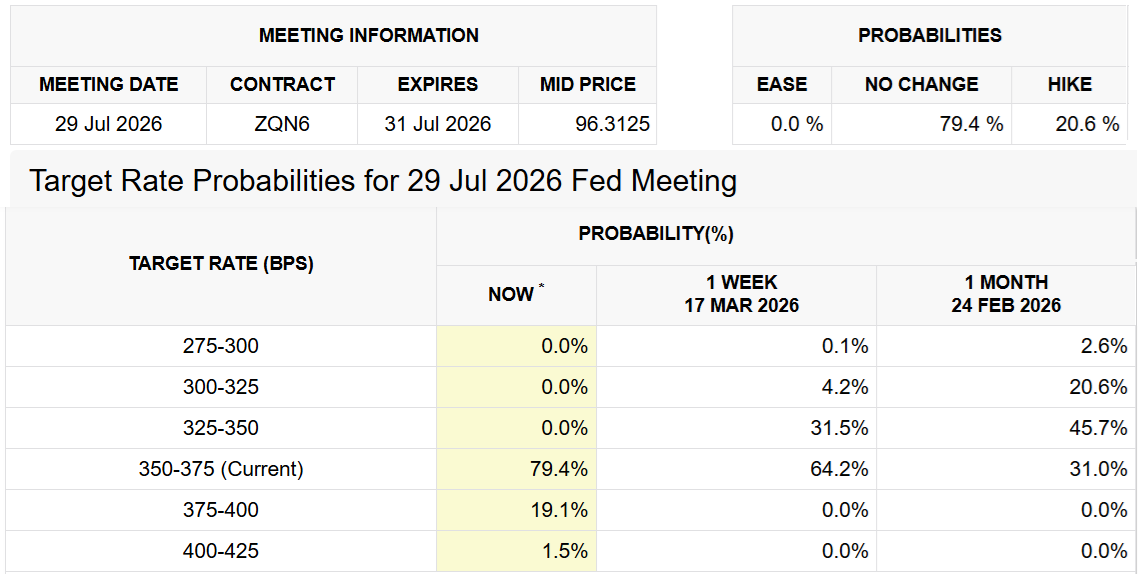 Interest rate target probabilities for the July FOMC meeting. Source: CME
Bond market futures showed that the implied probability of the Federal Open Market Committee (FOMC) hiking interest rates by July surged to 20.5%, up from 0% just one week prior. Investors anticipated a cooling job market as high interest rates continued to reduce corporate expansion incentives.
Tech stocks fall, inflation hurts consumers
US legislators debated an additional $200 billion in funding to support the war in Iran, according to The Washington Post. Kevin Hassett, director of the US National Economic Council, stated that $12 billion had already been spent. Lawmakers did not authorize the war, and Congress showed growing unease with the military strategy, according to AP.
Meanwhile, the US national debt soared past $39 trillion, which further pushed consumers toward a cost-of-living crisis. Fear of excessive speculative investment in the artificial intelligence sector emerged after Reuters reported that ChatGPT maker OpenAI offered private-equity firms a guaranteed minimum return of 17.5% while the company remained largely unprofitable.
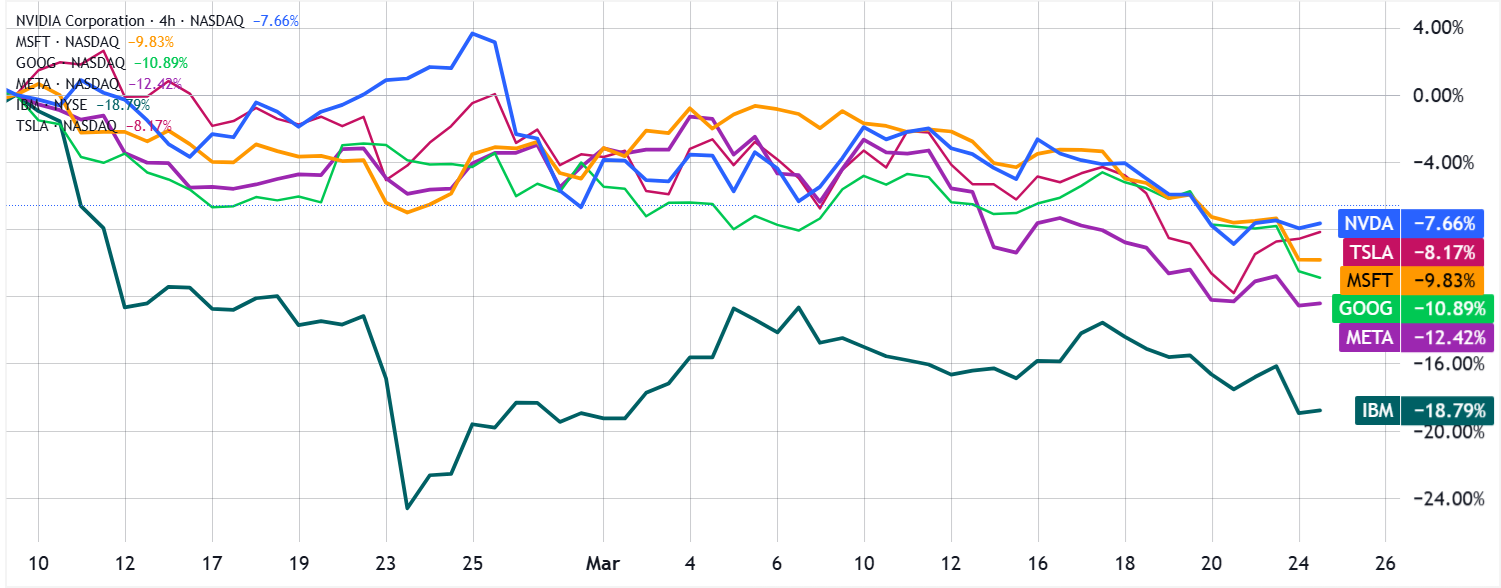 Tech stocks performance. Source: TradingView
Some of the world’s largest tech companies faced losses of 10% or more over the past six weeks, including Google (GOOG US), Meta (META US), and IBM (IBM US). Thus, regardless of the sharp correction in gold prices, traders increasingly feared recession risks or a surge in inflation above the 4% fixed income returns.
The combination of declining stock prices and persistent inflationary pressure explained why investors aggressively sought the safety of cash positions.
Regardless of favorable Bitcoin onchain metrics, broader macroeconomic conditions remained unfavorable for sustainable bullish momentum. The decline in gold prices while investors offloaded US Treasuries served as a sign of risk aversion. The odds of a $66,000 retest remain a serious threat, at least until inflation and war expenses hold US monetary policy tight for a longer period.
Disclaimer: The content of this article solely reflects the author's opinion and does not represent the platform in any capacity. This article is not intended to serve as a reference for making investment decisions.
You may also like
Wall Street giants to release financial reports next week: stock trading revenue expected to approach $19 billion, "everyone is a winner" may be a thing of the past
According to analyst expectations compiled by Bloomberg, the combined equity trading revenue of the five major U.S. banks in the third quarter will approach $19 billion, but fixed income trading revenue is expected to drop to its lowest point of the year, and M&A activity has also cooled. Meanwhile, AI-driven cash optimization tools may lead to deposit outflows, sparking concerns about bank stocks in the market. Analysts believe that while the profit performance of each bank may further diverge, market concerns about the impact of AI may be overblown.
EU regulator wants proof tokenized collateral survives a crisis

Ripple Prime’s ETF Push Tests the Rise of Nonbank Financing
UTXO’s Loren Asmus eyes $300 trillion bond market as new frontier for Bitcoin
Crypto prices
More


