
Crypto Biz: Institutions aren’t waiting for the bottom

Institutional demand for crypto is holding up despite ongoing turbulence, with new data showing large investors are preparing to increase allocations even after the market’s sharp sell-off since October.
At the same time, stablecoins are gaining traction across both retail and institutional channels. Japan is moving ahead with regulated USDC lending products, while new models tied to real-world assets are beginning to take shape.
Elsewhere, crypto companies continue to tap traditional capital markets, with Abra pursuing a public listing via a special purpose acquisition company (SPAC) deal.
Together, the latest developments point to a market that is still expanding through regulated pathways, even as price volatility and regulatory uncertainty persist.
Institutional investors double down on crypto
Despite recent volatility and a 40% crypto market sell-off since October, institutional investors are preparing to increase their digital asset exposure, with most expecting prices to rise over the next 12 months.
A January survey of 351 investors by Coinbase and EY-Parthenon found that 73% plan to buy more digital assets this year, while 74% expect prices to move higher.
Bitcoin and Ether remain the primary entry points, but interest is expanding into stablecoins and tokenized assets. Two-thirds of respondents said they prefer gaining exposure through regulated vehicles such as exchange-traded products.
The data points to steady institutional demand, with capital continuing to move through structured, compliant channels despite market turbulence.
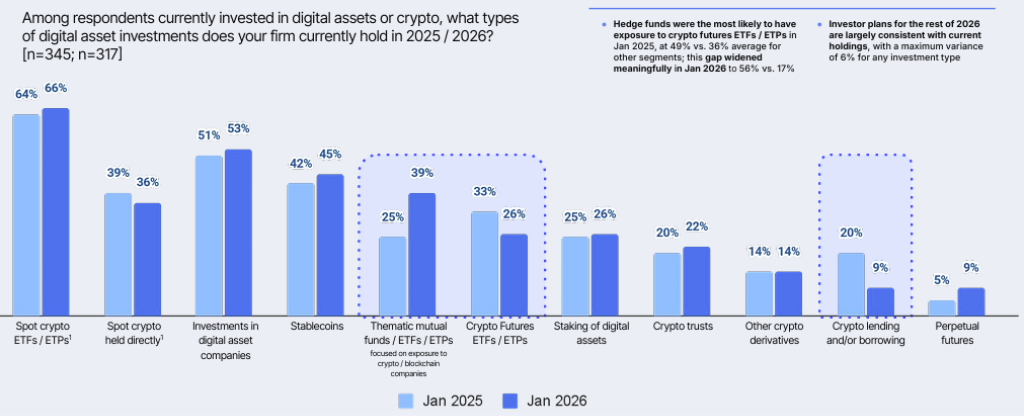 Crypto exchange-traded products remain an attractive entry point for institutional investors. Source: Coinbase-EY
SBI rolls out retail USDC lending in Japan
SBI VC Trade is expanding stablecoin use in Japan with the launch of a retail USDC lending service, as regulated access to dollar-backed tokens gains traction. The move follows recent regulatory changes that allow licensed companies to handle foreign stablecoins, such as Circle-issued USDC.
The platform enables users to lend USDC in exchange for yield, marking one of the first retail-facing products of its kind in Japan. SBI, a major financial group, has been building out its crypto offering within the country’s regulated framework.
The rollout highlights how stablecoins are moving beyond trading into regulated financial products, particularly in markets where legal clarity has already been established.
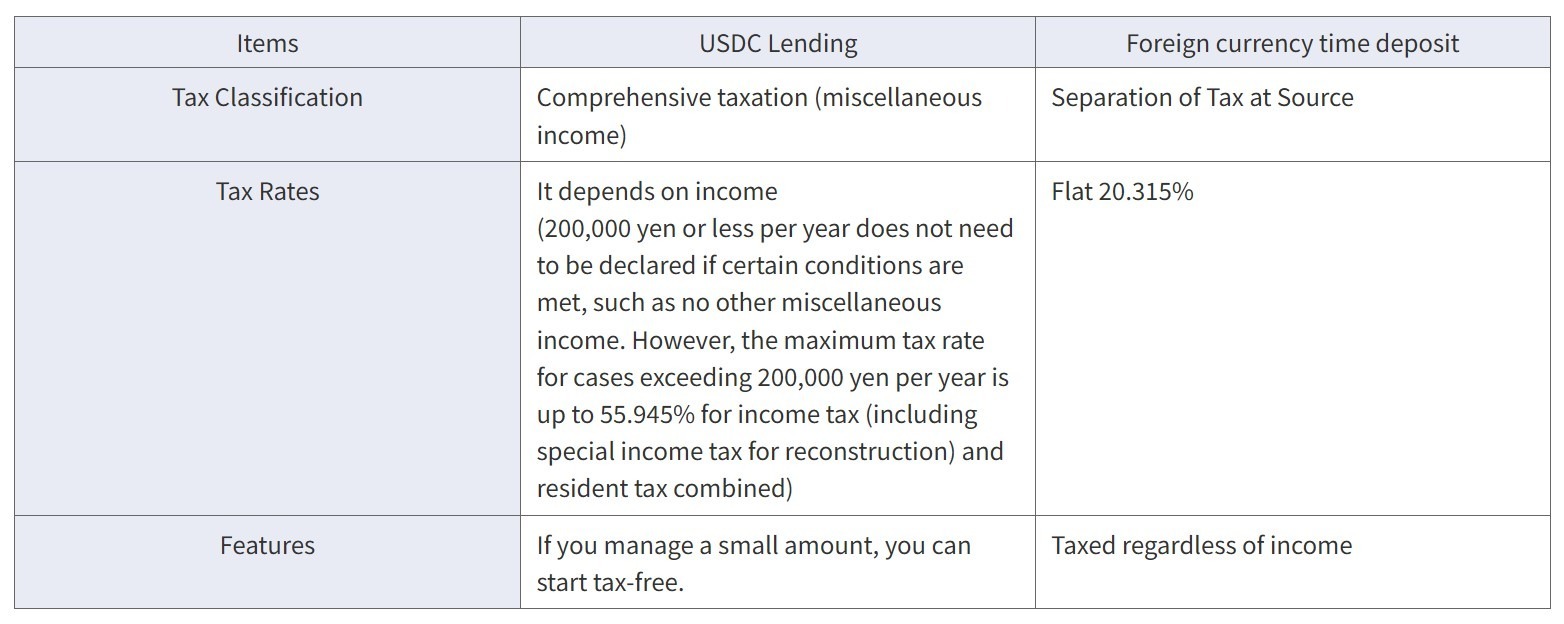 A table comparing Japan’s tax treatment of USDC lending and foreign currency deposits. Source: SBI VIC Trade
Abra targets Nasdaq listing through SPAC deal
Crypto wealth manager Abra is planning to go public through a merger with New Providence Acquisition Corp., in a deal that values the combined entity at around $750 million. The company is expected to list on Nasdaq under the ticker ABRX.
Abra has shifted its focus toward wealth management services, including trading, custody and yield products, following regulatory challenges tied to its earlier lending operations. The SPAC route offers a faster path to public markets at a time when traditional IPO activity remains limited.
The deal reflects continued efforts by crypto companies to access public capital, even as regulatory scrutiny and market conditions remain uneven.
Theo launches $100M gold-linked yield stablecoin vault
Tokenization platform Theo has unveiled a $100 million vault tied to a gold-linked, yield-bearing stablecoin, designed to combine price stability with onchain returns. The structure links the token’s value to gold while offering yield to users.
The model introduces a hybrid approach that blends commodity backing with onchain financial mechanisms, reflecting broader efforts to bring real-world assets into crypto markets. Gold serves as the underlying collateral, offering an alternative to fiat-backed stablecoins.
The product highlights growing experimentation around yield-bearing stablecoins, as developers look to expand their role beyond simple price stability.
Crypto Biz is your weekly pulse on the business behind blockchain and crypto, delivered directly to your inbox every Thursday.
Disclaimer: The content of this article solely reflects the author's opinion and does not represent the platform in any capacity. This article is not intended to serve as a reference for making investment decisions.
You may also like
NEWMARK GROUP INC <NMRK.O>: KBW CUTS TARGET PRICE TO $16 FROM $17.50
NEWMARK GROUP INC : KBW CUTS TARGET PRICE TO $16 FROM $17.50
VALERO ENERGY CORP <VLO.N>: JEFFERIES CUTS TARGET PRICE TO $394 FROM $401
VALERO ENERGY CORP : JEFFERIES CUTS TARGET PRICE TO $394 FROM $401
Gold prices rise Rs 1,500/10g; silver up Rs 3,100/kg ahead of US economic data, softer yields. Buy, sell or hold?
The Shopify Stock Rally Isn't Done: Chart of the Week -- Barrons.com
By Doug Busch Shopify is no longer a pandemic-era growth story that simply failed to slow down. It is compounding at a pace few software platforms its size still manage. In the second quarter of 2026, sales on its platform rose 32%. That was the fifth straight quarter of growth exceeding 30%. Merchants are also using more of Shopify's own tools, from payments to Shop Pay, and new channels like AI shopping agents are starting to increase demand. The simple bull case is that the stock already commands a huge share of independent online commerce, and that position should become more valuable as more buying moves through its checkout. A rule of market mechanics is that the vast majority of an individual security's gain is driven by its underlying sector. Within technology, software has staged a robust recovery, joining semiconductors to power the broader sector higher. The iShares Expanded Tech-Software Sector ETF has maintained an upward trajectory since its mid-April lows, though the advance from $74 to $112 has been choppy as bulls repeatedly stepped in to defend when necessary. Breadth across large-cap software has expanded significantly, with 24 constituents surging over 20% over the past three months. During that same three-month window, Shopify generated outstanding relative strength, advancing 36%, more than doubling the IGV's 17% gain over the same period. Expect the stock's outperformance to persist as software momentum broadens. Let's examine the daily and monthly charts to outline the technical drivers behind this thesis. Looking at the daily chart, the ratio chart against the IGV shows persistent outperformance extending back to mid-May. The stock is riding an eight-session winning streak, during which price action cleared a double-bottom-with-handle pivot at $151.39. Within this broader base, the stock recorded a bullish golden cross in late August and successfully filled its Sept. 10 price gap, tracing back to its Aug. 4 session, the day before a powerful earnings reaction sent the stock surging 17% hi
Crypto prices
More


