
South Korea Moves to Standardize Seized Crypto Handling Amid Custody Risks

South Korea is tightening its grip on digital asset enforcement as the Korean National Police Agency (KNPA) rolls out new draft guidelines to standardize how seized cryptocurrencies are stored, managed, and secured.

According to a report by local outlet Asiae, the KNPA’s directive outlines compliance protocols across every stage of crypto seizure, including the handling of software wallets and privacy-focused tokens. The guidelines aim to ensure that investigators can safely manage wallet addresses, private keys, and digital evidence, marking a shift from traditional asset storage methods.
KNPA eyes private custody provider despite budget constraints
A police spokesperson emphasized the urgency of the change, noting that investigative practices must evolve alongside emerging technologies. Unlike physical assets, once stored in warehouses, crypto requires technical expertise and structured systems to prevent loss or unauthorized access.
 Source:
asiaeco
Source:
asiaeco
Beyond internal protocols, the KNPA is also working to appoint a private custody provider to manage seized digital assets, with plans to finalize the selection in the first half of 2026. However, the process has faced setbacks. Three bidding rounds in 2025 reportedly failed after applicants were deemed unsuitable.
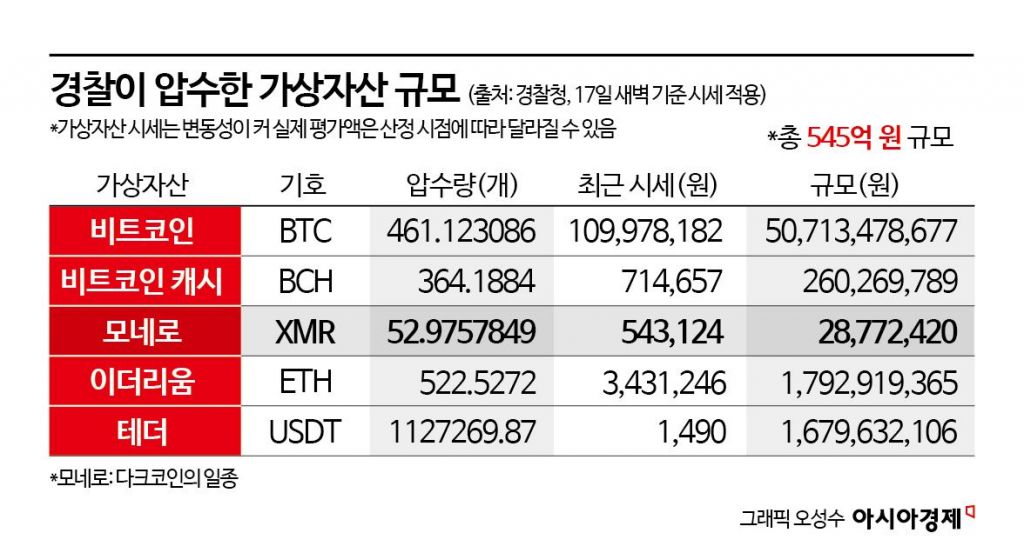
Budget limitations have further complicated efforts. The agency allocated just 83 million won (around $55,600) for crypto custody, a figure seen as low given the scale of assets involved. Over the past five years, seized cryptocurrencies linked to concluded cases have reached approximately 54.5 billion won ($36.5 million), including significant holdings in Bitcoin and Ethereum.
Phishing incident exposes weak links in asset security
The push for reform follows a high-profile custody lapse earlier this year. Officials at the Gwangju District Prosecutors’ Office discovered during a routine audit that roughly 320 Bitcoin had disappeared from custody tied to a 2025 investigation.
In a surprising turn, the stolen assets were later returned by the unidentified hacker. Authorities subsequently liquidated the recovered crypto, transferring about 31.59 billion won ($21.5 million) to the national treasury.
South Korea’s Finance Minister Koo stated last month that a comprehensive review of all digital assets held and managed by public institutions during enforcement processes would be conducted by the government, the Financial Services Commission, and the Financial Services Commission, and the Financial Supervisory Service.
The incident has intensified scrutiny over how government agencies safeguard digital assets, underscoring the need for robust custody frameworks as crypto adoption and associated risks continue to grow.
Disclaimer: The content of this article solely reflects the author's opinion and does not represent the platform in any capacity. This article is not intended to serve as a reference for making investment decisions.
You may also like
SpaceX, Broadcom, and Oracle Issue Massive Bonds! The U.S. Bond Market Is “Overflowing,” “Concentration Is Increasing, Ultimately All Influenced by the AI Cycle”
The AI financing wave has generated over $150 billion in debt demand within a week, saturating the public debt market and forcing a massive shift toward private credit and SPVs. "Crowding-out effects" in the debt market have pushed the 10-year US Treasury yield back to 5.31%, while CCC-rated junk bond spreads are nearing the historic threshold of 1,000 basis points. Oracle's five-year default probability has been priced by the market at over 20%, and SpaceX's CDS has nearly doubled in four months. Goldman Sachs warns that AI borrowers are "prepared to pay any price," with consumers, small businesses, and even governments ultimately footing the bill.
SpaceX Acquires Low-Frequency Spectrum with Massive Investment, Enters Mobile Operator Market; US Telecom Stocks Plummet
SpaceX announced the acquisition of 800MHz low-band spectrum covering the entire U.S. and has been authorized by the FCC to deploy 15,000 direct-to-cell satellites, officially declaring its independent entry into the U.S. mobile carrier market. Following the news, AT&T, T-Mobile, and Verizon all fell by more than 6% after hours. With $93.5 billion in cash and 12 million Starlink subscribers, Elon Musk is using this "final piece of the puzzle" to reshape the competitive landscape of the entire telecommunications industry.
Crypto prices
More


