
SlowMist introduces Web3 security stack for autonomous AI agents

Cybersecurity company SlowMist has introduced a five-layer security framework for AI and Web3 agents, pitching it as a way to reduce the growing risks that come with autonomous systems handling onchain actions and digital assets.
In a Wednesday blog post, the company said the framework centers on a user’s AI agents and combines governance controls through its AI Development Security Solution, or ADSS, with execution-layer tools including OpenClaw, MistEye Skill, MistTrack Skill and MistAgent. The company said the system is designed to create a closed-loop process of checks before execution, constraints during execution and review afterward.
SlowMist’s so-called “digital fortress” aims to defend against risks including prompt injection, supply chain poisoning attacks, data leaks and asset loss due to unauthorized operations or AI agent behavior exploits. It also seeks to reduce risks without sacrificing AI efficiency.
 SlowMist’s “digital fortress” security framework. Source: SlowMist
Autonomos AI agents introduce new attack surface in business operations
The push comes as more crypto firms experiment with autonomous tools for trading and execution, introducing “new attack surfaces,” such as supply chain poisoning, which has become a new entry point for hackers embedding secret backdoors into devices, according to SlowMist.
The framework’s governance layer, ADSS, aims to establish auditable security standards for organizations to prevent these risks. It includes AI agent permission constraints, real-time threat checks for external interactions and strengthened onchain risk detection.
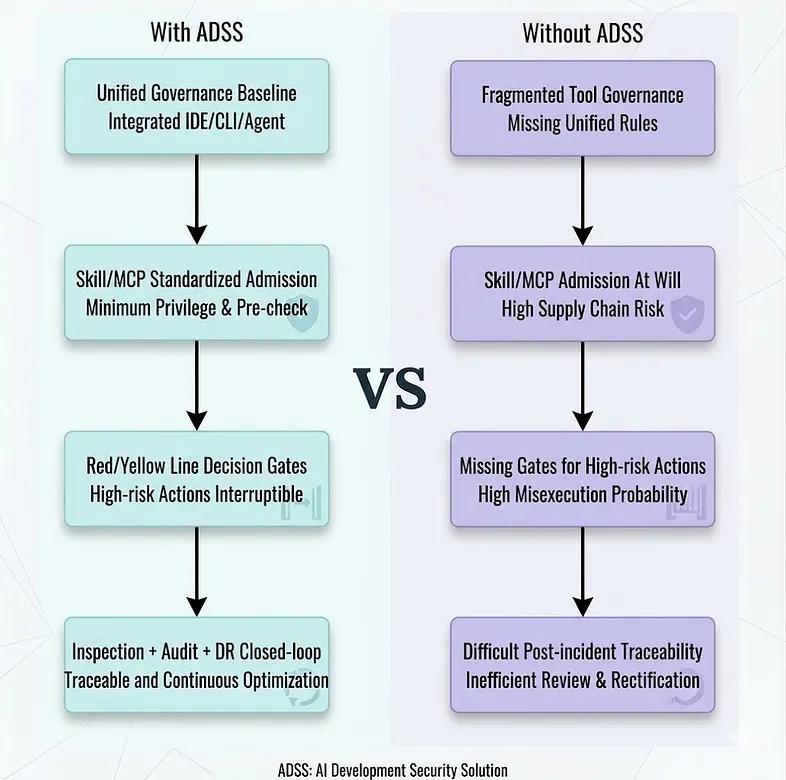 ADDS security benefits. Source: SlowMist
ADDS’ core value lies in improving “scattered security actions” into a systematic operation that is “executable, auditable, and sustainable,” SlowMist said.
Related:
Autonomous crypto trading bots on the rise
Crypto companies are launching more autonomous crypto trading bots. On Jan. 21, crypto intelligence platform Nansen launched autonomous crypto trading tools that enabled users to execute trades through AI agents and natural language prompts, with cross-chain execution on the Base and Solana blockchains.
Other companies that launched no-code AI trading agents include Coinbase, Bitget, Walbi and Gate.io. These solutions seek to lower barriers to entry for retail investors through automated strategies and conversational interfaces.
Magazine:
Disclaimer: The content of this article solely reflects the author's opinion and does not represent the platform in any capacity. This article is not intended to serve as a reference for making investment decisions.
You may also like
S&P 500 First Half of October Is Q4’s Strongest Half-Month in Midterm Years

U.S. September corporate layoffs hit a four-year low for the same period, but hiring intentions fell to the lowest level in fifteen years for the same period
According to a report by Challenger, Gray & Christmas, the number of layoffs announced by U.S. companies in September fell by nearly 20% year-on-year, while layoffs in technology companies increased by 77% month-on-month. The number of planned hirings in September by companies dropped 23% year-on-year. On the same day, the number of initial jobless claims in the U.S. last week fell to 197,000, approaching the lowest level since 1969.

Chainlink Price Prediction October 2026: Can LINK Hold Its August Breakout Through October?
RBI’s $200B Dollar Short: Why Indian Crypto Traders Should Watch USD/INR, Not Just Bitcoin
Crypto prices
More


