

Market volatility continues to test investors’ patience.
In an environment like this, even a single FUD-driven catalyst can spark a panic reaction.
This is especially critical for Bitcoin [BTC], with nearly 50% of the supply currently underwater and sitting at an unrealized loss.
Naturally, for many holders, HODLing at this stage is less about short-term price action and more about conviction. Still, given the fragile market structure, the recent U.S. government BTC transfer stirred volatility and put that conviction to a real stress test.
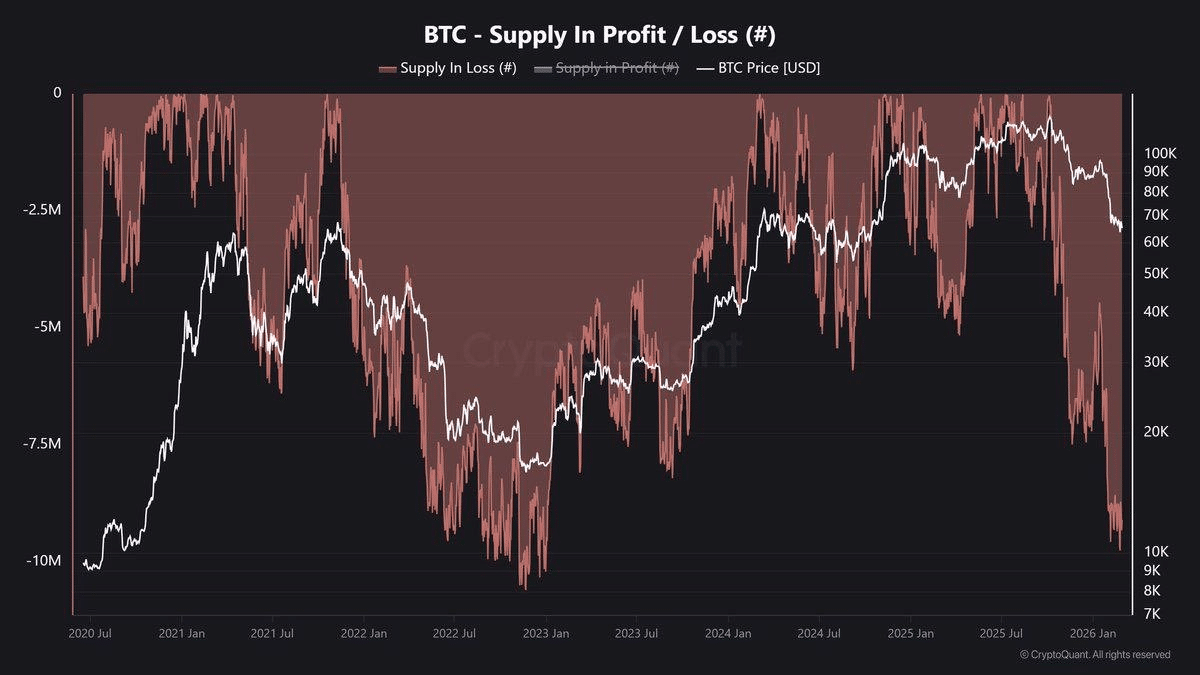
Source: CryptoQuant
What really stands out is the timing of this move.
On-chain tracker Lookonchain flagged that the U.S. government moved 0.0378 BTC ($2,520). While the amount is negligible, the macro backdrop prompted the market to start decoding the intent behind the move.
And yet, Bitcoin’s reaction was muted.
A roughly 1% dip over the past 48 hours kept BTC stable around the $67k zone.
That raises the bigger question: Despite the heavy underwater supply and headline-driven FUD, does Bitcoin’s resilience mark the first solid bullish signal of this cycle?
Smart money moves to keep Bitcoin FOMO alive
In bear phases, conviction often hinges on one thing – FOMO.
That dynamic feels especially relevant this cycle. Persistent macro FUD tied to the Middle East conflict continues to pressure sentiment, amplified by Bitcoin’s 20%+ correction this quarter, one of the steepest on record.
Against that backdrop, BTC’s resilience carries weight.
However, the question remains: Is this just a temporary pause in selling, or is it a weak-hand flush running into a structural bid, preserving the FOMO setup?
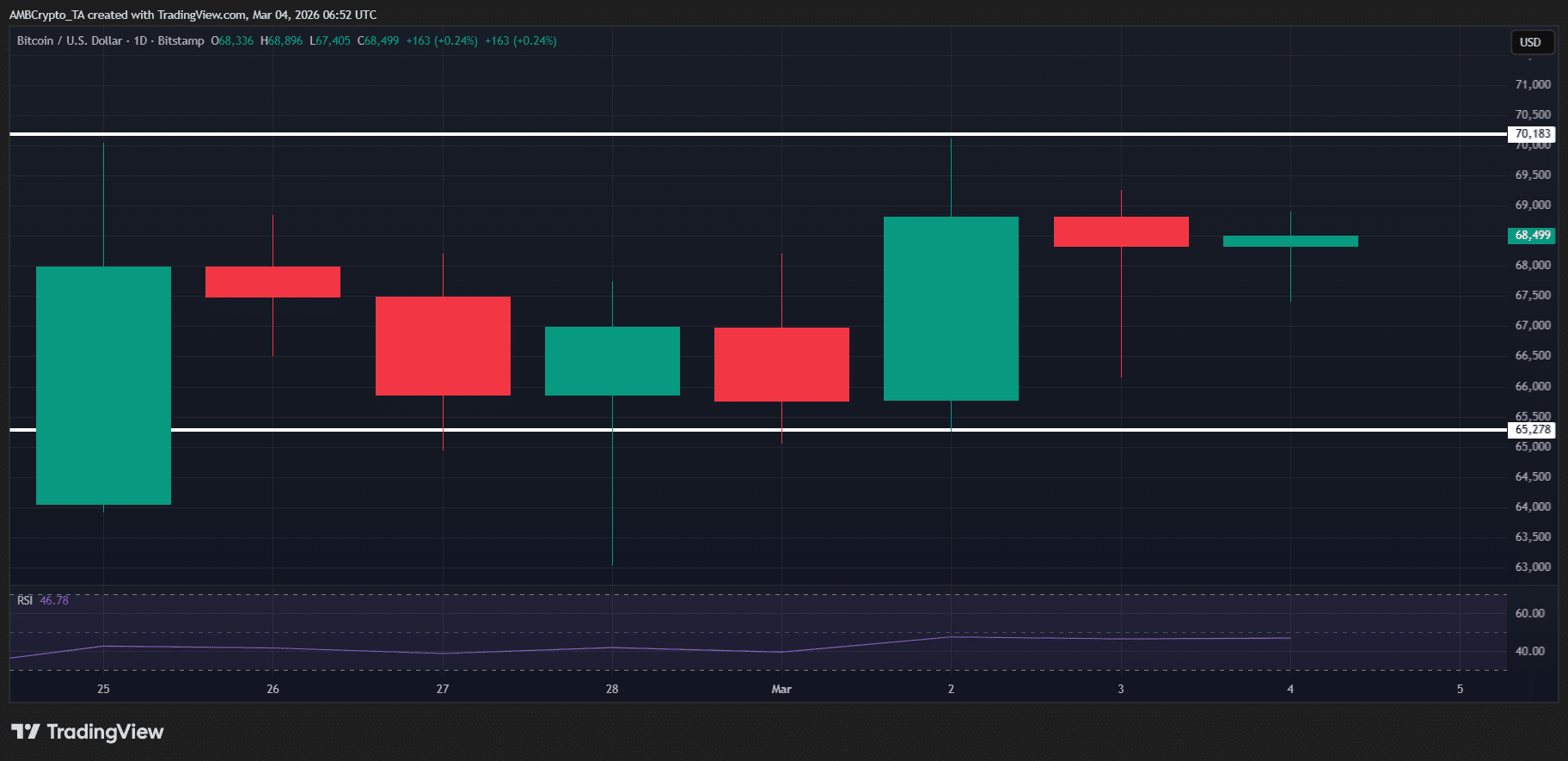
Source: TradingView (BTC/USDT)
Judging by positioning, larger players are treating this FUD as an entry zone, not a de-risking signal. Proof of that shows up in the flows, with Bitcoin ETFs pulling in nearly $700 million over the same 48-hour window.
Meanwhile, Michael Saylor publicly doubled down on his confidence in the dip, with BlackRock reinforcing that stance. As core liquidity drivers in the market, their support naturally signals absorption rather than distribution.
Against that backdrop, Bitcoin’s resilience doesn’t look accidental.
Instead, it looks like capital rotation. Smart money appears to be using the dip as a liquidity pocket, stepping in while weak hands de-risk. In that context, the recent U.S. government move is acting less as a threat and more as a catalyst that confirmed Bitcoin’s underlying bid strength.
Final Summary
- Despite macro FUD and a U.S. government BTC transfer, Bitcoin ETFs pulled in nearly $700 million in 48 hours, signaling strong underlying demand.
- With BTC holding the $67k zone despite heavy underwater supply, the price action suggests absorption by stronger hands, not distribution.


