
Microsoft Q2 Earnings Preview: AI Execution Shapes Tech Sector Outlook
1.Investment Highlights Overview
Microsoft is set to release its FY2026 Q2 earnings after the US market close on January 28, 2026, with consensus estimates projecting revenue of $80.27 billion (+15.3% YoY) and EPS of $3.88 (+20.1% YoY approximately). Key investor focus lies on Azure cloud momentum and AI tools like Copilot's revenue impact, which could validate Microsoft's AI leadership amid rising scrutiny on tech valuations. In a market where AI ROI is under the microscope, strong results may bolster Nasdaq sentiment, while underwhelming figures could pressure broader tech stocks.
2. Key Focus Areas
Focus 1: Azure Cloud Momentum Stabilization
Azure remains Microsoft's growth powerhouse, and its trajectory signals overall business health amid economic shifts. Investors are watching if demand rebounds post-optimization phases, with bookings and remaining performance obligations offering forward visibility. Key metrics: Azure revenue expected to rise +38.8% (QoQ deceleration from prior 40%), with constant currency trends providing clearer insights. Positive surprises could drive stock rebounds and affirm cloud resilience; slowdowns might heighten sustainability concerns, weighing on valuations.
Focus 2: AI Monetization Progress
As AI investments face performance tests, tangible revenue from tools like Copilot is crucial to justify hype and sustain premium pricing. Adoption in enterprise and consumer segments, plus Azure usage uplift, will highlight if Microsoft's edge translates to profits. Key metrics: AI revenue share (inferred via Copilot adoption rates), alongside returns from 49% OpenAI stake. Strong uptake could reignite market enthusiasm for tech rallies; delays in realization might fuel AI bubble fears, leading to pullbacks.
Focus 3: Margin Efficiency Amid Costs
Rising AI and data center spends test profitability, making margin trends a litmus for operational leverage. Comparisons to peers will gauge if cloud optimizations counterbalance infrastructure outlays in energy and computing. Key metrics: Operating margin (around 45% from last quarter). Stable or expanding margins could defend high multiples; erosion from costs might prompt earnings downgrades and stock declines.
Focus 4: Productivity and Personal Computing Segments
These areas reflect broader economic demand, with Office and Windows pricing power indicating resilience, while LinkedIn sheds light on job and ad markets. PC trends offer consumer sentiment clues. Key metrics: Productivity segment growth +10-12% YoY, alongside Windows OEM revenue. Robust performance could offset cloud volatility and support diversified growth; weakness might amplify macro headwinds, adding downside pressure.
Focus 5: Forward Guidance and Capex Trends
Guidance will dominate post-earnings reactions, revealing Azure outlooks and AI revenue frameworks, while capex levels underscore commitment to long-term bets. Key metrics: Next-quarter revenue guide ~+14% YoY, capex around $15 billion from prior. Upbeat projections could spark upside momentum; conservative tones might reinforce growth doubts and volatility.
3. Risks and Opportunities
Coexist Upside Catalysts:
- Azure acceleration beyond +38.8% expectations, signaling end of optimization drag.
- Copilot penetration exceeding forecasts, clarifying AI revenue streams.
- Margin improvements demonstrating efficient scaling of investments.
Downside Risks:
- Persistent AI capacity constraints into June, delaying Azure rollouts.
- Capex overruns squeezing near-term profits.
- Soft PC demand from rising memory prices, highlighting consumer weakness.
4. Trading Strategy Insights
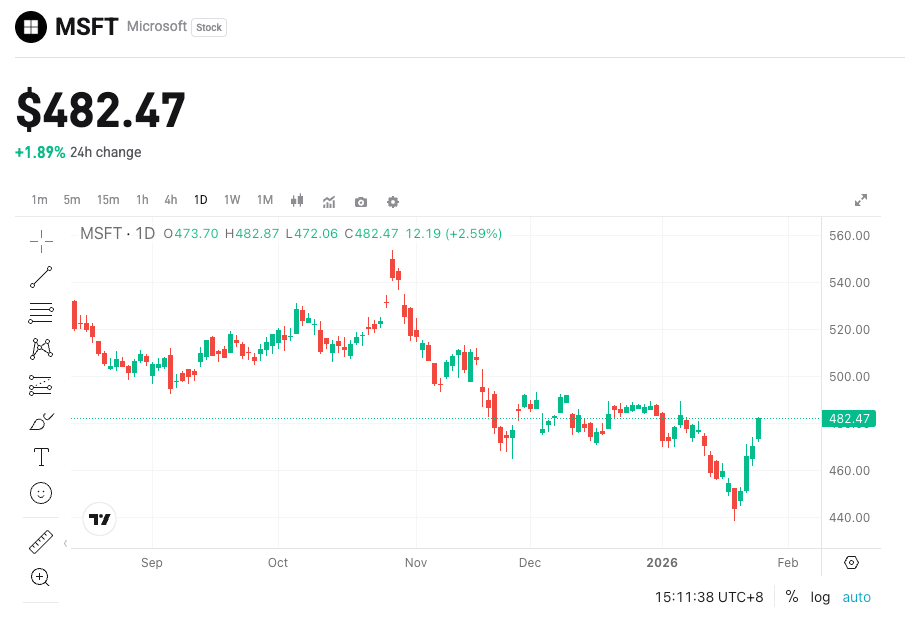
- Bullish Case:Look for upside if Azure and AI metrics beat estimates with confident guidance, potentially pushing shares toward the $500 resistance level for short-term gains.
- Bearish Risks: Downside looms if growth decelerates or costs escalate, risking breaks below $432 support toward $393 gaps.
- Key Data Points: Azure growth rate, Copilot adoption metrics, operating margins, next-quarter revenue guidance.
- Operational Tips: In beat scenarios, consider tactical longs with stops; monitor supports for shorts on weak outlooks; stay nimble, awaiting confirmation before scaling positions.
Disclaimer: The content of this article solely reflects the author's opinion and does not represent the platform in any capacity. This article is not intended to serve as a reference for making investment decisions.
You may also like
AI memory demand continues to surge: Micron (MU.US) surpasses expectations in Q4, with quarterly data center core business revenue increasing by over 10 times year-over-year
Storage chip giant Micron Technology released its financial results for the fourth quarter of fiscal year 2026 after the market closed on Wednesday. Both revenue and profit exceeded Wall Street expectations, and the company provided stronger-than-expected guidance for the next quarter.
Federal Reserve approves stress test reform by a 6-1 vote: Capital requirement volatility halved, sole dissenting vote warns of reduced resilience
The Federal Reserve has officially approved two final rules aimed at increasing transparency and reducing capital requirement volatility by approximately 50%. The new regulations will seek public comments on stress test scenarios and will calculate the capital buffer based on the average of the results from two consecutive years of testing. This averaging mechanism will take effect in 2028. The reforms are the result of years of negotiation within the banking sector and have been welcomed by industry groups. However, critics such as Governor Barr warn that the reforms will weaken the constraints of stress testing and reduce the overall resilience of the banking system.

Metals fade as long yields offset cooler inflation, lower Fed odds - Kitco PM Report
Bitwise brings NEAR to Wall Street – But the chart isn’t impressed
Crypto prices
More


