
USD: The Start of a New Downtrend

Morning FX
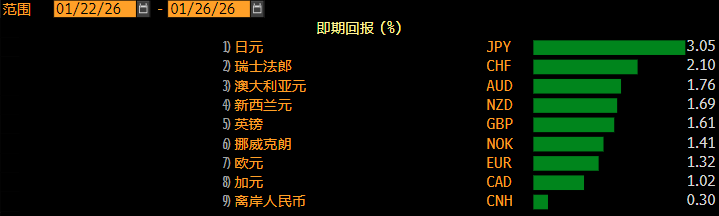
Since last Friday, the joint US-Japan intervention in the foreign exchange market has led to a surge of five big figures in the yen, also driving up the Swiss franc, euro, and Australian dollar. At Monday's opening, the US dollar index continued to gap down, dropping below the 97 level at its lowest point.
I. Reasons for the Sharp Drop in the US Dollar
1. US-Japan Joint Verbal Intervention on the Yen
Last Friday, the New York Fed made a rare rate check on JPY, sparking speculation about a possible Plaza Accord 2.0. This move was highly significant. On one hand, the yen's depreciation and the surge in Japanese bond yields have impacted US Treasuries, causing dissatisfaction in the US; on the other hand, this action sends a signal to the market of the Trump administration’s political desire for a weaker US dollar.During Monday’s Asian session, the yen continued its appreciation trend, also boosting the previously weak Korean won.
2. Geopolitical Tensions Fuel “De-dollarization” Narrative
Recently, the US has frequently taken aggressive actions towards Venezuela, Europe, Canada, Iran, and others, prompting a new wave of “de-dollarization” trades by overseas funds: increasing hedges against US dollar exposure and reducing allocations to US dollar assets.
Last week, after the Greenland event, several Nordic funds announced reductions in their US dollar assets: On January 20, Danish Akademiker Pension announced that it would fully divest about USD 100 million in US Treasuries by the end of January; on January 21, Sweden’slargest occupational pension fund Alecta announced the sale of about USD 8 billion in US Treasury holdings. In addition, data disclosed by the Netherlands civil servants pension fund ABP(the largest pension fund in Europe) showed that its US Treasury market value plummeted from EUR 29 billion at the end of 2024 to EUR 19 billion in September 2025.
It’s not just Europe; Australia’s second-largest pension fund, ART, also announced last week that it is reducing US dollar risk exposure through foreign exchange hedging.
3. US Cold Wave + Political Double Storm,Dragging Down the Dollar
The recent turmoil in the US has also weighed on the dollar.Extreme cold weather has caused large-scale power outages, and protests in Minnesota have further deepened social divisions. In addition, if Congress fails to reach a budget agreement by the end of the month, the federal government will once again face a shutdown.
II. Outlook
Looking ahead, in the short term, the bias remains bearish on the US dollar index. The dollar drop triggered by the rate check may further increase foreign exchange hedging against US dollar assets by overseas assets, reinforcing the downward trend of the dollar index.
However, it is expected that the scale of this round of de-dollarization trades will not match that of last April:
1) The threat of tariffs is much less than in April last year, and after several TACO experiences, the threshold for risk aversion sentiment has clearly increased.
2) US economic data remains strong, and this week’s FOMC Powell is likely to maintain a hawkish stance.
3) The AI narrative has strengthened the appeal of US equities. Pay special attention to Meta and Microsoft’s earnings after the close this Wednesday, which will confirm whether companies can translate massive AI investments into substantial profits. If results exceed expectations, US equities may be further boosted, supporting the dollar.
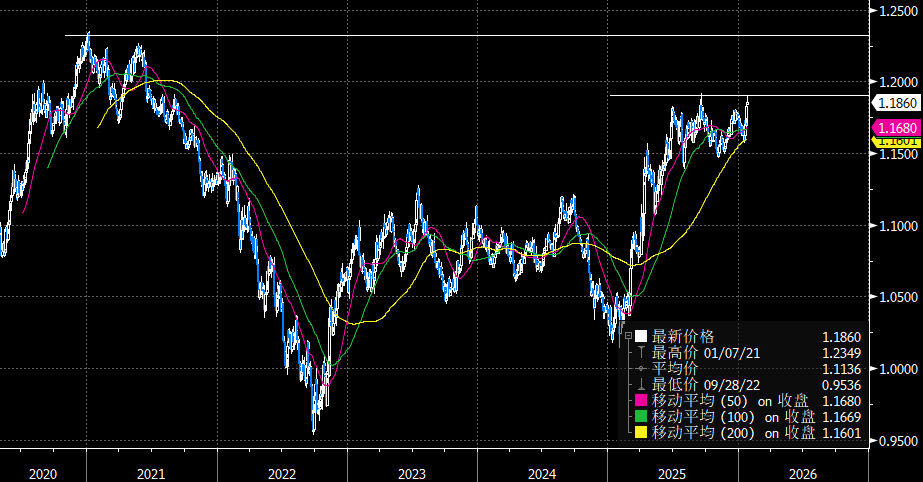
From a technical perspective,EURUSD last week held above the 200-day moving average and surged upward, breaking through both the 50-day and 200-day moving average resistance levels, showing strong upward momentum. The MACD has already turned into a golden cross, indicating a bullish trend is established. The next major resistance is the previous high at 1.1910; if this key level is breached, further upside could be seen.
Disclaimer: The content of this article solely reflects the author's opinion and does not represent the platform in any capacity. This article is not intended to serve as a reference for making investment decisions.
You may also like
Prospects for the opening of the Hormuz Strait are overshadowed, Asian bonds under pressure: 2Y Japanese bond yield approaches 2%, 3Y Korean bond yield rises to highest level since 2022
With high oil prices, short-term bond yields in South Korea and Japan have risen.
5% US Treasury pressure weighs on global assets, while Australian government bonds open up a window for allocation? Fixed income giant Pimco calls the rate hike expectations too aggressive
Pacific Investment Management Company (Pimco) holds a constructive view on Australian bonds, believing that market expectations for rate hikes are too high. Pimco stated that the rate hike cycle in Australia has been "fully priced in," and cracks are beginning to appear in the economy, making Australian bonds look attractive, especially in the 5- to 10-year segment of the yield curve.
Only a few stocks are rising! Goldman Sachs warns: US stock market breadth hits the worst level since the 2000 internet bubble, with rare divergence in bond volatility
Flood, a Goldman Sachs partner, believes that leading AI companies are propping up the market indexes, while median stocks have fallen 16% from their highs. More unusually, Garrett, the head of derivatives trading at Goldman Sachs, warns that the bond volatility MOVE index is at an extremely high percentile, yet the VIX remains subdued. Jonathan Krinsky, a strategist at BTIG, points out that while total hedge fund leverage is rising, net leverage is falling, indicating a contradiction of "increasing exposure without increasing direction," and warns: "Something has to give."
Hyperliquid’s big test: Can institutional demand absorb $100M in whale selling?
Crypto prices
More


