Bitget App
Trade smarter
Buy cryptoMarketsTradeFuturesStocksEarnInstitutionAI & More
Decoding why Bitcoin remains quiet despite Fed’s first Yen warning in decade

Decoding why Bitcoin remains quiet despite Fed’s first Yen warning in decade

AMBCryptoAMBCrypto2026/01/25 16:03
By:AMBCrypto

Bitcoin is down around 6.5% this week, but the move hasn’t turned into a full-blown sell-off. Instead, BTC has been moving slowly, lagging behind other assets.

Currency stress is back in focus, with the New York Fed concerned about the Japanese yen for the first time in over a decade. That has shaken greater markets, and crypto isn’t immune.

Why the yen is back on the global radar

One of the most important macro bookmarks this week has come from the currency market.

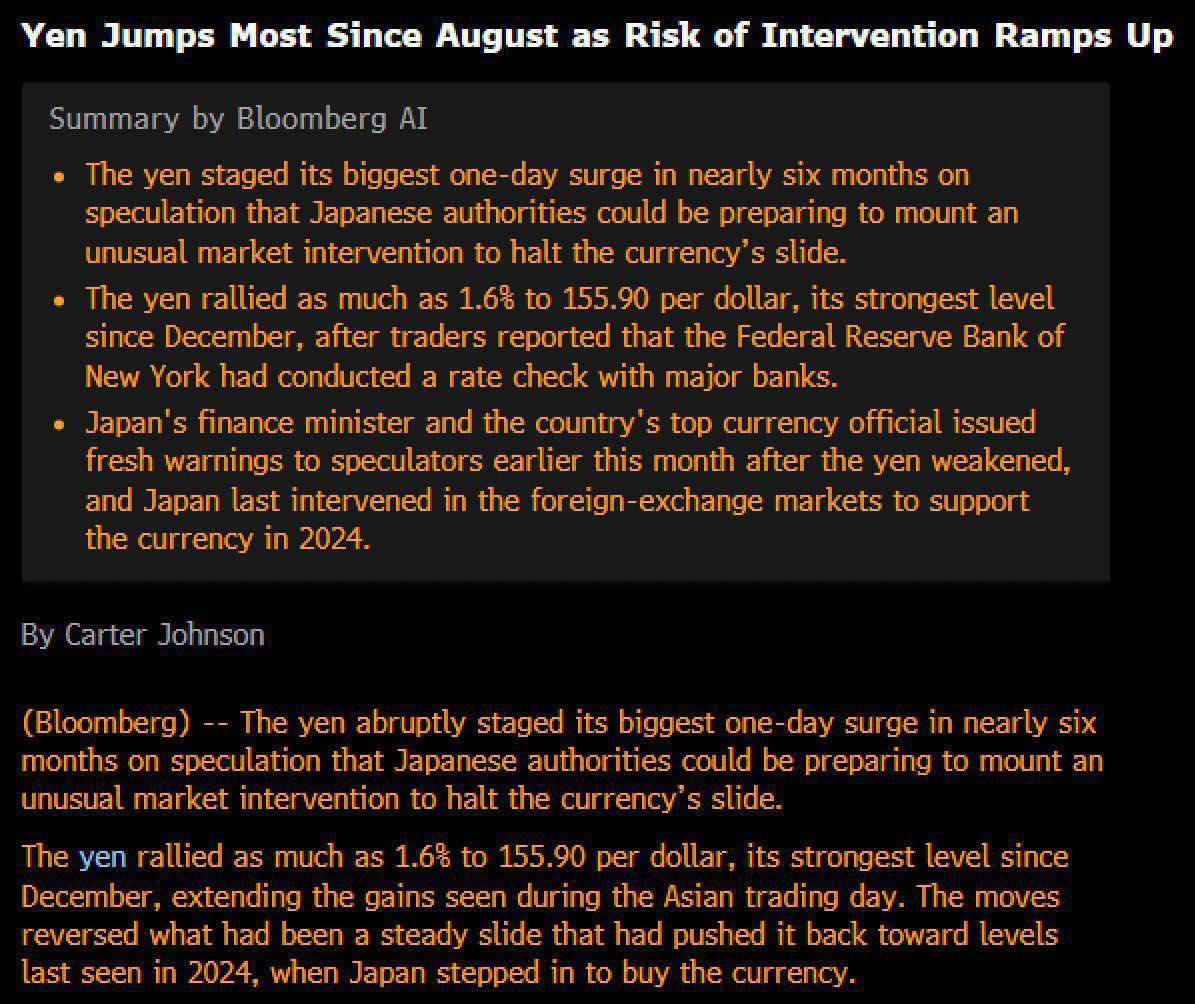
The Japanese yen saw its most shocking one-day jump in months after reports that the New York Fed checked rates with major banks. That is widely regarded as a warning sign.
Decoding why Bitcoin remains quiet despite Fed’s first Yen warning in decade image 0

Source: X

For the first time in over a decade, U.S. policymakers appeared openly concerned about yen weakness.

Japan’s bond yields are rising while its currency continues to fall, so this matters. There’s growing stress in Japan’s economy, and it raises the risk of intervention.

Why timing matters more than price

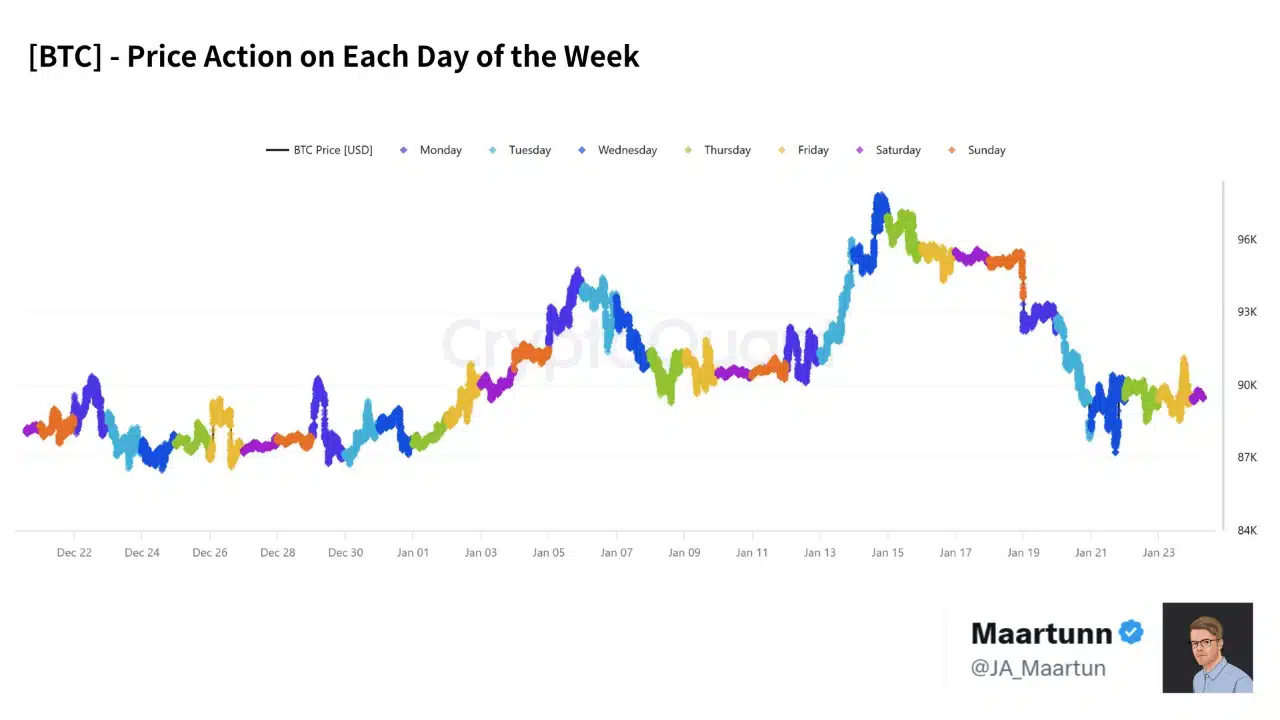
Recent data showed that Bitcoin [BTC] wasn’t reacting to levels as much as it was to timing.

Volatility has consistently picked up between the 20th and 21st of January, when short-term moves tend to form. By contrast, weekend sessions (especially Saturdays) were quiet, with price moving in tight ranges.
Decoding why Bitcoin remains quiet despite Fed’s first Yen warning in decade image 1

Source: CryptoQuant

This showed who was active in the market. Big players tend to step in mid-week, while weekends lack fresh capital.

BTC falls, but it’s not so bad

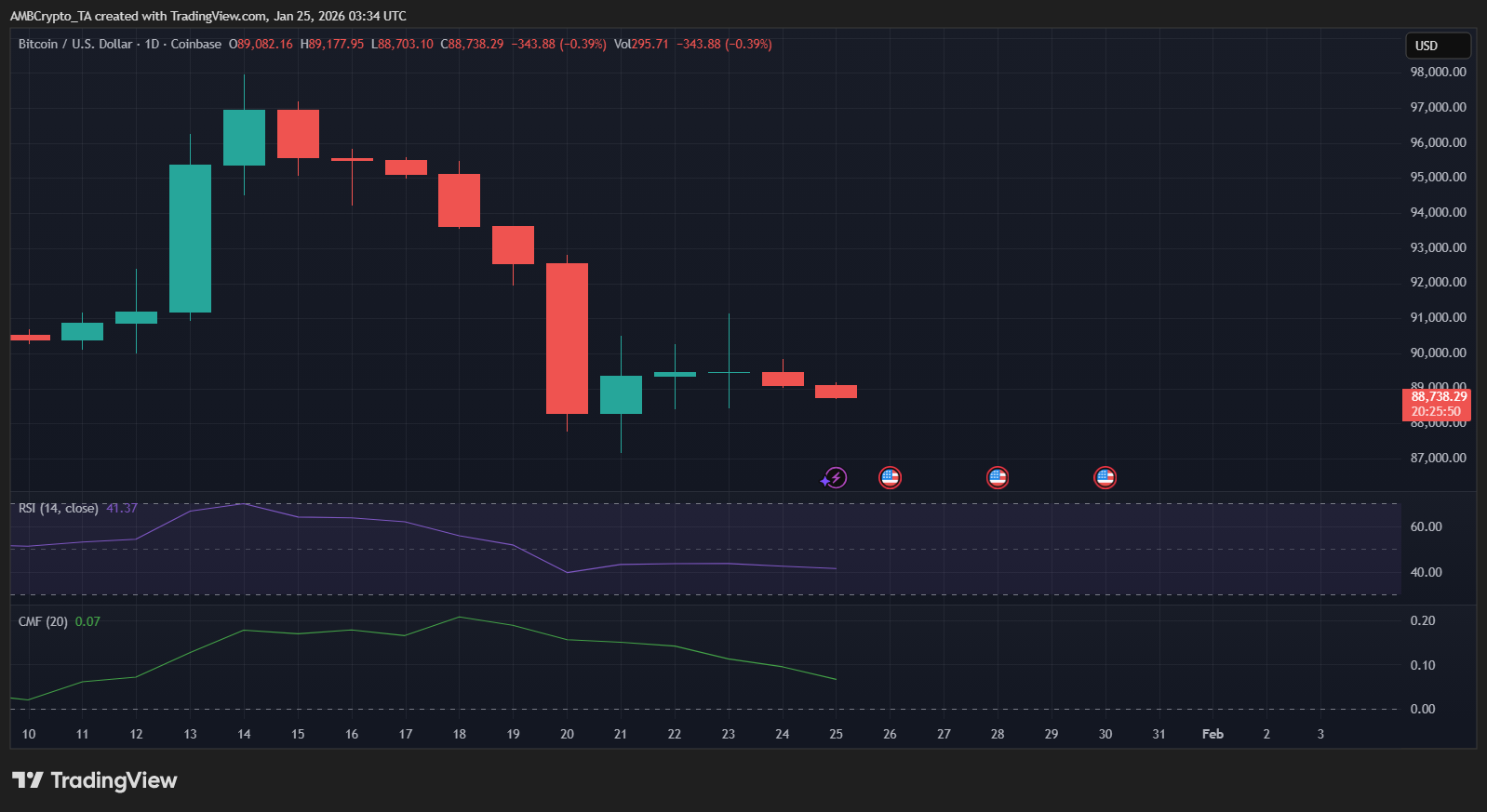
Bitcoin spent the past week going lower, pulling back from the mid-$90K range toward the $88-$89K range. The move was quick at first, but selling pressure calmed quickly.
Decoding why Bitcoin remains quiet despite Fed’s first Yen warning in decade image 2

Source: TradingView

The RSI was at neutral levels. Meanwhile, CMF stayed slightly positive with capital staying despite the dip – the underlying support still holds. Bitcoin is consolidating while traders wait for a sign.

Final Thoughts

  • Bitcoin’s weekly dip came with no panic or capital flight.
  • Rising currency stress around the yen may act as the next trigger.
0
0

Disclaimer: The content of this article solely reflects the author's opinion and does not represent the platform in any capacity. This article is not intended to serve as a reference for making investment decisions.

Understand the market, then trade.
Bitget offers one-stop trading for cryptocurrencies, stocks, and gold.
Trade now!

You may also like

Trump Rejects Iran's Proposal for Talks; Global Stocks and Bonds Under Pressure, Oil Prices Up Over 2%, Gold Falls Below 4200

Trump rejected Iran's latest proposal to reopen the Strait of Hormuz, causing the optimistic sentiment in the market last Friday to quickly reverse amidst the Middle East diplomatic stalemate. Brent crude oil rose over 2%, gold fell below $4,200, and silver dropped more than 4%. Asia-Pacific stock markets broadly declined, with South Korea's KOSPI falling over 2%. Global bond markets came under pressure, and the yield on the US 2-year Treasury rose to 4.90%. Market focus will shift to this week's PCE inflation data and the non-farm payroll report.

华尔街见闻•2026/09/28 06:16

AI demand drives TSMC to accelerate capacity expansion, 2nm monthly production aims for 120,000 wafers by year-end

According to reports, industry giants such as Apple, Nvidia, and AMD have collectively increased their orders by 10% to 20%, directly boosting TSMC's 2nm monthly production capacity to 120,000 wafers by the end of the year, which exceeds the previous estimate by more than 20% and brings forward the 2027 target by two years. For the first time in history, five factories will ramp up production simultaneously, and the annual compound growth rate of capacity from 2026 to 2028 will reach as high as 70%.

华尔街见闻•2026/09/28 04:26