
Web3 Social: Still Dominated by the Chinese Community

Written by: David, Deep Tide TechFlow
Within two days, two decentralized social protocols changed hands.
On January 20th, Lens Protocol announced it would be taken over by Mask Network. On January 21st, Farcaster announced it had been acquired by Neynar, one of its clients.
Combined, these two protocols have raised over $200 million. Farcaster was valued at $1 billion last year, with investors including a16z and Paradigm. Behind Lens is DeFi giant Aave.
Now, the founders have all "stepped down from daily operations to work on new projects."
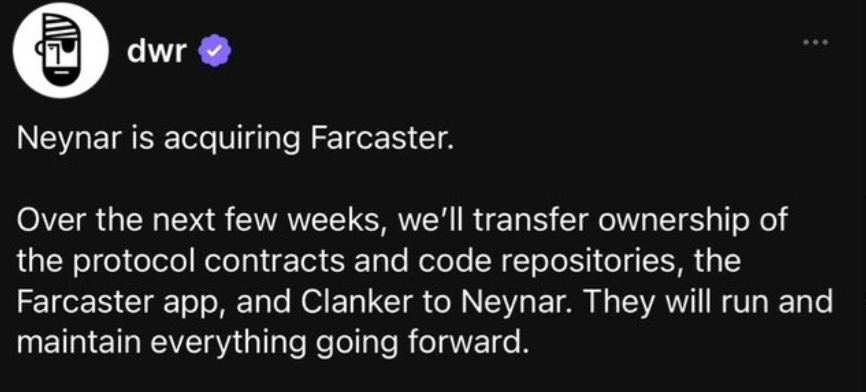
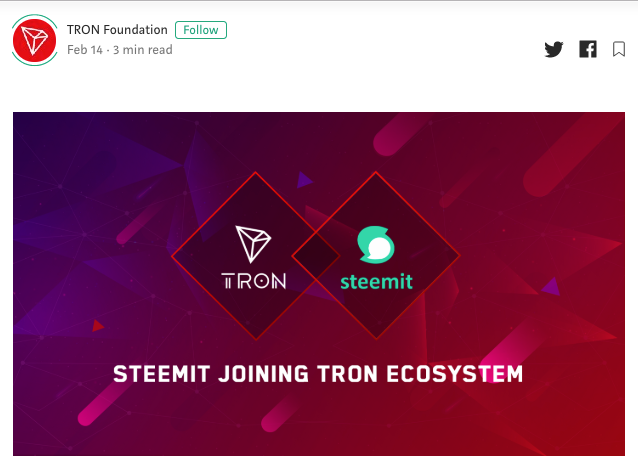
Counting Steem, another well-known project acquired by Tron in 2020, two out of these three phenomenal decentralized social protocols have now been taken over by Chinese teams.
You may have already forgotten about Steem. It was the pioneer of "write-to-mine" launched in 2016, and at its peak was the benchmark project for the entire Web3 social sector. After being acquired by Justin Sun, the community forked and left—more on this later.
Mask Network, which took over Lens, was founded by Suji Yan. Chinese, dropped out of UIUC at age 20 to start a business, previously contributed articles to Caixin and Jiemian.
Founded Mask in 2017, focusing on layering Web3 features onto traditional social platforms like Twitter.
Over the past few years, Mask has been actively acquiring: in 2022, acquiring two major Japanese Mastodon instances; last year, buying Orb, the most active client on Lens; and now, taking over Lens itself.
Suji Yan positions himself as "the Tencent of Web3."
On the Farcaster side, the new owners Neynar are two Indian founders, both former Coinbase employees. But out of the three protocols, two being taken over by Chinese teams remains a fact.
Why the Chinese?
One possible explanation is capability endowment. The two most successful countries in building social products globally are the US and China. WeChat, TikTok, Xiaohongshu—Chinese teams have proven they can build social platforms for billions of users.
But this explanation is flawed. Building products and acquiring protocols are not the same. Protocols are infrastructure, not directly facing users. You can build products on top, but the protocol itself doesn't create user experience.
Another reasonable explanation is price.
Look at Justin Sun’s acquisition list: $140 million for BitTorrent in 2018, Poloniex in 2019, Steemit in 2020, HTX in 2022.
These targets have something in common:
All once had their glory days but are now on the decline. BitTorrent was the pioneer of P2P downloads, Poloniex was once a leading US exchange, and HTX was once one of China's top three exchanges.
Justin Sun doesn't buy the best, but the best bargains.
Now, Farcaster is valued at $1 billion but its monthly revenue has dropped to $10,000, a year-on-year decline of more than 95%. Founder Dan Romero admitted in a post last month, "After four and a half years of trying a social-first approach, it didn't work out";
Lens has only 50,000 monthly active users, and the Aave team wants to let go to focus on its core DeFi business.
The most valuable days of these protocols are over, but their technology and brands remain. In A-share stock market terms, this is called:
Value has emerged after the drop.
There’s also a subtler extension of thought: in the West, decentralized social is a belief; in China, it’s a business.
Western founders in this space are somewhat idealistic. Users should own their data, social graphs should be portable, platforms shouldn’t have censorship rights... Farcaster’s slogan is "able decentralized," Lens is "user-owned social."
But after five years, users don’t care.
Ordinary people don’t care about data ownership or whether their social graphs are portable. They care about whether there’s anyone to chat with, interesting content, or associated assets that can skyrocket in value.
Chinese buyers taking over is, to some extent, handing this business from idealists to pragmatists.
Suji Yan said what Mask wants to do is "bring decentralized social out of the lab and into everyday life." In other words:
Forget ideals for now, let’s get people to use it first.
Of course, the last time the Chinese acquired a decentralized social protocol, the outcome wasn’t great.
In 2020, Justin Sun bought Steem. After the acquisition, he joined forces with exchanges to gain control of Steem’s network governance, but the original community responded by collectively forking to create a new chain, Hive, using code to exclude Justin Sun’s wallet.
Forking is the most extreme form of protest in the blockchain world. “We’re not playing with you anymore, we’re copying the code and leaving.”
Now Steemit is still running, but most active users have long since moved to Hive.
So here’s the question: will this time be different?
Mask taking over Lens, the official term used is "stewardship," not acquisition. The founders will continue as advisors, and the protocol remains open.
But the very fact that a "decentralized protocol" can be acquired already says something. Contracts can be transferred, codebases can be transferred, apps can be transferred. So where is the "decentralization"?
Disenchantment reveals that decentralization is just a technological architecture, not a business model. Technically decentralized, but commercially, someone still calls the shots.
After the leadership change at Lens, Vitalik posted that every post he made in 2026 was through Firefly, a multi-platform client under Mask Network.
He also said, "If we want a better society, we need better mass communication tools."
That’s not wrong. But who builds this tool, who operates it, who decides what it looks like—decentralization hasn’t answered these questions.
Now, the answer may be that it’s built by the Chinese.
However, maybe nothing will happen. After all, there aren’t many active users left anyway.
Disclaimer: The content of this article solely reflects the author's opinion and does not represent the platform in any capacity. This article is not intended to serve as a reference for making investment decisions.
You may also like
CoreWeave Dilemma for Nvidia: Forced to Rescue or Stand By?
As both a shareholder of CoreWeave and its sole GPU supplier, Nvidia now faces a dilemma after the sharp decline in CoreWeave's stock price. If it intervenes, each rescue strengthens expectations of a safety net, raises the threshold for future rescues, and risks getting further entangled in this high-leverage game. If it does not intervene, CoreWeave's liquidity crisis will directly cut off demand for GPU purchases, simultaneously devaluing Nvidia's equity investment and severely damaging its market reputation.
US CPI Heats Up Across the Board, Triggering "Inflation Spiral" Alert; October Rate Hike Odds Once Hit 50%. "New Fed News Agency": Watch Waller's Speech This Week
After the CPI was released, the market-implied rate hike probability first rose to 50% before falling back to 40%. Wall Street generally believes that whether action will be taken in October still depends on how the Federal Reserve assesses inflation trends. "The New Fed News Agency" noted that, unlike in August when price increases were concentrated in certain items, the stronger-than-expected performance of September's core CPI was more broad-based, further reinforcing the case for a December rate hike. The speech by Waller on Friday morning Beijing time is his last public statement before the Fed's blackout period ahead of this month's meeting. Economists are warning about an "inflation spiral," with real purchasing power and midterm election pressures interweaving.
The calm period in the US stock market is over! The S&P 500 ends its record of 53 consecutive trading days without a drop of over 1%. AI stock sell-off intensifies market concerns.
The S&P 500 Index fell by 1.1%, ending a streak of 53 consecutive trading days without a drop of 1% or more. This was the longest period of calm since January 2020.
Federal Reserve Beige Book: U.S. economy expands moderately but inflationary pressures intensify; AI boosts productivity curbing some corporate hiring demand
The latest Beige Book released by the Federal Reserve on Wednesday shows that overall economic activity in the United States continues to grow, but performance varies across regions. Consumer spending remains generally weak, and there has been little change in the labor market.
Crypto prices
More


