
Federal Reserve Policy Easing Anticipated to Re-Ignite Retail Interest in Crypto

Quick Breakdown
- The Federal Reserve’s rate-cutting trajectory in 2026 is emerging as the primary catalyst for the return of retail and institutional participants to the digital asset market.
- Despite three rate reductions in 2025, market sentiment remains in “Extreme Fear” as Bitcoin trades nearly 30% below its October peak.
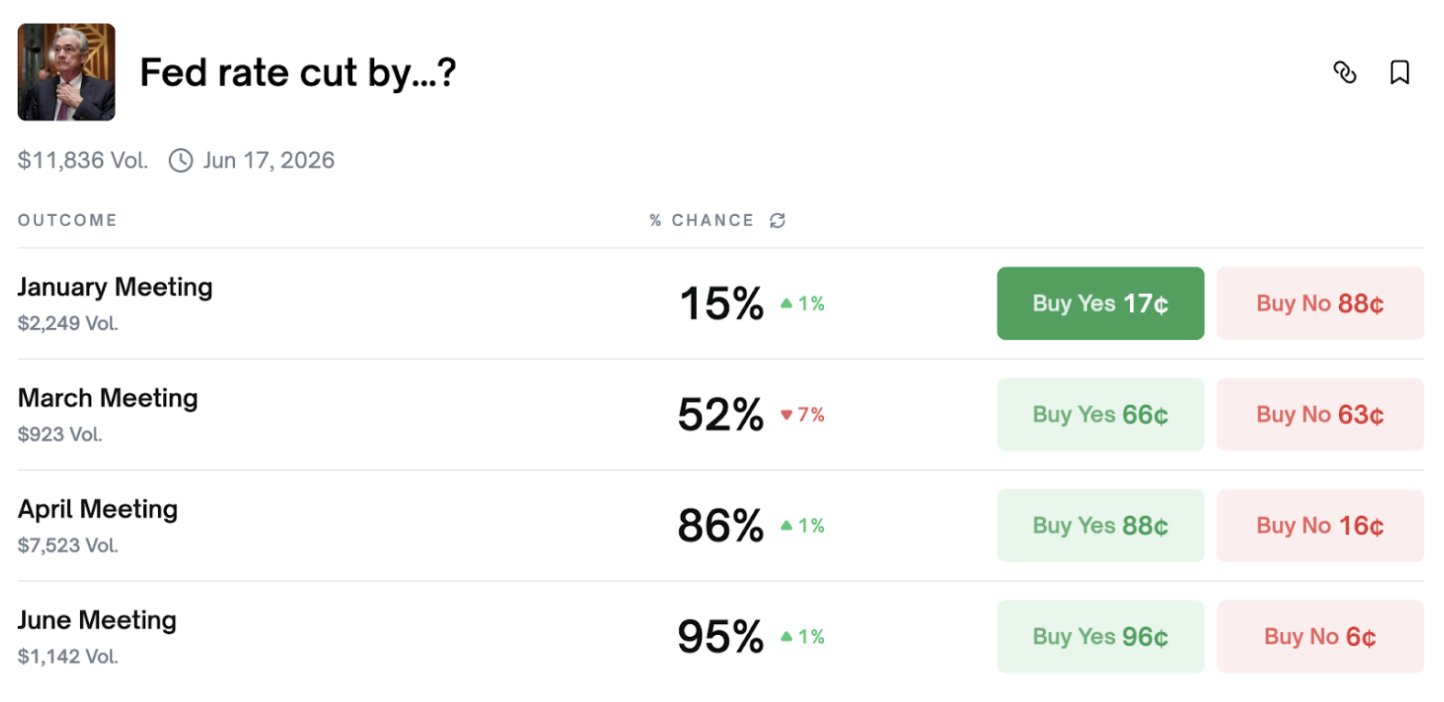
- Prediction markets show significant skepticism for a January rate cut, though a majority of participants expect a pivot by March 2026.
The Federal Reserve’s (Fed) aggressive stance on interest rate cuts throughout 2026 is expected to be the critical driver in bringing retail investors back into the cryptocurrency market. According to Owen Lau, managing director at Clear Street, Fed rate decisions will stand as a “key catalyst” that could reinvigorate excitement for both retail and institutional players after a volatile end to 2025. Historically, interest rate reductions have been bullish for risk assets like Bitcoin ($BTC), as they diminish the appeal of traditional fixed-income investments such as bonds and term deposits.
Monetary policy shifted after three 25-basis-point cuts (Sep, Oct, Dec 2025). The September cut briefly pushed Bitcoin to a record $125,100, but an ensuing $19 billion liquidation in October ended the rally. This negative sentiment saw Bitcoin drop to $88,439 by late December 2025, deterring retail investors.
Federal Reserve internal divisions and market skepticism
The road to further easing appears fraught with internal debate within the Federal Open Market Committee (FOMC). December’s meeting minutes revealed that Fed members were divided on the necessity of the year-end cut. While the committee remains “prepared to adjust the stance of monetary policy” to meet economic goals, some analysts suggest that resilient consumer spending and a shifting labour market could slow the pace of future cuts.
Market participants are currently expressing doubt regarding a quick start to the 2026 easing cycle. Data from the decentralized prediction platform Polymarket
 Source:
Polymarket
Source:
Polymarket
Sentiment remains low amid extreme fear
Further optimism is fueled by the Fed’s withdrawal of restrictive crypto guidance, a move that eases bank entry and supports the long-term integration of digital assets into traditional finance. The broader crypto market continues to struggle with a lack of conviction. The Crypto Fear & Greed Index has remained in “Extreme Fear” territory since mid-December, recently posting a score of 23. This sustained pessimism underscores the importance of the Fed’s 2026 roadmap; without a clear signal of continued easing, retail liquidity may remain on the sidelines.
Disclaimer: The content of this article solely reflects the author's opinion and does not represent the platform in any capacity. This article is not intended to serve as a reference for making investment decisions.
You may also like
SoFi tie-up shows stablecoins can provide alternative blockchain settlement rail
Slowing AI models may not necessarily be bearish: three structural tailwinds for traditional data centers outweigh rising interest rates
HSBC believes that the traditional growth logic of data centers is shifting from frontier model iteration to AI commercialization and diffusion. With the rise in inference demand and increased capital expenditure from cloud service providers, combined with tightening power and regulatory constraints, the supply-demand imbalance is expected to persist until 2028. Even with rising interest rates, the compound annual growth rate of AFFO per share is still expected to reach 11%–12% from 2025 to 2028, demonstrating strong earning resilience.
This time, will U.S. Treasury bonds crash U.S. stocks?
Bloomberg strategist Simon White warns that the recent rise in US Treasury yields is shifting from a "benign" increase driven by interest rate expectations to a disorderly surge fueled by expanding term premium. Market analysts note that higher long-term interest rates will simultaneously push up US stock valuation discount rates and corporate financing costs, intensifying liquidation pressure on highly leveraged assets. If interest rates above 5% become the new norm, US stock valuations will face ongoing compression pressure.
Crypto prices
More


